

 Shun Nagai
When choosing pet food for dogs and cats, many pet owners assume that low-fat products are healthier. However, fat plays a far more important role for dogs and cats than simply serving as an energy source.
The right amount of high-quality fat helps maintain a dog’s health and vitality while also improving the palatability of pet food. In this article, we will explain the role of fat in pet food and how to prevent fat oxidation.
The Role of Fat in Pet Food
Fat is an essential component of the diet. It not only provides energy, but also supplies important nutrients and enhances the palatability of food.
Its Nutritional Role
Fat is sometimes naturally present in the raw materials used in pet food formulations. For example, the omega-3 fatty acids found in fresh salmon are believed to help prevent obesity, improve metabolism, and support conditions such as dermatitis and arthritis.
Omega-6 fatty acids are also said to help lower blood cholesterol levels. More specifically, they may help reduce LDL cholesterol. Components of omega-6 fatty acids, such as linoleic acid and arachidonic acid, are considered to contribute to this effect.
According to the National Research Council (NRC), pet foods with an omega-6 to omega-3 fatty acid ratio ranging from 2.6:1 to 26:1 have been shown to offer health benefits, including reducing the risk of heart disease, joint problems, and inflammation-related conditions.
Its Role as a Palatant
Fat is used either within dry pet food kibble or as a coating material. The most common coating material, or palatant carrier, is animal fat. Chicken fat provides excellent palatability, but it also increases greasiness. Pork fat, on the other hand, is less greasy but generally offers lower palatability.
Chicken fat (melting point: approx. 30°C) and pork fat (melting point: approx. 40°C) are convenient because they remain liquid at relatively low temperatures. Beef tallow, by contrast, has a higher melting point of around 45°C and is used less frequently, partly because some markets request beef-free formulations.
In extrusion-based dry pet food manufacturing, formulations may include up to 8% total fat. Fish oil and flaxseed oil are generally used in combination with other ingredients. However, because fat negatively affects kibble expansion, it is usually not used at very high inclusion levels.
How to Maximize Palatability
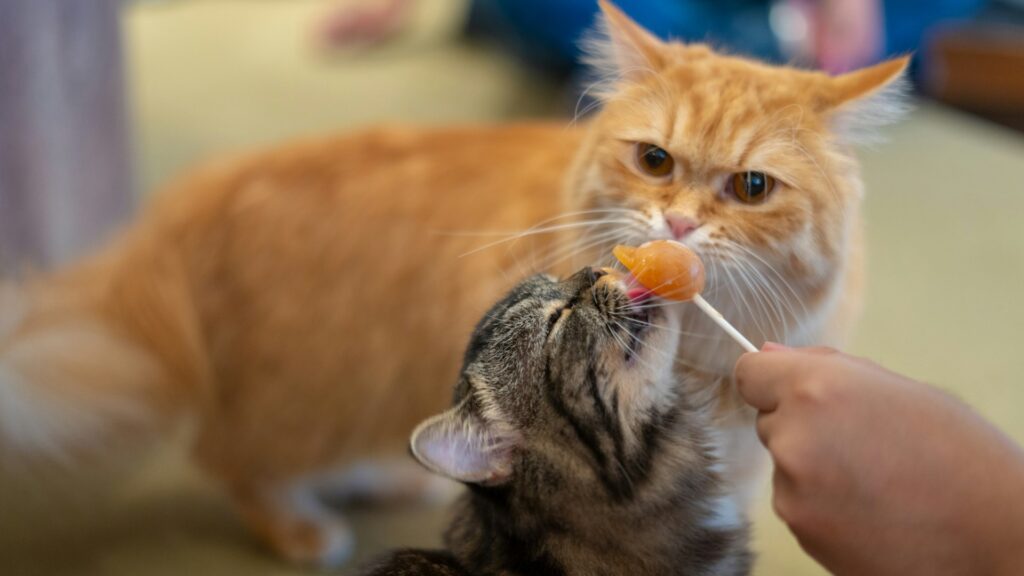
The way fat is used during pet food manufacturing is also important. As noted above, fat may be incorporated into the mix or used as a coating, but approximately 80% is used as a coating material. The most common methods for coating fat onto kibble are drum coaters and vacuum coating systems.
Fat is often used together with liquid or powdered palatants. When they are combined, the general order is to apply the fat first to the surface of the kibble, followed by the liquid palatant, and finally the powdered palatant. This sequence allows the powder to adhere more effectively and helps the fat maximize the performance of both the liquid and powdered palatants.
Points to Consider When Handling Fat
Fat is an important element in dry pet food. It contributes to flavor, nutritional value, texture, and palatability. However, fat is highly sensitive to oxidation, so special care is required when using it.
Once fat oxidizes, it produces unpleasant odors that may negatively affect a pet’s appetite. As a result, pet owners may perceive the food as low quality or even harmful to their pet’s health.
Note: Even slight oxidation can negatively affect palatability in cats, whereas dogs are said to tolerate a certain degree of oxidation.
The Three Stages of Fat Oxidation
Step 1: Initiation
When fat is heated or comes into contact with oxygen or metals, the structure of its fatty acids changes and free radicals are generated.
Step 2: Propagation
The free radicals then react with other fatty acids to form hydroperoxides.
Step 3: Termination / Final Stage
The hydroperoxides decompose into oxidation by-products such as aldehydes (for example, hexanal), alcohols, and short-chain fatty acids. These compounds are what cause unpleasant odors.
Once this oxidation process begins, it cannot be stopped, because it proceeds through a chain-reaction mechanism.
What Are Free Radicals?
The cells of living organisms are constantly attacked by compounds known as free radicals. Free radicals are created as by-products when cells produce energy, and they can also arise from external factors such as pollution and stress.
These free radicals damage cell membranes as well as important components inside cells, such as enzymes and DNA, disrupting their normal function. Free radicals are especially harmful to cells in the nervous and immune systems. They are believed to contribute to the progression of various diseases and to accelerate aging.
Put simply, free radicals are like “rust” inside the body, gradually impairing its normal functions.
Antioxidants That Help Prevent Fat Oxidation
The main way to protect pet food from this oxidation process is through the use of antioxidants. Antioxidants slow down oxidation reactions, helping preserve both palatability and nutritional quality.
Some people avoid preservatives because they believe antioxidants are dangerous and that additive-free pet food is always better. However, if a pet food contains no antioxidants at all, it cannot effectively prevent oxidation. As a result, the quality of the food may decline, and harmful substances may be produced.
Types of Antioxidants
Antioxidants are classified according to how they work into primary antioxidants and secondary antioxidants. Primary antioxidants neutralize free radicals, while secondary antioxidants remove metals or oxygen, or help regenerate primary antioxidants.
| Category | Examples |
|---|---|
| Synthetic | Butylated hydroxytoluene (BHT), butylated hydroxyanisole (BHA), ethoxyquin (EQ), tert-butylhydroquinone (TBHQ), propyl gallate |
| Natural | Lutein, vitamin E (tocopherols), vitamin C (L-ascorbic acid), other plant extracts |
| Examples |
|---|
| Citric acid (natural or synthetic), phosphoric acid (synthetic), ethylenediaminetetraacetic acid (EDTA, synthetic) |
These antioxidants work either by neutralizing free radicals before they can attack fatty acids (primary antioxidants) or by binding metal ions and converting them into less harmful substances (secondary antioxidants).
In this way, antioxidants help reduce lipid oxidation when added to fats, oils, and feed ingredients. In addition, certain combinations of primary and secondary antioxidants can prevent lipid oxidation more effectively than individual ingredients alone.
Note: Antioxidants cannot reverse oxidation that has already occurred.
Are Antioxidants Better Synthetic or Natural?
Like other additives, antioxidants can be divided into synthetic antioxidants and natural antioxidants derived from naturally occurring substances.
Not all synthetic additives are necessarily harmful. However, when it comes to antioxidants in particular, synthetic antioxidants such as BHA, BHT, and ethoxyquin have raised concerns regarding carcinogenicity, chromosomal abnormalities, and mutagenicity, which has led to hesitation about their use in pet food.
Dog foods formulated with greater attention to additives tend to use naturally derived antioxidants. That said, not every synthetic substance is inherently bad.
Pet Food OEM Manufacturing in Thailand
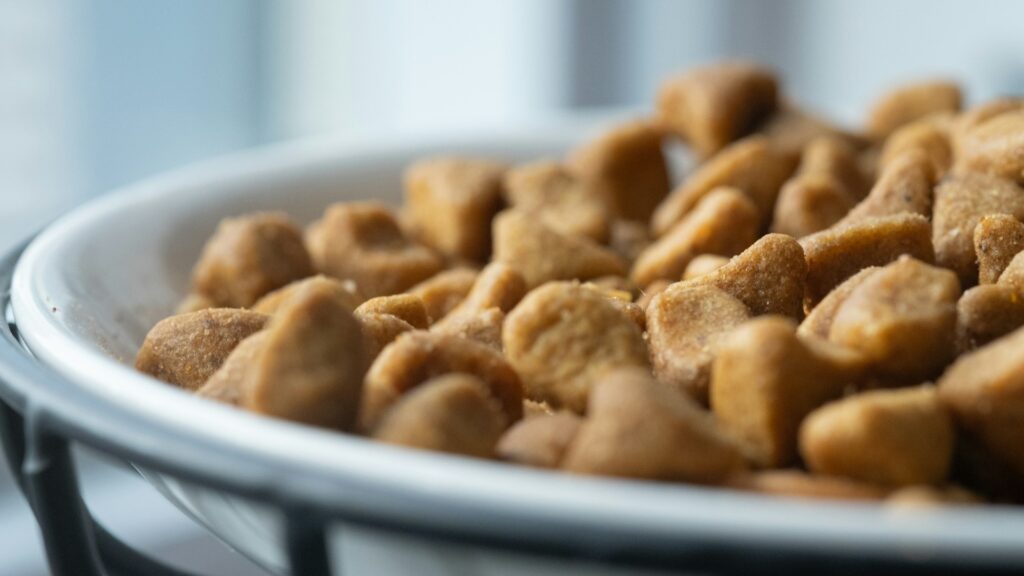
Our company offers support for dog food development and contract manufacturing (OEM) in Thailand.
Thailand is widely recognized as a major hub for OEM pet food manufacturing. In recent years, as the pet food market has become more diversified and quality-oriented, Thai OEM factories have also become capable of developing premium pet food products.
Here, we introduce some of the key advantages of OEM manufacturing in Thailand.
Proven Track Record as a Major Pet Food Exporter
According to the Thai Pet Food Trade Association (TPFA), Thailand’s pet food export value exceeded THB 65 billion in 2021, up 27% year on year, making it the world’s third-largest pet food exporter.
The top five destinations for Thai pet food exports are the United States, Japan, Italy, Malaysia, and Australia. Demand for Thai pet food has also been increasing in Asian countries such as India, Indonesia, and Laos.
Thailand’s steady export growth continued into 2022, with exports already up 43% year on year as of July 2022, indicating even stronger momentum.
According to Dr. Chanintr Chalisarapong, Chairman of the TPFA, Thailand’s long-standing experience in canned tuna production for human consumption—around 20% of the world’s canned tuna is produced in Thailand—has also contributed to the expansion of wet pet food manufacturing. As a result, wet pet food production in Thailand has become increasingly active.
Easy Access to High-Quality Raw Materials
About 95% of the raw materials used in Thai pet food production—such as fresh, high-quality meat, grains, and seafood—are sourced locally, which has further strengthened the country’s manufacturing base and global trade success.
Thailand’s diverse climate and land conditions allow it to produce a wide variety of agricultural products, including grains, vegetables, and fruits.
In addition, livestock farming is well established in Thailand, making it possible to obtain fresh, high-quality meat suitable for human-grade applications. Because Thailand is also surrounded by the sea, it has abundant marine resources, enabling the use of high-quality seafood for pet food as well.
Cost Advantages
Thailand is known for its relatively low production costs. This is influenced by lower labor costs compared with Japan and Western countries, as well as the ease of sourcing raw materials locally.
This is an especially attractive point for companies planning to develop new pet food products. Lower manufacturing costs help keep product prices competitive and support stronger positioning in the market.
Frequently Asked Questions
- QCan products be manufactured according to our desired recipe?
- QWhat is the quality of the raw materials used for OEM manufacturing in Thailand?
- QWhat kind of manufacturing equipment do Thai OEM manufacturers use?
- QWhat is the quality control system like in Thailand?
- QHow long does it take from initial inquiry to final product completion?
- QHow long does it take from placing an order to delivery?
Inquiries and Consultations

Please feel free to contact us with any questions or consultations regarding our OEM support services.
How to contact us
Phone: +66 (0)61-457-4310
You can call and speak directly with our representative. Phone support is fast and allows us to provide needed information immediately.
Email:
You may send an inquiry email to our representative’s email address. We will respond with detailed answers to your questions and requests.
What we will ask you to prepare
After your inquiry, we will have a detailed discussion tailored to your interests and needs. We will ask about the following:
- Project overview: Please share the product you want to develop and the purpose of the project.
- Requests and preferences: Please tell us your specific requirements and budget so we can make a more concrete proposal.
- Schedule: Please let us know your target timeline and desired completion schedule.
We value close communication with our customers and will provide the best possible support to ensure the success of your project.