

 Shun Nagai
Just like humans, pets care a great deal about how their food tastes. Imagine the moment you serve pet food in a bowl. A dog may sit patiently in front of it, drooling with anticipation, or a cat may come running the moment it hears a can being opened. Pets are no different.
As humans, we need to do more than simply provide the nutrients necessary to support a pet’s healthy life. We also need to help make mealtime enjoyable.
Just as most people would not want to eat wheat germ every morning no matter how healthy it is, pets do not want to eat food every day that may be healthy but tastes unappealing.
This is where palatants play a key role in stimulating a pet’s appetite. In this article, we explain what palatants are and why they are so important in pet food manufacturing.
What Are Palatants?
Palatants are specially designed ingredients that make pet food, treats, and supplements more appetizing, helping improve palatability so pets will consume the nutrients they need.
Even if you offer a highly nutritious pet food, if a pet refuses to eat it or will not continue eating it because of poor palatability, then those nutritional benefits cannot be delivered.
In other words, palatants play an essential role in making meals enjoyable for pets, encouraging healthy eating habits, and helping them consume the nutrients they need.
Since pets, like humans, rely heavily on taste and smell when judging how appealing a food is, palatants improve pet food palatability in the following ways.
Benefits of Palatants
- Improved Taste
Palatants can enhance the taste of pet food, including sweetness, saltiness, and umami. They can also add unique and appealing flavors that pets find especially attractive. - Improved Aroma
Aroma is extremely important, especially for dogs, which have a highly developed sense of smell. Palatants can significantly improve the aroma of pet food, increasing palatability even before the first bite. - Increased Protein Content
Animal protein-based palatants contain amino acids that can enhance sweetness and umami. In addition, palatants can provide protein that helps pets maintain optimal health.
Originally, pet food palatants were called “digests.” Digests are enzymatically hydrolyzed proteins added to dry food to create a meaty palatability effect.
Today, however, the term “palatants” refers not only to digests but also to a wider range of ingredients, including fat-based components, that are used to improve palatability.
(In Japan, palatants are often referred to as digests or as various “extracts.”)
Benefits for Pet Food Brands
Palatants do more than improve palatability and nutritional value. They also offer important business advantages to companies selling pet food.
Product Differentiation
In the highly competitive pet food market, palatants are an important tool that allows manufacturers to differentiate their products by offering unique flavors and formulations tailored to consumer needs.
Palatants can also enhance product quality and functionality by adding essential nutrients and health-supporting components. As a result, consumers are more likely to view these products as contributing to their pet’s health and well-being, which can strengthen brand loyalty.
To stay competitive in the market, brands need more than just attractive pricing. Differentiation in quality and product features is also essential. By leveraging the characteristics of palatants, manufacturers can build a competitive advantage.
Higher Customer Satisfaction
By offering pet food that pets genuinely enjoy eating, manufacturers can increase customer satisfaction and loyalty, which ultimately leads to repeat purchases.
A pet’s diet is directly tied to its health and well-being, so this is a matter pet owners take very seriously. That is why it is so important for manufacturers to produce food that pets willingly and happily eat. For example, palatants can improve flavor and aroma, making meals more enjoyable for pets.
This can make mealtime a more positive experience and may help address problems such as poor appetite and picky eating. At the same time, providing nutritionally balanced food helps support overall health.
In addition, when manufacturers produce food that matches pets’ taste preferences, owners feel more confident that they are giving their pets the best possible food. This naturally increases satisfaction, deepens trust in the brand, and encourages repeat purchases.
Types of Palatants
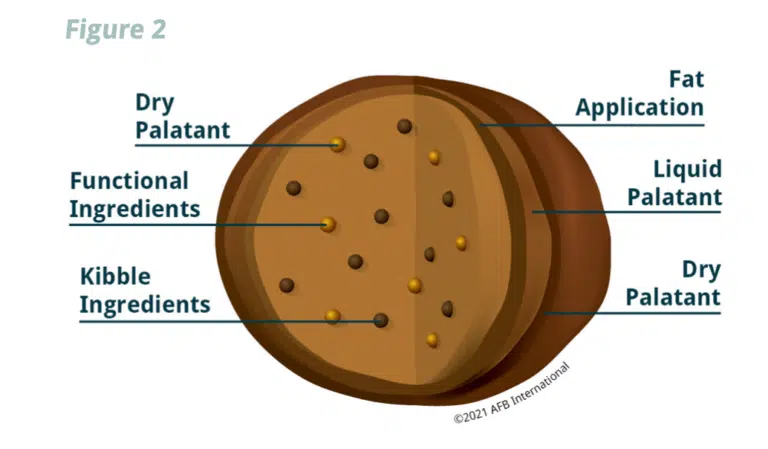
Palatants come in a wide variety of forms to meet the specific needs of pet food manufacturers, including grain-free, limited-ingredient, GMO-free, organic, and low-fat options.
Palatants are available in both liquid and powder forms, and formulations that combine both are commonly used to maximize palatability.
Liquid Palatants
Liquid palatants are highly versatile and convenient because they can improve the palatability of both dry and wet pet food. They are produced from a variety of protein sources, including chicken-based and fish-based materials.
Powder Palatants
Liquid palatants can be used on their own, but powder palatants are generally recommended for use with fat as a binder, or in combination with liquid palatants. This combination can deliver the highest level of palatability, and it may also help protect fats from oxidation.
Raw Materials Used in Palatants
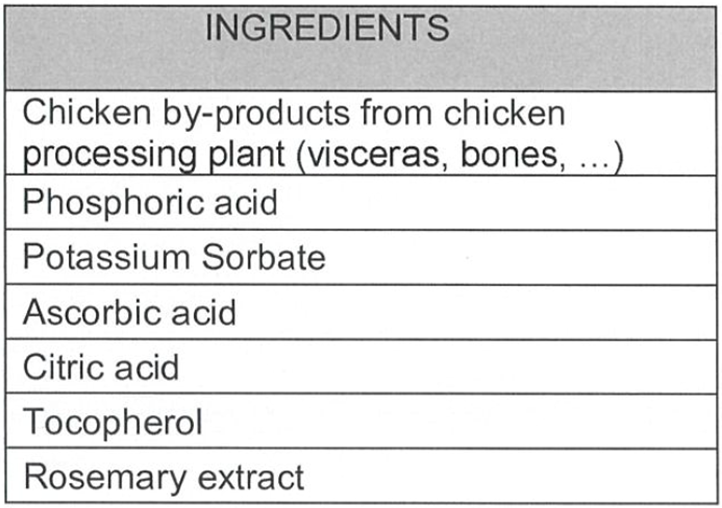
Palatants can be made using either animal protein or plant protein, and they are designed to meet requirements such as:
- Grain-free
- Limited-ingredient diets
- GMO-free
- Organic
- Low-fat
Palatant formulations may include protein, yeast, phosphates, antioxidants, and other ingredients. The most appropriate protein source depends on the target product performance, cost requirements, and the manufacturer’s brand concept.
Animal Proteins
Common animal-derived protein sources include poultry, pork, and fish. In some regions, novel proteins such as kangaroo from Australia are also used in palatants.
Animal proteins can come not only from different animal species but also from different parts of the animal. For example, they may be derived from skin, muscle tissue, or organs. Organs, in particular, are well suited for creating aroma-driven palatants.
- Meat-Based
Meat-based palatants extracted from high-quality meat sources such as beef and lamb provide the natural savory taste that pets enjoy. These palatants are rich in protein and amino acids, making them nutritionally valuable as well. - Poultry-Based
Poultry-based palatants, such as those made from chicken or turkey, are widely used by pet food manufacturers because of their consistently strong palatability and high nutritional value. They provide a familiar taste and aroma that many dogs and cats readily accept. - Fish-Based
Fish-based palatants extracted from salmon, tuna, white fish, and similar sources deliver strong palatability that appeals to many pets. They are also rich in omega-3 fatty acids and protein, offering additional health and nutritional benefits.
Plant Proteins
Plant-derived proteins can come from a variety of sources, including corn, soybeans, potatoes, and certain grains. Plant protein-based palatants are often used to meet consumer demands for grain-free, limited-ingredient, GMO-free, organic, and low-fat products.
How Palatants Are Applied
Palatants are available in a range of grades, from economy to premium, and pricing generally reflects quality. Typical inclusion rates are 1.0% to 3.0% for liquid palatants and 0.5% to 2.0% for powder palatants. These usage levels can have a significant impact on the manufacturing cost of dry dog food.
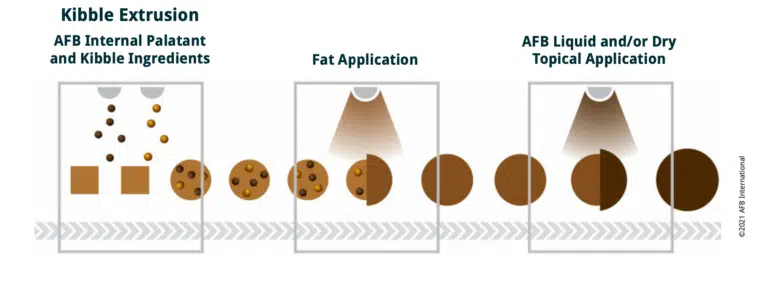
In pet food manufacturing, palatants are typically coated onto kibble using a combination of liquid and powder forms. They are commonly applied using drum coaters or vacuum coating systems.
When both liquid and dry palatants are used, the process generally involves surface-coating with oil or fat first, followed by the liquid palatant, and then the powder palatant.
For canned products, palatants may be added on top of the food just before the can is sealed, or they may be mixed into pâté, gravy, mousse, or similar formats.
About the Safety of Palatants
You may sometimes see information online claiming that hydrolyzed protein, one type of palatant, contains carcinogens or is a dangerous ingredient. But what is the actual situation?
The Real Concern Is Acid Hydrolysis
Claims such as “it contains carcinogenic substances” or “it is a dangerous ingredient” do not apply to all hydrolyzed proteins. This misunderstanding comes from differences in how hydrolyzed proteins are produced. There are three main production methods:
- Thermal hydrolysis
- Acid hydrolysis
- Enzymatic hydrolysis
Among these, the one that raises concern is acid hydrolysis. Acid hydrolysis can potentially generate trace amounts of carcinogenic substances known as chloropropanols. Because of this, some people mistakenly assume that all hydrolyzed proteins contain carcinogens.
Most Are Safely Produced by Enzymatic Hydrolysis
However, most hydrolyzed proteins used in dry pet food are produced through enzymatic hydrolysis. This method uses protease enzymes, the same type of digestive enzymes found in the body, to break down proteins. As a result, there is no concern about the formation or contamination of carcinogenic substances, making it a very safe process.
In addition, hydrolyzed proteins used as palatants are broken down to a molecular level close to amino acids, so allergy antibodies are unlikely to recognize them as intact proteins.
Therefore, the risk of triggering an allergenic response is extremely low. For this reason, hydrolyzed proteins are often used as key ingredients in therapeutic diets for pets with severe food allergies.
In this way, enzymatically hydrolyzed proteins are safe and serve as an excellent nutritional source that supports pet health.
Major Palatant Companies
In the pet food market, palatants play an essential role in improving pet food palatability. They enhance flavor and aroma, helping ensure that pets enjoy eating the food. Below are some globally recognized palatant companies.
- SPF (France)
SPF manufactures palatants made from animal-derived proteins and fats. The company is known globally for producing high-quality palatants using advanced manufacturing technologies. - AFB (United States)
AFB specializes in the research and development of palatants for pet food. The company develops products based on scientific research and a data-driven approach, and it has a strong brand presence in the U.S. market supported by extensive research facilities. - BHJ (Denmark)
BHJ manufactures palatants and protein products using animal proteins. The company places strong emphasis on sustainable product development and strict quality control, and it is highly regarded in the European market. - LEIBER (Germany)
LEIBER manufactures yeast-based palatants and nutritional supplements. Using specialized fermentation and yeast extraction technologies, the company delivers high-quality products and is well known in Germany and across Europe for its reliability and commitment to quality.
These palatants can also be used in OEM manufacturing in Thailand.
Contact and Consultation

Through our OEM support services, we provide total support for ingredient selection, recipe development, packaging, and transportation. Finding the right OEM manufacturer for your pet food is a major factor in determining the success of your pet food business.
Please feel free to contact us with any questions or inquiries regarding our OEM support services.
How to Contact Us
Phone: +66 (0)61-457-4310
You can call and speak directly with our representative. Phone support is fast and allows us to provide needed information immediately.
Email:
You may send an inquiry email to our representative’s email address. We will respond with detailed answers to your questions and requests.
Information to Prepare Before Contacting Us
After receiving your inquiry, we will discuss the details based on your interests and needs. At that time, we may ask about the following:
- Project Overview
Please tell us about the product you would like to develop and the purpose of your project. - Requests and Requirements
If you can share your specific product requirements, preferences, and budget, we will be able to make a more concrete proposal. - Schedule
Please let us know your target timeline and when you hope to complete the product.
We value close communication with our clients and are committed to providing the maximum possible support to help make each project a success.