

 Shun Nagai
In general, texture refers to how a food feels when it is bitten, chewed, and swallowed. For example, it can be the creamy mouthfeel created by adding cream to coffee or the crisp crunch that makes potato chips so appealing. Texture greatly influences how food is perceived, not only by humans but also by animals.
Factors That Influence Texture
| Factor | Description |
|---|---|
| Processing conditions | Moisture, temperature, time, and formulation during production |
| Food shape | The physical shape and structure of the kibble or product |
| Amount and type of fat | The level and source of fat used in the formula or coating |
| Nutritional composition | Moisture, protein, and other nutrients that affect texture |
| Type of palatant | Liquid or powdered palatants that influence texture, aroma, and taste |
1. Processing Conditions
Whether producing canned (wet), kibble (dry), baked, or semi-moist pet food, manufacturers must manage a variety of processing conditions, including moisture, temperature, time, and ingredient formulation. This is because the characteristics of the raw materials, such as fat and fiber levels, can affect how the product needs to be processed.
For example, depending on the ingredient type, the extrusion process used in dry food manufacturing may be affected in terms of water absorption and agglomeration. These factors can also influence kibble density (hardness) and fat absorption. In addition, conditions such as time and temperature play a role, and the combination of all these factors ultimately creates a product with its own unique texture.
In dry food especially, kibble density is considered a very important factor in feline palatability. Although the reason has not been fully clarified, one commonly suggested theory is that cats prefer low-density kibble because it breaks more easily into smaller pieces.
2. Food Shape
Dry pet food comes in countless shapes, from round pieces to hearts, stars, bones, and fish shapes. Shape is generally not considered a major factor in canine palatability, but studies suggest that cats may prefer certain kibble shapes.
Research Data from AFB

Researchers at AFB, a U.S. manufacturer of pet food palatants, conducted a study to investigate whether kibble shape affects the palatability of dry cat food. The study evaluated the five different kibble shapes shown above.
Conditions
| Item | Details |
|---|---|
| Size control | All kibble types were adjusted to the same diameter and thickness |
| Moisture content | 6.5–9.5% |
| Density | 0.30–0.38 g/cm³ |
| Base material | A grain-based meal ground from the same lot was used for all kibble shapes |
| Fat coating | 5.0% chicken fat |
| Palatant coating | 1.5% powdered palatant |
Method
To measure palatability, AFB’s research center conducted once-daily palatability tests over two days using 25 cats. The position of the food bowls was changed on each test day.
Results
The results showed that round and star-shaped kibble had the highest palatability. Since the palatability results varied depending on kibble shape, the study suggested that the texture experienced when the food is bitten and crushed affects palatability.
When comparing round and star-shaped kibble, the round shape performed better. One likely reason is that round kibble has a larger surface area, which may improve palatant coverage and therefore increase palatability.
In addition, round kibble is easier to form during extrusion, is less likely to clog the die, and creates less friction, which also improves production efficiency.
Food shape and texture are often treated as separate characteristics, but shape affects how food feels when bitten and crushed. For that reason, shape also plays a role in texture.
3. Amount and Type of Fat
The amount and type of fat used in pet food have a major effect on texture. In the pet food industry, chicken fat is the most commonly used fat source, but beef tallow, canola oil, sunflower oil, coconut oil, and fish oil are also used either as formula ingredients or as coatings.
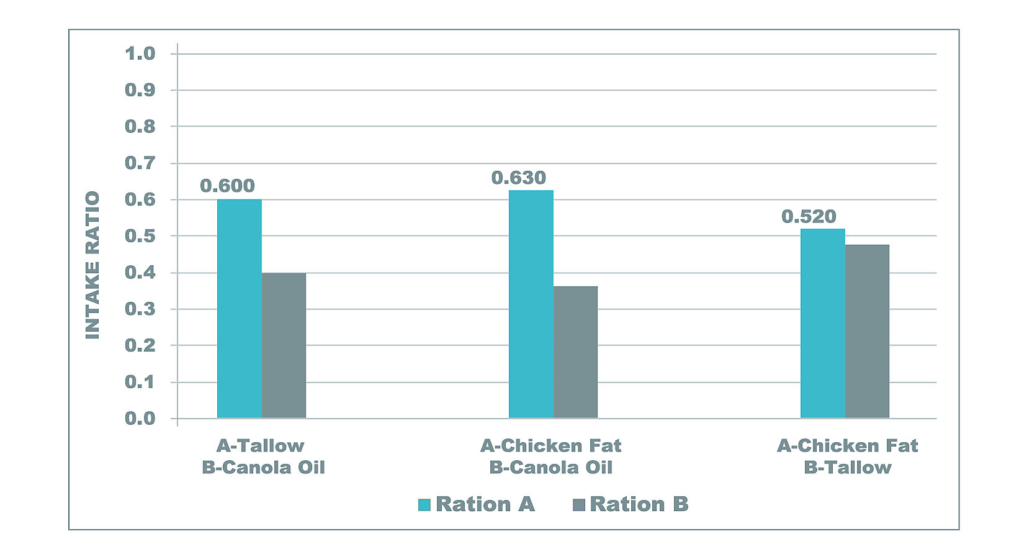
High-quality fats can improve palatability even when used simply in combination with palatants. For dogs, animal fats are generally preferred over vegetable oils such as canola oil.
On the other hand, although cats are obligate carnivores, no clear preference difference has been observed between canola oil and animal fat. Since aroma and flavor are also involved, it is still unclear whether this preference difference is directly related to texture.
4. Nutritional Composition
In addition to added fat and palatants, nutrients such as moisture and protein also contribute to texture. In particular, moisture is believed to have a positive effect on canine palatability. Reflecting this trend, semi-moist foods have recently attracted attention as products with enhanced palatability.
Cats, in contrast, are generally thought to prefer dry kibble. For this reason, powdered palatants are more commonly used in dry cat food than liquid palatants.
5. Type of Palatant
Palatants are one of the most important factors in determining texture and overall palatability. Therefore, the type of palatant used can significantly influence the texture of pet food.
Liquid palatants can improve palatability by giving pet food a distinctive moist sensation. Powdered palatants, on the other hand, are often used in treats and canned products as well. When added before processing, they do not greatly affect texture, but when added during heating or cooking, they are said to generate flavor and aroma compounds.
In this way, the type of palatant is closely related to all three aspects of palatability: taste, aroma, and texture.