

 Shun Nagai
Cats are widely known for being picky eaters. In cat food development, enhancing palatability—making food taste and smell “delicious” to cats—is extremely important.
A cat’s food preference is influenced by many factors, including the physiological characteristics of its senses such as taste and smell, the types of ingredients used, processing methods, and even texture.
In this article, we explain how feline palatability works, focusing on the physiological characteristics of taste and smell, the effects of ingredients and processing methods, and methods for evaluating palatability.
Physiological Characteristics of Taste
| Taste Type | Sweet | Salty | Sour | Bitter | Umami |
|---|---|---|---|---|---|
| Cats’ Sensitivity | Cannot detect (receptor deficiency) | Low sensitivity | High sensitivity (tendency to avoid) | High sensitivity (tendency to avoid) | Extremely sensitive (preferable) |
Fewer Taste Buds
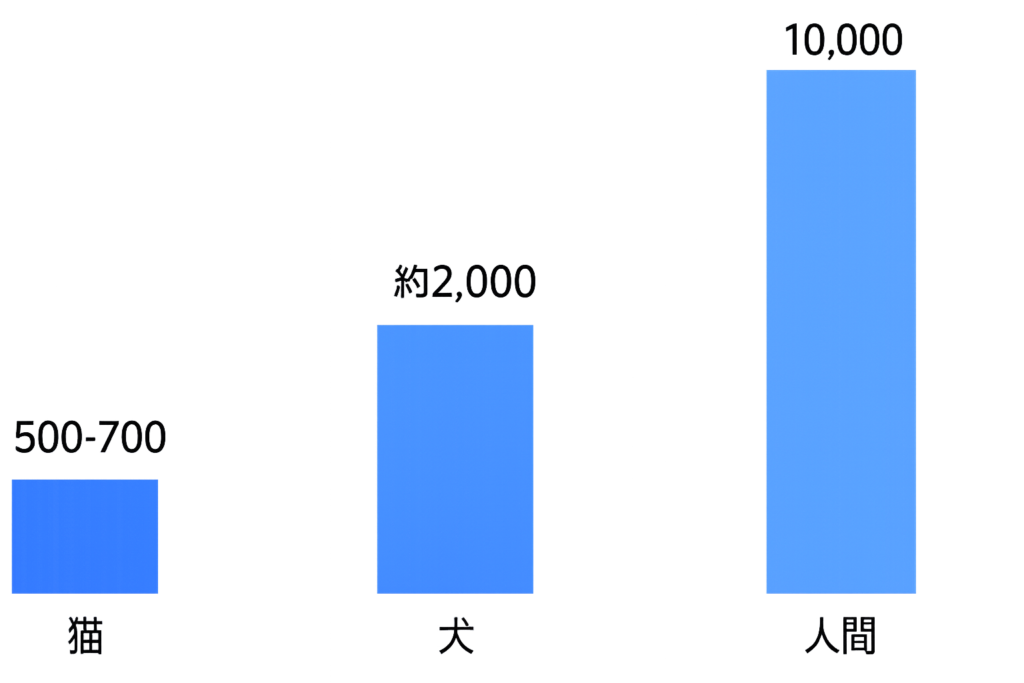
A cat’s sense of taste differs greatly from that of humans and dogs. First, in terms of physical characteristics, the number of taste buds (clusters of taste receptor cells) on a cat’s tongue is far lower than in humans—only about 500 to 700.
This is extremely low compared with humans, who have about 7,000 to 10,000 taste buds, and dogs, which have around 1,700 to 2,000. This suggests that cats have a limited ability to perceive taste itself. For this reason, cats are believed to be less sensitive than humans to subtle differences in flavor and to rely more heavily on senses other than taste.
Cats Cannot Taste Sweetness

Cats also differ in the kinds of tastes they can perceive. Humans can detect the five basic tastes: sweet, salty, sour, bitter, and umami. In cats, however, the receptor responsible for sensing sweetness has lost its function, so they can hardly detect the sweetness of sugars.
In fact, of the genes that make up the mammalian sweet taste receptor, T1R2 is missing in cats and has become a pseudogene, which is why they cannot perceive sweetness.
Sensitive to Bitter and Sour Tastes
On the other hand, cats are highly sensitive to bitterness and sourness. Like dogs, they strongly avoid bitter tastes and generally do not like sourness either. They can perceive saltiness, but they are thought to be less likely than humans to find salty taste especially appealing. Because cats are carnivores and naturally obtain sodium from their food, they are not believed to actively seek out salty flavors.
Highly Sensitive to Umami
Cats also possess the receptor responsible for perceiving umami—the T1R1/T1R3 receptor complex—and are believed to be highly sensitive to umami derived from amino acids. As obligate carnivores, cats are especially responsive to amino acid flavors, and it has been said that even a single amino acid can stimulate their taste buds.
Key Points About Feline Taste
Because of these characteristics of taste reception, the kinds of flavors cats prefer differ from those preferred by humans and dogs. Since cats cannot perceive sweetness, sugar and other sweeteners cannot be used to stimulate appetite. Instead, they are strongly attracted to umami and amino acid-derived flavors from proteins.
For example, both cats and dogs tend to like so-called “sweet amino acids” such as alanine, proline, lysine, histidine, and leucine. However, in cats, the presence of certain hydrophobic “bitter amino acids,” such as tryptophan, isoleucine, arginine, and phenylalanine, has been reported to reduce palatability.
In short, the umami compounds found in meat and fish—such as amino acids and nucleotide-derived flavor compounds—are key drivers of palatability for cats. Cats are also highly sensitive to bitterness, so even trace amounts of bitter-tasting vitamins, medicines, or plant-derived components may cause them to reject a food.
In cat food development, even necessary nutritional additives must therefore be used carefully if they have a strong bitter taste.
There is also an interesting observation regarding the order in which cats prioritize sensory input when judging whether food is “tasty.” According to one veterinary column, dogs and cats evaluate food primarily by smell first, then texture, then taste, and finally appearance.
This suggests that taste itself is less important than smell and texture. This likely reflects the relatively small number of taste buds in cats and their highly developed sense of smell. In the next section, we will look more closely at feline olfaction.
Physiological Characteristics of Smell
| Olfactory Structure | Cat | Human | Ratio |
|---|---|---|---|
| Olfactory epithelium area | Approx. 20 cm² | Approx. 4 cm² | Approx. 5 timers larger |
| Number of olfactory cells | Approx. 200 million | Approx. 40 million | Approx. 5 times more |
| Types of olfactory receptors | Approx. 677 | Approx. 400 | Approx. 1.7 times more |
Before eating, cats often sniff food carefully to determine whether it is safe and desirable. This is because their sense of smell is highly developed.
A cat’s sense of smell is vastly superior to that of humans, and this difference is also clear anatomically. The area of the olfactory epithelium—the membrane in the nasal cavity that detects odors—is about 20 cm² in cats, more than five times larger than in humans. The number of olfactory cells in this tissue is also much greater: approximately 200 million in cats compared with about 40 million in humans. As for olfactory receptor genes, around 677 types have been identified in cats, compared with roughly 400 in humans. This is slightly fewer than the 800-plus reported in dogs, although some researchers suggest that future studies may show cats to be closer to dogs than currently thought.
In other words, cats possess a highly developed olfactory system both in the number and variety of odor-detecting cells. Thanks to this powerful sense of smell, cats can detect faint odors that humans cannot and use them to distinguish between desirable and undesirable foods.
When cats sniff food before eating, they are using their strong sense of smell both to check safety and to assess palatability. It has been reported that when presented with a new food, both cats and dogs sniff it thoroughly before putting it in their mouths. By doing so, they appear to judge whether the food is fresh or spoiled and whether its smell matches something familiar from past experience.
Unlike dogs, cats do not have a natural tendency to eat carrion. As carnivores, they originally consumed fresh prey immediately after capture. As a result, they are highly sensitive to even slight signs of spoilage or unpleasant odors and may stop eating if they detect anything unusual.
For pet food developers, this means that strict control of ingredient freshness and storage conditions is essential. Oxidized fat odors and unpleasant smells caused by microbial activity must be prevented through rigorous quality control.
The effect of smell on palatability is extremely large, and the quality of the aroma directly affects how “tasty” a food seems to a cat. Many odor compounds are fat-soluble and are associated with lipids, which is why fat content is such an important factor in cat food palatability. In general, foods with higher fat content have richer aromas and tend to achieve better acceptance.
In fact, in both cats and dogs, smell and taste are considered the biggest contributors to food palatability, and higher fat content is generally associated with improved palatability. However, the type of fat also matters. Cats tend to prefer the aroma of animal fats such as beef tallow and pork fat, whereas fats high in medium-chain fatty acids, such as coconut oil, have been reported to be disliked.
Cats show especially strong aversion to caprylic acid, an eight-carbon medium-chain fatty acid, and it has even been reported that slight hydrolysis of coconut oil, producing this compound, can make a cat refuse the food. Dogs, by contrast, are not known to show the same aversion to specific fatty acids and readily accept medium-chain fatty acids.
This difference may reflect the fact that dogs evolved with a more omnivorous tendency, including scavenging, whereas cats were adapted to eating freshly caught prey rather than decomposing food. That said, not all vegetable oils are unpopular with cats. For example, some studies have found that cats show no significant difference in preference between canola oil and animal fat. This suggests that fat-derived aroma is not the only factor involved and that texture and other flavor components also play a role.
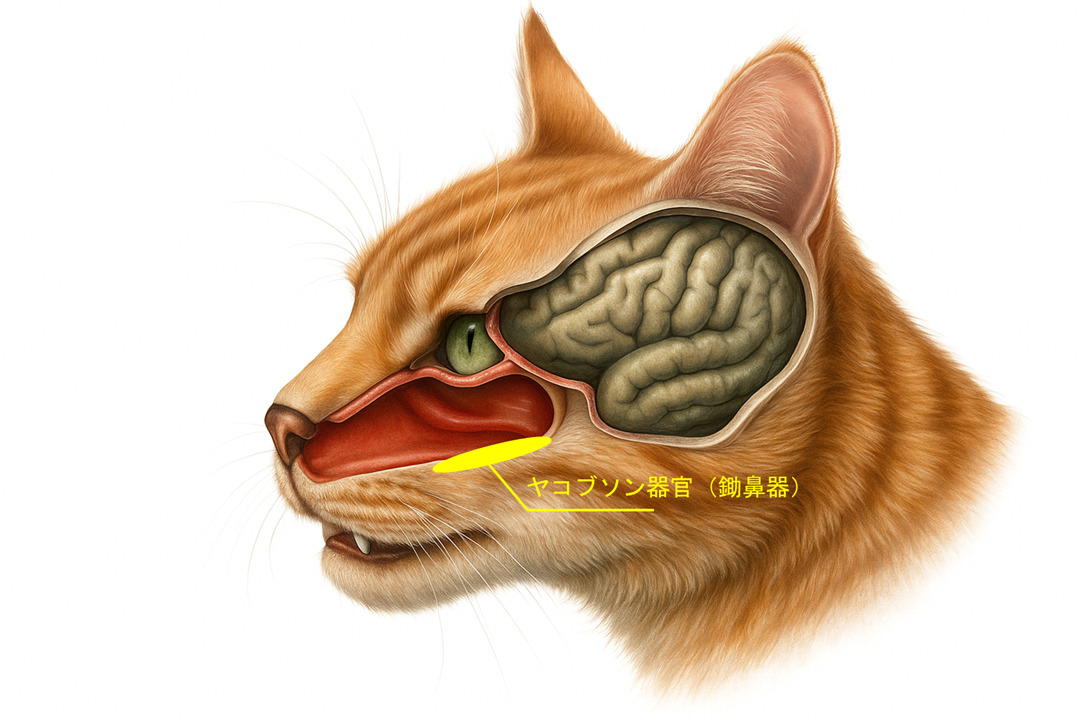
Cats also possess a special chemosensory organ in addition to their nose: the Jacobson’s organ, or vomeronasal organ. This tube-like organ is located in the roof of the mouth and is particularly effective at detecting pheromones and other specialized chemical signals. When a cat occasionally opens its mouth slightly and curls back its upper lip—a behavior known as the Flehmen response—it is using this organ to analyze odors.
The vomeronasal organ primarily responds to scents related to mating or marking, but it has also been suggested that it may react to certain compounds in food. In any case, because cats are so sensitive to smell overall, giving cat food an appealing aroma is one of the most important keys to palatability.
In pet food manufacturing, many techniques are used to appeal to feline olfaction. For example, the roasted aroma generated during heat processing through the Maillard reaction is known to stimulate feline interest. In dry food production, high temperatures may be used to promote reactions between proteins and sugars to enhance flavor.
As discussed later, it is also common to apply flavor coatings, or palatants, to the surface of kibble in the final production step, adding the aromas of meat extracts, fish extracts, oils, and other attractive compounds. For cats, being able to detect an appetizing aroma is the first step toward strong palatability.
Effects of Ingredients and Raw Materials
Types and Quality of Ingredients
Palatability is greatly influenced by the types and quality of ingredients used. Cats are obligate carnivores by nature, and in the wild they mainly feed on small animals such as mice and birds. For this reason, animal protein sources are the central factor determining palatability in cat food.
It is often said that cats prefer fish to meat, but this is not necessarily universal and is strongly influenced by upbringing and feeding experience. Cats in Japan tend to show a strong preference for the smell and flavor of fish, likely due to the long history of fish being commonly fed in households. In contrast, cats in Europe and North America may show equally strong or stronger preference for meat-based foods. Individual variation and prior exposure are major factors.
From a product development standpoint, the choice between fish-based and meat-based flavors should therefore be made in accordance with the target market and the typical preferences of cats in that market.
Protein Content
Protein content also affects feline palatability. Dogs are said to prefer diets in which approximately 25% to 30% of energy comes from protein, whereas cats readily accept high-protein diets in which 40% to 50% or more of total energy is derived from protein.
In fact, the body composition of prey animals such as mice, excluding water, consists largely of protein, and cats are adapted to this high-protein dietary pattern. In dry cat food, products containing more than 35% crude protein are not unusual, and protein-rich formulas tend to improve acceptance.
However, cats may sometimes consume lower-protein diets under certain conditions. According to one report, cats may occasionally even eat protein-free diets, which has been interpreted as a form of self-regulation to avoid metabolic acidosis caused by excessive protein intake.
In other words, although cats instinctively prefer high-protein foods, they also seem capable of adjusting intake according to their physical condition. When developing products, it is important to determine an appropriate protein level that balances both nutrition and palatability.
Types of Protein
Differences in palatability based on protein type—such as animal species or processing state—should not be overlooked. Interestingly, cats do not necessarily reject soy protein, a plant-derived protein source, whereas they may not particularly like casein, a milk-derived animal protein.
However, when casein is enzymatically hydrolyzed into peptides and amino acids, cats consume it as readily as hydrolyzed soy protein. This suggests that cats’ preference for protein is determined less by whether it is animal- or plant-derived and more by its amino acid composition and peptide flavor profile.
In other words, “meat” does not automatically mean “preferred,” nor does “plant” automatically mean “rejected.” What matters is the umami and aroma compounds present in the ingredient. Even soy can become attractive to cats if fermentation or hydrolysis produces flavorful peptides, whereas even animal ingredients such as blood meal may be disliked if they have metallic or otherwise unpleasant odors.
For this reason, ingredient selection should not be based solely on whether a raw material is animal- or plant-derived. Its flavor characteristics—such as umami intensity and the presence or absence of off-notes—must also be carefully considered.
Fat and Oils
Fat is another ingredient category directly linked to palatability. As noted earlier, fat acts as a carrier for aroma compounds, and many appetizing smells dissolve into lipids. Cat food may contain chicken fat, fish oil, beef tallow, and various other fats and oils, and optimizing both their type and level is important.
In general, high-fat diets tend to be more palatable, and this tendency appears to be particularly pronounced in cats. However, if the fat level becomes excessively high, there is also a point at which greasy texture and post-meal discomfort reduce intake.
Research has shown that when fat content reaches around 50% or more, cats may stop eating the food. It has also been reported that when texture is kept appropriate, there may be no significant palatability difference between foods containing 15% fat and those containing 45% fat.
This indicates that while cats generally prefer higher fat levels—up to a point—texture has a major influence, and simply increasing fat has its limits.
Carbohydrates and Dietary Fiber
Other factors such as carbohydrates and dietary fiber can also affect palatability indirectly. Cats do not appear to have especially strong preference for carbohydrate sources such as grains themselves, but carbohydrates can contribute to roasted flavor through the Maillard reaction and help maintain kibble structure.
The amount and type of fiber also influence gut health and post-meal satiety, which in turn can affect intake. Too much fiber may cause cats to tire of the food more quickly, while too little may affect stool quality and ultimately reduce appetite.
In palatability design, it is therefore important to look not only at protein and fat, but at the overall balance of the formula, including carbohydrates and fiber.
Palatants
Finally, it is worth discussing palatants. Palatants are flavor enhancers added to pet food or coated onto its surface to improve acceptance. Typical examples include enzymatically hydrolyzed animal proteins (often called “digests”), liver extract, cheese extract, fish meal extract, yeast extract, and various umami seasonings.
Cat palatants often use strong fish or chicken-based aromas and umami notes. Yeast extracts and nucleotide-based flavor compounds such as inosinate are especially effective because they can work synergistically with amino acids to produce strong umami. As noted earlier, cats are highly sensitive to amino acid-derived savory flavors, so the combination of amino acids, peptides, and nucleotides in a palatant can greatly improve palatability.
Some products use multiple palatants in combination to appeal to both smell and taste at the same time. Palatants are truly one of the most important tools available to cat food formulators and can be thought of as the “recipe” for the taste and aroma cats love.
As discussed later in the manufacturing section, palatants come in both liquid and powder forms, and powdered palatants are generally preferred in dry cat food. This is thought to be because dry, powder-based flavor coatings are less likely to interfere with texture than liquid coatings, which can make the kibble surface sticky.
The Relationship Between Processing and Palatability

The palatability of cat food is strongly influenced not only by ingredients but also by processing methods, manufacturing conditions, and the final texture of the product. In dry food, for example, the conditions used during extrusion—such as moisture level, temperature, and residence time—as well as the degree of drying all affect hardness, density, and surface characteristics. These physical properties directly influence the cat’s eating experience.
Texture
Texture is a key factor in palatability. Cats enjoy a crunchy texture, but they tend to dislike kibble that is too hard or foods that feel powdery in the mouth.
Research indicates that kibble density is particularly important in dry cat food palatability, and cats tend to prefer kibble with lower density—that is, kibble that is lighter and easier to break. Low-density kibble fractures more easily and creates a crisp texture, making it easier for cats’ small jaws and teeth to handle.
By adjusting extrusion conditions to increase expansion and incorporate more air, or by designing the formulation so that the product does not become too hard, manufacturers can create this lighter texture. On the other hand, if kibble is too dense and hard, cats may find it bothersome to chew and stop eating partway through the meal.
Kibble Shape
Kibble shape is another factor that should not be ignored in cats. In dogs, kibble shape—round, triangular, bone-shaped, and so on—is generally thought to have little influence on palatability. In cats, however, certain shapes may be preferred.
In research conducted by AFB in the United States, five kibble shapes—disc, star, triangle, triangle with a hole, and cylinder—were compared in palatability tests. Round and star-shaped kibble showed the highest palatability, with round shapes being preferred over star shapes.
One suggested reason is that round kibble has greater surface area and can therefore hold more palatant on its surface. The study suggests that shape affects not only the way the kibble breaks in the mouth and feels during chewing, but also how much flavor coating can adhere to it.
In actual product development, cat kibble often uses shapes with relatively large surface area and few sharp edges, such as larger round pieces or thicker kibble. Of course, manufacturing efficiency and technical constraints must also be considered, so shape design should strike a balance between palatability and practicality.
How Palatants Are Applied
As mentioned earlier, the way palatants are applied is another critical processing consideration. In dry food production, liquid or powdered palatants are typically sprayed onto the surface of the kibble after extrusion and drying.
In dog food, liquid palatants are often used to create a moist surface, but in dry cat food, powdered palatants are more commonly used. Powdered palatants are thought to have less impact on texture and help avoid a sticky surface, which cats may dislike.
Liquid palatants can provide strong aroma, but they may also produce a wetter mouthfeel that some cats do not prefer. Powdered palatants, meanwhile, require processing adjustments so they are not lost during drying, and in some cases they may be incorporated earlier into the formula so that flavor and aroma compounds are generated during heating.
In any case, deciding what kind of palatant to use and at what stage to apply it is central to palatability design.
Moisture Content
Moisture content is also closely related to palatability. In general, dogs tend to prefer soft, semi-moist foods, and increasing moisture often improves palatability for them. Reflecting this, semi-moist products marketed for improved palatability have become more common in dog food.
Cats, by contrast, are often said to prefer dry, crunchy kibble. In dry cat food, products with especially high moisture content are uncommon, and powdered flavor coatings are the norm. However, this applies mainly within the category of dry food. Looking at cats more broadly, many individuals strongly prefer wet food, which has high moisture content.
Therefore, it would be inaccurate to say simply that “cats prefer dry food.” Preference for dry or wet food varies by individual. Still, in dry cat food development, the mainstream approach is not to make the product semi-moist, but rather to dry it to an appealing crunchy texture and then enhance it with attractive aroma.
Kibble Size
Another important design factor is kibble size. Cats have small mouths, and their chewing motion is mainly vertical rather than grinding. Therefore, if the kibble is too large or too flat, they may have difficulty eating it and leave it behind.
In general, kibble for adult cats is often around 8 to 12 mm in diameter and is not made excessively large. Kitten food typically uses smaller kibble, while senior formulas may be made more fragile so they can be broken easily by cats with weaker teeth.
Overall, controlling the physical characteristics of the food through manufacturing is an essential part of maximizing palatability. Creating kibble that is easy for cats to chew, rich in aroma, and coated with flavors they enjoy is one of the key skills of successful cat food developers.
Methods for Evaluating Feline Palatability
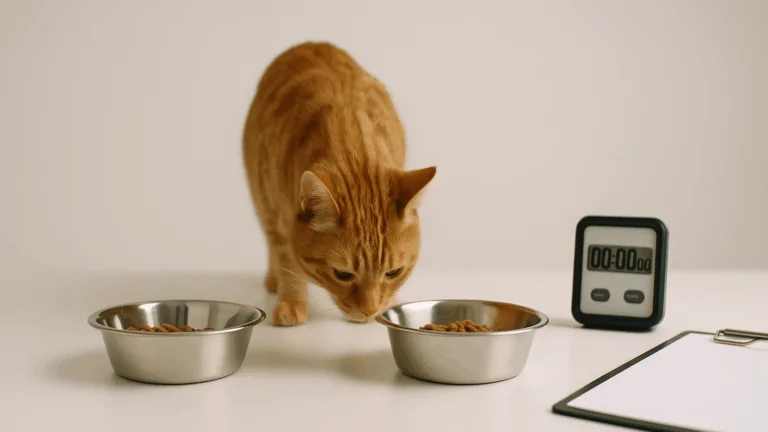
In research and product development, palatability is evaluated by actually feeding the food to cats and objectively measuring their responses. This is somewhat similar to sensory evaluation in humans, but because cats cannot verbally report preferences, palatability must be quantified indirectly through feeding behavior and intake.
Two-Bowl Test
The most commonly used method is the two-bowl test. In this method, two foods are presented to the cat at the same time, and researchers compare which food is eaten more and in what amount.
Specifically, test food A and test food B are prepared, and after the cat has been adequately fasted, equal amounts are placed in two bowls and presented simultaneously. After allowing the cat to eat freely for a set period—such as 15 minutes or one hour—the remaining amount in each bowl is measured to determine which food was consumed more.
Researchers may also record which bowl the cat approaches first at the beginning of the test (first choice), or which food is consumed more heavily during the initial period. By repeating the test over multiple days, alternating left-right bowl placement, and using a sufficient number of cats, the relative palatability of foods A and B can be assessed.
Typically, a higher consumption ratio or preference percentage is taken to indicate higher palatability. First-choice percentage is also used as a reference. For example, if a comparison between food A and food B is conducted using 10 cats over 2 days and food A shows an average intake ratio of 60:40, with 80% of cats choosing A first, A would be judged the more palatable product.
Single-Bowl Test
Although the two-bowl test is the most widely used in practice, other methods include the single-bowl test, three-way comparisons, and cafeteria-style free-choice tests. The single-bowl test involves feeding only one type of food over a certain period and observing leftover amounts or acceptance. It is useful for determining whether a new product is broadly acceptable at all.
In three-way or cafeteria-style tests, three or more foods are presented simultaneously and the animal is allowed to choose freely among them. However, in practical product development, the two-bowl test is considered the most reliable and most frequently used method because it allows a clear comparison between two candidates.
At present, there is no officially standardized method for pet food palatability testing. Each company or research institution typically uses its own testing criteria. The number of cats used and the duration of the study also vary, but in order to detect statistically meaningful differences, it is preferable to test as many cats as possible and repeat the trial multiple times.
Cats show substantial individual variation. It is not unusual for one cat to love a food that another cat completely ignores. If conclusions are drawn from only a few animals, the results may be biased. For that reason, it is important to use a sufficient sample size in order to understand overall preference trends.
Palatability test results are usually presented in terms of intake ratio, preference percentage, and statistical significance, such as p-values. In product development, obtaining evidence that a product is significantly more palatable than a competing product can be a major commercial advantage.
In addition to controlled palatability testing, home-use panels may also be conducted, in which cat owners feed the product at home and provide feedback on acceptance. These kinds of consumer-oriented studies can complement formal laboratory testing.
What matters most is that palatability evaluation ultimately relies on the cat’s own response. No matter how “delicious” or “pleasant-smelling” a food may seem to humans, it has little value if the cat does not find it appealing.
Rather than relying on the developer’s personal impression, it is essential to verify the cat’s opinion—expressed through behavior and intake—with actual data.
Conclusion: Understanding Feline Palatability
We have looked broadly at the mechanisms of feline palatability, from the physiology of taste and smell to ingredients, processing, and evaluation methods. In summary, cats have relatively few taste buds and cannot perceive sweetness, but they possess a highly developed sense of smell and respond strongly to umami and the aroma of fats.
For that reason, in cat food, smell and savory flavor are especially important. Animal proteins, high-quality fats, and the appropriate use of palatants are key. Texture and temperature also matter. Designing kibble with a hardness and shape that are easy for cats to eat, and warming food slightly to release its aroma, can also be effective strategies.
Ultimately, once a food has been developed, it must be tested with actual cats and evaluated using objective data to confirm whether they truly find it palatable.
Feline palatability is not a simple subject, but that is precisely what makes it such a rewarding area for product developers. Designing formulas based on scientific knowledge and a deep understanding of cats, and creating foods that make many cats think, “This is delicious!”—that is one of the most satisfying achievements in pet food development.