

 Shun Nagai
Dogs living indoors face a variety of environmental changes in everyday life, including being left alone, visitors, thunderstorms, fireworks, moving house, and visits to the veterinary clinic. In Japan, as dog ownership has shifted increasingly toward indoor living, these lifestyle-related variables have become more common. From both a behavioral science perspective and a product planning perspective, “stress support” has become an established area of interest.
At the same time, products in the pet food and related categories that use claims such as “stress,” “relaxation,” or “calmness” can easily drift into expressions that imply definite efficacy. This creates potential risks under the Pharmaceuticals and Medical Devices Act, the Pet Food Safety Act, and the Fair Competition Code for pet food labeling. In addition, there are many cases where the level of scientific evidence behind an ingredient does not match the strength of the marketing claims used in product copy.
This article is intended for manufacturers and D2C brand managers planning stress-support products for indoor dogs. It reviews three representative functional ingredients: L-theanine, L-tryptophan, and α-casozepine, a peptide derived from bovine αs1-casein. The article summarizes their mechanisms of action, research evidence, practical formulation considerations, and labeling considerations. It is designed to serve as an evaluation framework when considering OEM product development.
What This Article Covers
- The role pet food formulation can and cannot play in stress-support products for indoor dogs.
- Four key criteria for evaluating functional ingredients: mechanism of action, research evidence, formulation and manufacturing suitability, and labeling and regulatory suitability.
- The characteristics and formulation considerations of L-theanine, L-tryptophan, and α-casozepine.
- A comparison table of the three ingredients and how to approach combination formulations.
- Expressions to avoid from the perspectives of the Pharmaceuticals and Medical Devices Act, the Pet Food Safety Act, and the Fair Competition Code, as well as relatively lower-risk wording.
- Key points to check when selecting an OEM manufacturing partner.
The Role Pet Food Formulation Can Play
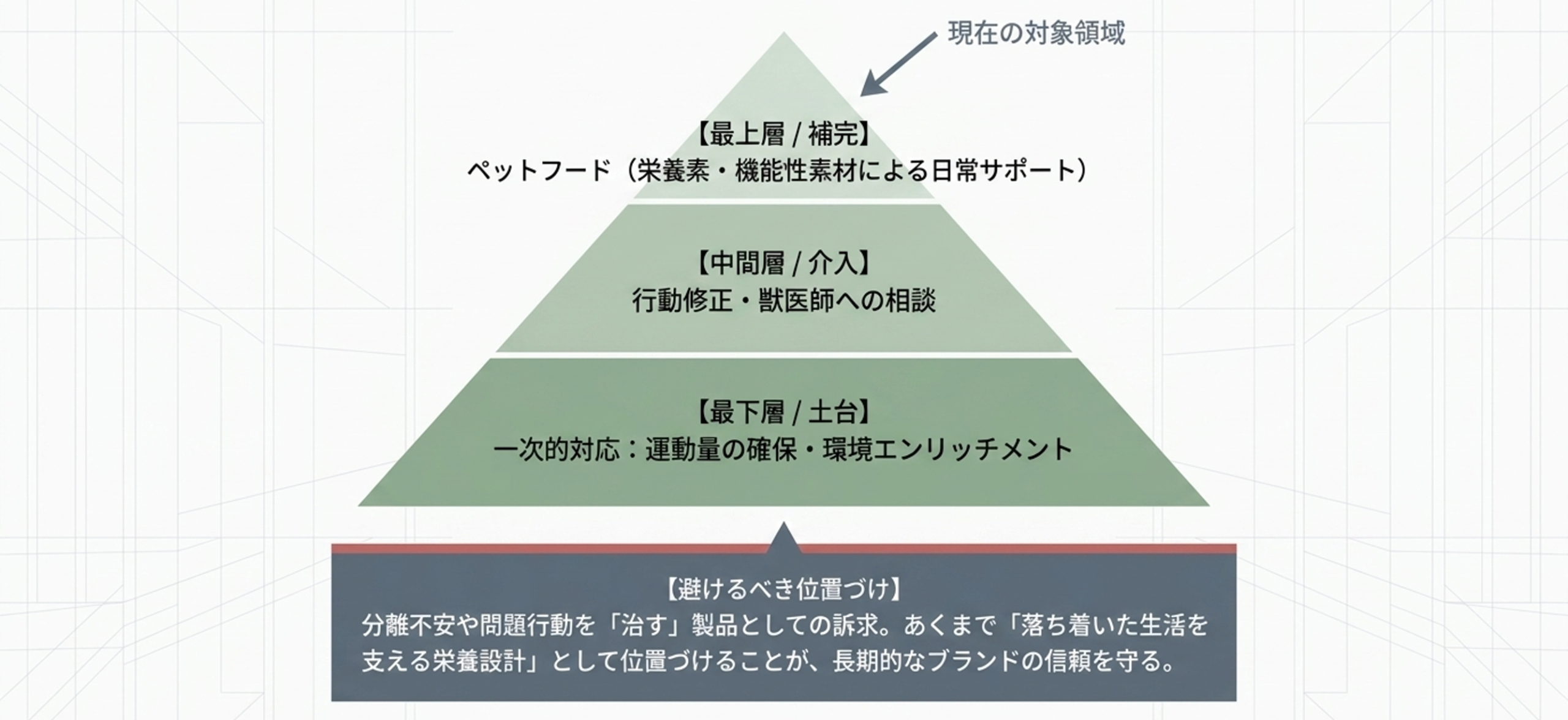
Pet foods and functional treats should be positioned as one supplementary option within a broader, multi-faceted approach to stress care, where behavioral modification and environmental management remain the primary measures. This positioning is consistent with the current state of research and with the scope of claims that can realistically be made under applicable regulations.
Common Challenges in Products for Indoor Dogs
When planning premium foods or functional treats for indoor dogs, the following issues often arise.
The first is differentiation. The indoor dog category is already crowded with competing concepts such as joint care, gut health, skin and coat support, dental care, and senior support. As a result, product planners often consider lifestyle-related angles such as “stress,” “relaxation,” or “calmness” when developing a new product concept.
The second is the dilemma of wording. Consumer-facing claims need to be clear and compelling, but stronger wording increases the risk of violating the Pharmaceuticals and Medical Devices Act or the Fair Competition Code for pet food. Even when an ingredient has research evidence, the level of evidence in dogs and the labeling restrictions applicable to pet food mean that the words available for product copy are limited.
The third is ingredient sourcing and manufacturing suitability. Even if an ingredient has a track record overseas as a functional material, product development cannot proceed to mass production unless its heat stability, retention after processing, stable supply, and availability of ingredient specifications can be confirmed for pet food manufacturing processes such as extrusion, drying, and coating.
What Nutritional Intervention Can and Cannot Do
For stress-related behavior in dogs, organizations such as the American Animal Hospital Association (AAHA), through its behavior management guidelines, and the American College of Veterinary Behaviorists (ACVB), through its statements, position behavioral modification and environmental management as primary approaches.
Nutritional intervention is generally understood as a complementary measure used alongside these approaches. Similar frameworks are shared across professional organizations and review articles. In other words, nutrition and functional ingredients are best understood as supportive tools that complement behavioral modification, environmental management, and veterinary intervention when necessary.
This premise is important when deciding on a product concept. Rather than saying that “pet food solves stress,” it is more appropriate to frame the product as “using ingredients that may provide supportive benefits through daily feeding as one option within the owner’s broader stress-care approach.” This makes it easier to maintain consistency with both regulatory requirements and the current level of scientific evidence.
4 Evaluation Criteria for Stress-Support Ingredients
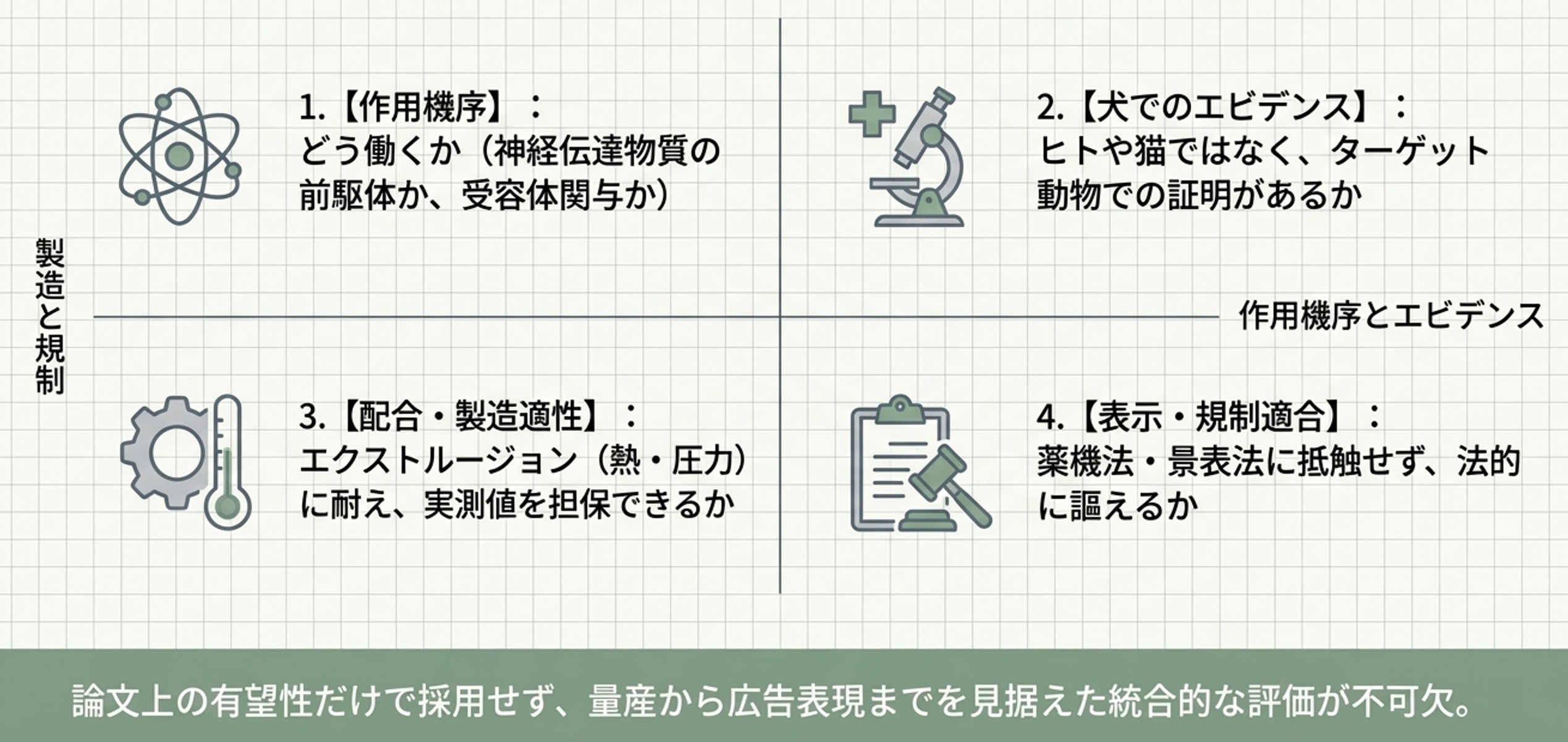
When deciding whether to adopt a functional ingredient, it is important to evaluate four criteria independently: mechanism of action, evidence in dogs, formulation and manufacturing suitability, and labeling and regulatory suitability. The ingredient selected should be consistent with the overall product plan across all four areas.
1. Mechanism of Action
The first step is to understand, based on primary literature, what the ingredient acts on and how it may influence stress responses. If the proposed mechanism is based on studies in humans or animal species other than dogs, the possibility and limits of extrapolation to dogs must also be considered.
2. Research Evidence in Dogs
It is necessary to check whether peer-reviewed studies in dogs exist, as well as the study design, including whether the study was placebo-controlled, double-blind, sample size, evaluation period, statistical significance, and effect size. Where systematic reviews exist, their overall conclusions should be prioritized. As discussed below, studies in dogs exist for all three ingredients, but the quality of the evidence varies considerably.
3. Formulation and Manufacturing Suitability
Product developers need to evaluate ingredient stability during manufacturing processes such as extrusion, drying, and coating; interactions with other nutrients and raw materials; retention of active content; effects on palatability; and lead times for raw material procurement at commercial scale. It is particularly important to obtain ingredient specifications and confirm, in advance, how content can be measured in the finished product.
4. Labeling and Regulatory Suitability
The scope of permissible wording should be checked against three frameworks: the Pet Food Safety Act, the Fair Competition Code for pet food, and the Pharmaceuticals and Medical Devices Act. In particular, expressions that imply efficacy, medicinal effects, treatment, prevention, or cure cannot be used for pet food.
L-Theanine: Characteristics and Practical Formulation
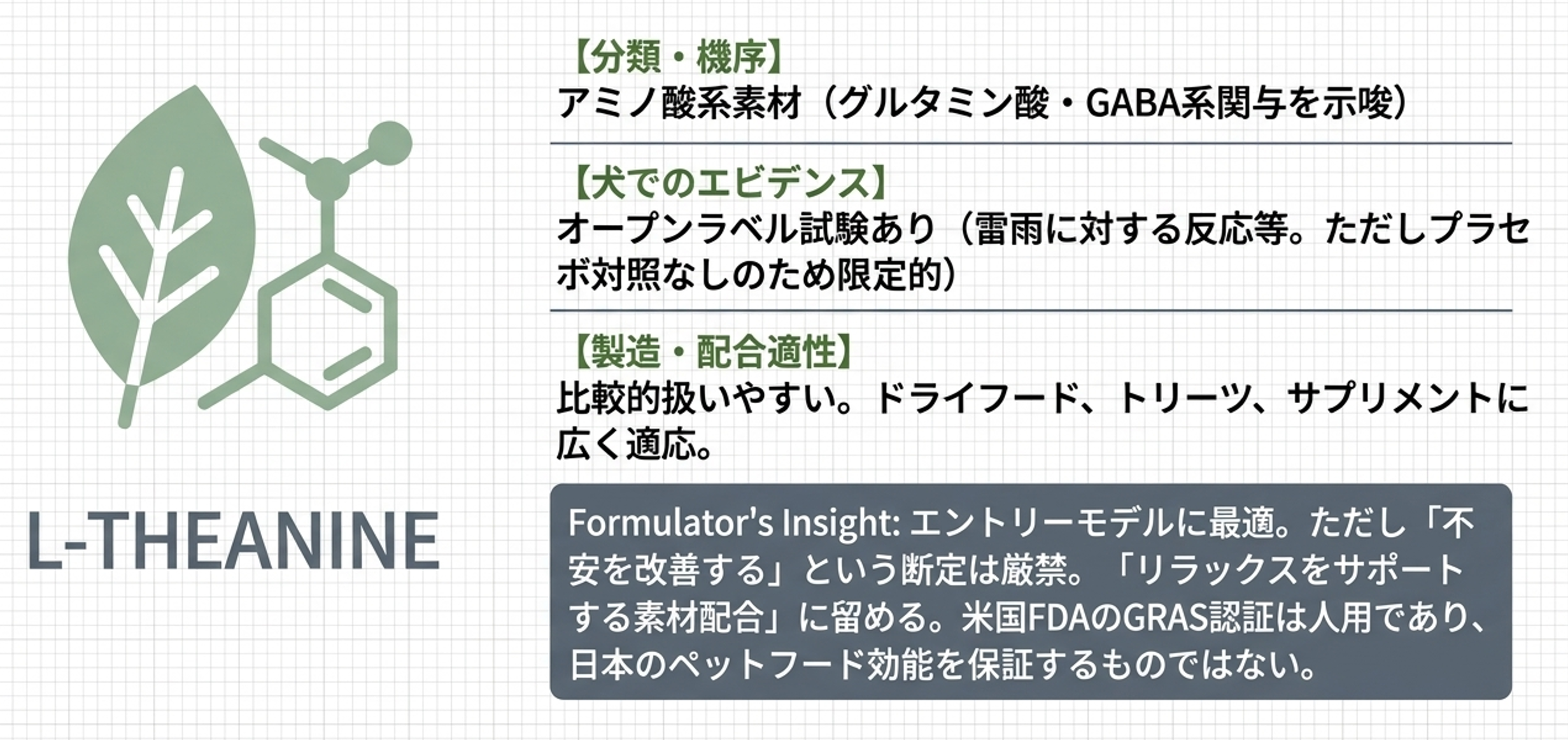
L-theanine has a relatively substantial body of research in humans. In the United States, the L-theanine ingredient “Suntheanine” is listed in an FDA GRAS Notice as safety information for food use. However, peer-reviewed studies in dogs are limited. Therefore, it is realistic to position L-theanine as an ingredient for “relaxation support” rather than as an ingredient with definitive effects in dogs.
Mechanism of Action and Product Concept
L-theanine is a free amino acid found in green tea and is structurally similar to glutamic acid. Human research, such as the review by Nathan PJ et al. 2006, has reported binding to glutamate receptors. Other studies have examined its possible influence on neurotransmitters such as GABA, dopamine, and serotonin in the brain. However, these findings should not be treated as established causal relationships; rather, they remain separate lines of research evidence.
In product concepts, L-theanine is often incorporated into daily treats, senior-focused products, or scene-based products intended for situations such as visitors or travel, using claims such as “relaxation support” or “calmness support.”
Research Evidence in Dogs
Peer-reviewed studies on L-theanine alone in dogs are limited. Pike AL et al. 2015, published in the Journal of Veterinary Behavior, was an open-label study of 18 dogs with noise phobia and reported signs of improvement. However, the study lacked a placebo control, and later research has also pointed out limitations in the study design, including the absence of a placebo-controlled design and the small sample size.
At present, no systematic review assessing multiple dog studies on L-theanine alone has been identified. The evidence in dogs remains at the level of individual studies. From the perspective of evidence hierarchy, L-theanine can be described as an ingredient with a relatively strong research base in humans but still limited high-quality research in dogs.
In product copy, it is advisable not to make definitive claims about efficacy in dogs. Wording such as “formulated with an ingredient expected to support relaxation” is more consistent with both regulatory considerations and the current state of research.
In the United States, Taiyo International, Inc. submitted GRAS Notice GRN 000209 to the FDA for its L-theanine ingredient “Suntheanine,” and in 2007 the FDA issued a no-objection letter regarding safety for food use. However, this is a safety evaluation for human food use in the United States and does not guarantee approval for use in pet food in Japan or permit efficacy claims.
Practical Formulation Considerations
L-theanine is an amino acid, and content loss may occur under the high-temperature and high-pressure conditions of extrusion. Therefore, when designing a formula, it is advisable to check not only the guaranteed values in the ingredient specification but also the content in the finished product after manufacturing. Some manufacturers add L-theanine after extrusion through a coating process, but the stability of the coating layer and content retention during storage also need to be verified.
For sourcing, L-theanine is available from several functional ingredient suppliers in grades ranging from pharmaceutical-grade to food-grade. Prices and purity vary depending on grade and manufacturing process, such as chemical synthesis or fermentation, so the ingredient should be selected according to the intended application.
L-Tryptophan: Characteristics and Practical Formulation
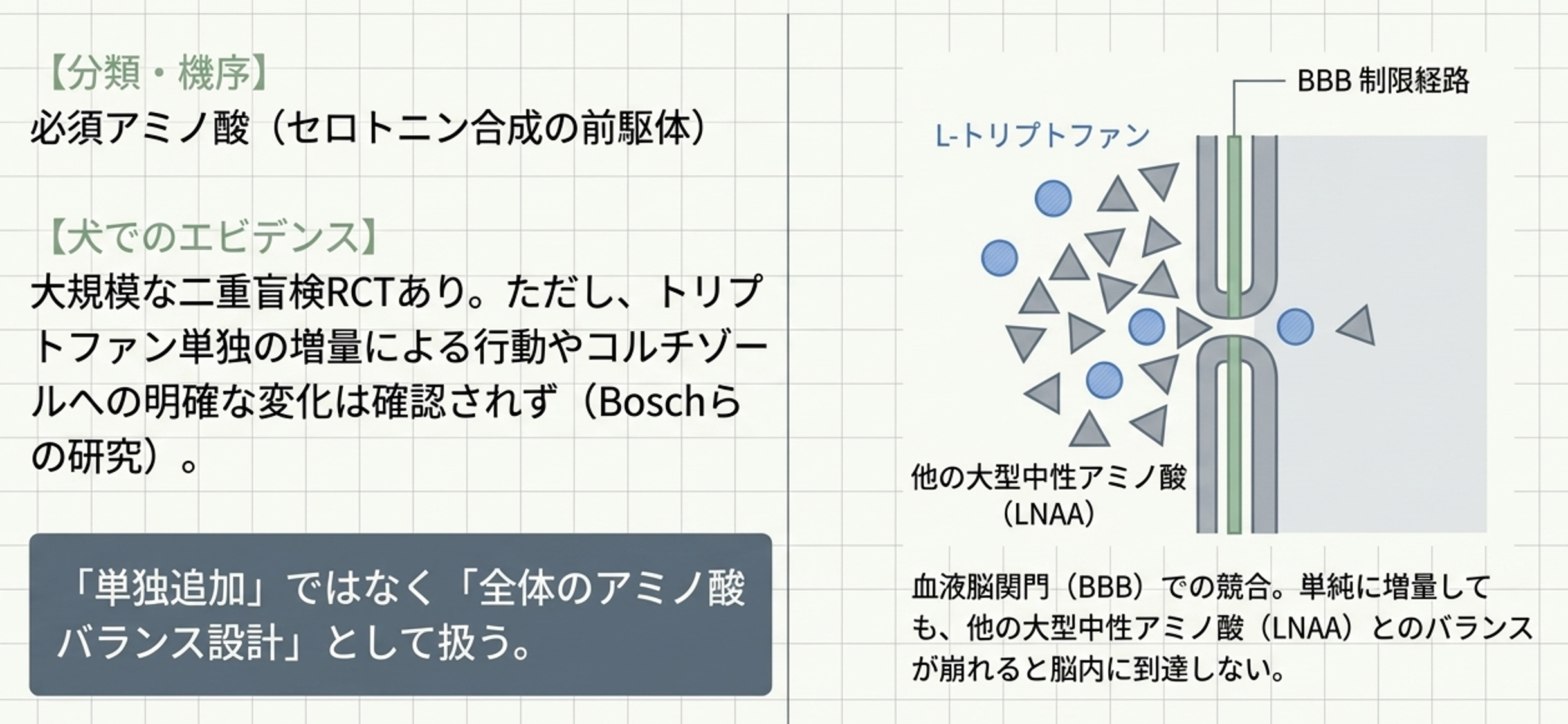
Among the three ingredients discussed in this article, L-tryptophan has a relatively larger body of research in dogs. However, review articles that systematically evaluate multiple studies conclude that tryptophan alone cannot be considered sufficient for addressing anxiety or stress-related behavior in dogs. Therefore, rather than positioning it as an “ingredient that improves anxiety,” it is more realistic to frame it as a “nutritional design enriched with an essential amino acid involved in serotonin synthesis.”
Mechanism of Action and Product Concept
L-tryptophan is an essential amino acid and a precursor of serotonin and melatonin. Brain serotonin levels are considered to be influenced by the concentration of free tryptophan in the blood and by the ratio of tryptophan to other large neutral amino acids, or LNAA, such as valine, leucine, isoleucine, phenylalanine, and tyrosine (Gazzano A, Ogi A, Torracca B, Mariti C, Casini L. 2018, Animals 8(5):63).
L-tryptophan is one of the essential amino acids required by dogs, and it serves as a precursor for serotonin and melatonin in the body. Serotonin is one of the neurotransmitters in the central nervous system and has been studied in relation to behavior and sleep in humans and several animal species. Melatonin is known for its involvement in sleep rhythm.
However, increasing tryptophan content does not directly mean that serotonin in the brain will increase. When tryptophan moves into the brain, it uses the same transport pathways as other amino acids, including valine, leucine, isoleucine, phenylalanine, and tyrosine. Therefore, the balance between tryptophan and these other amino acids is important.
In practical formulation, it is therefore necessary to evaluate not only the amount of tryptophan added but also its ratio to other amino acids. In particular, the Trp/LNAA ratio, which compares tryptophan to large neutral amino acids, is considered an important indicator when considering how easily tryptophan may move into the brain.
As a product concept, L-tryptophan may be used in nutritional enhancement formulas for dry food, senior-focused products, products for multi-dog households, or concept-based products designed around scenes such as visitors or being left alone.
Research Evidence in Dogs
Bosch G et al. 2009, published in Applied Animal Behaviour Science, was an 8-week, double-blind, placebo-controlled study involving 207 privately owned mildly anxious dogs. The tryptophan content of the test diet was increased to approximately 2.6 times that of the control diet, and the plasma Trp/LNAA ratio increased by approximately 31.2%. However, no significant improvement was observed in behavioral indicators or blood cortisol levels. This study is frequently cited in later research as a finding that calls for cautious interpretation of the effects of tryptophan supplementation alone.
A review article by Sofyan LM 2024, published in Veterinary Evidence 9(4), evaluated the effect of tryptophan supplementation on reducing anxiety signs in dogs and concluded that it is insufficient as a standalone treatment.
Therefore, in product design, L-tryptophan should not be positioned as an “ingredient that improves anxiety.” Instead, it is more consistent with the current state of research to position it as part of “a nutritional design enriched with an essential amino acid involved in serotonin synthesis,” used alongside behavioral modification and environmental management.
As reference standards, the AAFCO Official Publication 2024 nutrient profiles, revised in 2016, list 0.16% DM for adult maintenance in dogs, while NRC 2006 lists 0.14% DM. In nutritional design, a practical approach is first to meet these baseline requirements and then consider additional supplementation for functional positioning.
Practical Formulation Considerations
When formulating with L-tryptophan, attention should be paid to the Trp/LNAA ratio. In high-protein formulas, the absolute amount of LNAA increases, so simply increasing tryptophan may not necessarily improve the ratio. Gazzano A, Ogi A, Torracca B, Mariti C, Casini L. 2018 discusses the relationship between the Trp/LNAA ratio and carbohydrate content in canine diet formulation.
L-tryptophan is relatively stable during extrusion, but it may be affected by losses due to Maillard reactions and oxidative degradation during storage. For this reason, it is desirable to confirm content both through ingredient specifications and finished product analysis.
α-Casozepine: Characteristics and Practical Formulation
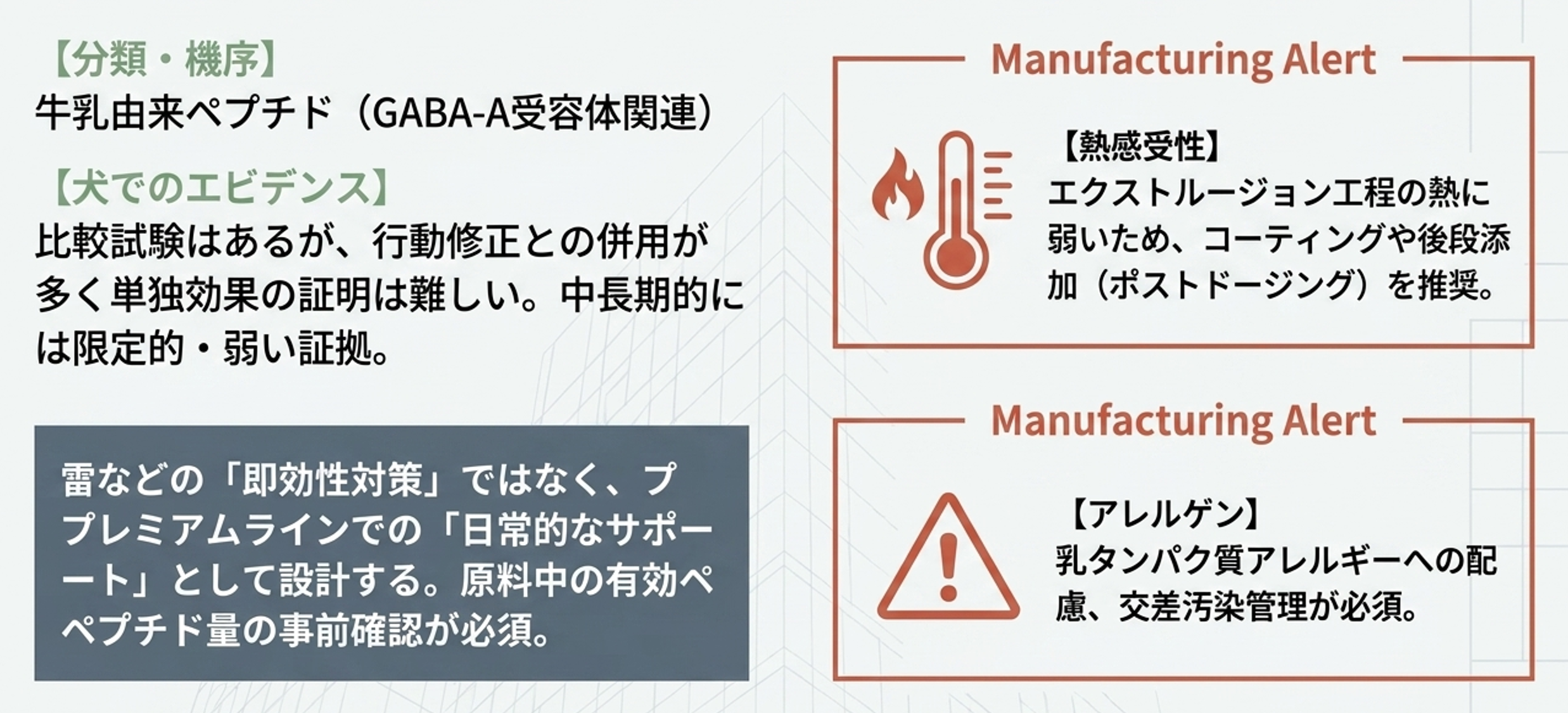
α-Casozepine is a specific peptide derived from bovine αs1-casein. Studies in dogs do exist, but many involve behavioral modification or combination formulas with other ingredients such as CBD, making it difficult to isolate the effect of α-casozepine alone. As an ingredient used for “functional peptide” positioning, its research scope needs to be communicated accurately.
Mechanism of Action and Product Concept
α-Casozepine is a tryptic peptide corresponding to residues 91–100 of bovine αs1-casein, with the sequence YLGYLEQLLR. It was identified by Miclo L et al. 2001 in FASEB Journal. Benzodiazepine-like mechanisms have been reported in animal studies, and α-casozepine has been commercialized as a “relaxation support” ingredient in both human and pet products.
It is a specific structural peptide within the broader category of casein peptides, and it is technically inaccurate to treat “casein peptide” and “α-casozepine” as identical terms. In product copy, it is preferable to clarify the relationship between the broad category and the specific peptide, using wording such as “α-casozepine, a type of casein peptide” or “milk-derived α-casozepine peptide.”
Regarding digestive stability, Cakir-Kiefer C et al. 2011, published in the Journal of Agricultural and Food Chemistry, reported on its stability under simulated digestion conditions.
In Australia, the Therapeutic Goods Administration (TGA) has established compositional guidelines for α-casozepine-enriched hydrolysed milk protein. However, these guidelines apply to human supplements and do not represent approval as a pet food ingredient. They can be used as a reference when checking ingredient quality parameters.
Research Evidence in Dogs
A representative dog study is Beata C et al. 2007, published in the Journal of Veterinary Behavior. This study involved 38 dogs and a 56-day oral administration trial of α-casozepine at 15 mg/kg/day. Improvements were reported in certain indicators, but because the study involved concurrent behavioral modification, the contribution of α-casozepine alone cannot be isolated.
As a systematic review, Buckley LA 2017 published a Knowledge Summary focused on α-casozepine in Veterinary Evidence 2(3). The review concluded that evidence does not support efficacy for acute stress, and that evidence for medium- to long-term effects is limited and carries a high risk of bias. As a basis for product design, it is realistic to build claims within the scope of this overall conclusion.
A more recent study, Flint HE, Weller JE, Hunt ABG, King T. 2025, published in Frontiers in Veterinary Science 12:1632868, evaluated treats containing CBD, L-tryptophan, and α-casozepine in dogs. However, this was a combination formula including CBD, and it cannot be interpreted as evidence for α-casozepine alone or for a two-ingredient combination of α-casozepine and L-tryptophan. The study should be cited only with the clear caveat that the contribution of each ingredient was not separated.
In cats, Landsberg G et al. 2017, published in the Journal of Feline Medicine and Surgery, reported improvements in indicators of anxiety responses in a new environment during a four-week study of a diet supplemented with α-casozepine and L-tryptophan. However, effects on fear responses toward humans were not observed, and extrapolation to dogs requires caution.
Practical Formulation Considerations
Because α-casozepine is a peptide, its structure may be affected by heat history during extrusion. For this reason, some manufacturers choose post-extrusion coating or incorporation into soft-dry or semi-moist formulas. The ingredient is supplied by several manufacturers as a functional peptide material, with each supplier having its own concentration process and specification standards.
Because it contains milk protein, which is an allergen, consideration is required for dogs with milk allergies. It is advisable to include allergen labeling and cautionary statements after considering the target dog population and individual sensitivities.
Comparison of the 3 Ingredients
The table below compares L-theanine, L-tryptophan, and α-casozepine from a practical formulation perspective.
| Evaluation Item | L-Theanine | L-Tryptophan | α-Casozepine |
|---|---|---|---|
| Main classification | Free amino acid derived from tea leaves | Essential amino acid | Peptide derived from bovine αs1-casein, YLGYLEQLLR |
| Main claim direction | Relaxation support | Nutritional enhancement plus serotonin synthesis precursor | Relaxation support as a functional peptide |
| Peer-reviewed studies in dogs | Limited, including Pike 2015, n=18, open-label study | Moderate, including Bosch 2009 and Templeman 2018/2019 | Moderate, including Beata 2007, n=38, and Flint 2025; many studies involve combination formulas |
| Review article conclusions | No identified systematic review focused on dogs; evidence remains at the individual-study level | Sofyan 2024: insufficient as a standalone treatment | Buckley 2017, focused on α-casozepine: effects are limited and risk of bias is high |
| AAFCO standard | Not specified | Adult maintenance: 0.16% DM, 2016 revision | Not specified |
| FEDIAF standard | Not specified | Specified | Not specified |
| U.S. FDA safety information | GRN 000209, no-objection letter in 2007 for human food use | Treated as a food-related amino acid | No applicable GRAS Notice |
| Physical and formulation considerations | Amino acid; content loss may occur during extrusion. Coating is an option. | Relatively stable during extrusion; attention needed for Maillard reaction losses. | Peptide; structure may change with heat history. Soft-dry or coating applications are options. |
| Allergen considerations | Generally low risk | Essential amino acid, often derived from common raw materials | Contains milk protein; consideration required for milk allergy |
| Suitable product formats | Treats and coated dry food | Dry food incorporated into nutritional design | Soft-dry products, semi-moist products, and coated formats |
How to Approach Combination Formulations
When using multiple ingredients in combination, product claims should not exceed the scope of evidence available for each individual ingredient. It is realistic to position the product as “a formulation combining multiple functional ingredients” and construct claims based on the independent evidence for each ingredient.
L-Theanine-Only Formula
This type of formula is suitable for daily treats or coated dry foods with “relaxation support” as the central claim. By confirming ingredient specifications and finished product content analysis, and by keeping claims at the level of “formulated with this ingredient,” the product can remain consistent with both regulatory considerations and the current state of research.
L-Tryptophan-Enriched Formula
This is a formulation approach in which L-tryptophan is incorporated into the nutritional design of the product after meeting AAFCO and FEDIAF requirements for adult maintenance. The key is to design the formula with the Trp/LNAA ratio in mind and to secure a stable supply of the ingredient. Based on the conclusions of review articles, wording such as “a formula enriched with an essential amino acid that serves as a precursor for serotonin synthesis” is more consistent with the evidence and the claim direction.
α-Casozepine Plus L-Tryptophan Formula
This approach combines a functional peptide with an essential amino acid. As noted above, Flint HE, Weller JE, Hunt ABG, King T. 2025 was a study of a three-ingredient formula that included CBD, and it cannot be cited as evidence for the effect of α-casozepine plus L-tryptophan alone. Landsberg G et al. 2017 was a study in cats, and extrapolation to dogs requires caution.
Therefore, in product copy, it is realistic to state the formulation fact, such as “formulated with both α-casozepine and L-tryptophan,” while avoiding definitive effect claims such as “synergistic effect” or “additive effect.”
Wording to Avoid in Labeling and Advertising
Under the Pet Food Safety Act, the Fair Competition Code for pet food, and the Pharmaceuticals and Medical Devices Act, expressions that make definitive efficacy claims or imply medicinal effects cannot be used. On the other hand, there may be room to balance product appeal and regulatory suitability by replacing such wording with qualified expressions that describe possibilities suggested by research.
Under Article 5, Paragraph 1 of the Pet Food Safety Act, the Ministerial Ordinance on Standards and Specifications for Pet Food, issued by the Ministry of Agriculture, Forestry and Fisheries and the Ministry of the Environment, requires five items to be displayed on pet food containers and packaging: product name, ingredients, expiration date, country of origin, and business operator name and address. Article 6 of the same Act prohibits the sale of pet food that does not comply with these labeling standards.
In addition, the Fair Competition Code of the Pet Food Fair Trade Association prohibits expressions that definitively state efficacy or could cause the product to be mistaken for a medicinal product. If a product uses claims that may fall under therapeutic diet positioning, there is also a risk that it may become subject to regulation under the Pharmaceuticals and Medical Devices Act.
Expressions to Avoid
The table below summarizes expressions that are often used in stress-support products and the regulatory risks they may create.
| Expression to Avoid | Potential Risk |
|---|---|
| “Reduces stress” | Definitive efficacy claim; may be considered a medicinal claim under the Pharmaceuticals and Medical Devices Act |
| “Improves separation anxiety” | Treatment claim for a condition; may be considered therapeutic diet or medicinal positioning |
| “Solves insomnia” | Definitive efficacy claim; medicinal claim |
| “Restores calmness” | Definitive effect claim |
| “Cures XX condition” | Cure claim; medicinal claim |
| “Fast-acting” | Definitive efficacy claim |
| “No side effects” or “100% safe” | Absolute safety claim |
| “Recommended by animal hospitals” or “veterinarian recommended,” without specific evidence | May be seen as medicinal positioning or as misleading representation under the Act against Unjustifiable Premiums and Misleading Representations |
| “Proven effective in XX study,” when the claim exceeds the scope of the research | Risk of unsubstantiated advertising or violation of the Fair Competition Code |
Examples of Relatively Lower-Risk Expressions
The following are examples of expressions generally considered lower-risk in light of the current research and regulatory framework. Final acceptability should be determined based on the overall context of each product claim, ideally after confirmation with the Pet Food Fair Trade Association or a legal specialist.
| Relatively Lower-Risk Expression | Notes |
|---|---|
| “Formulated with relaxation-support ingredients” | Avoids definitive efficacy claims while staying within the scope of ingredient-based positioning |
| “A formula enriched with an essential amino acid that serves as a precursor for serotonin synthesis” | Based on nutritional design and factual ingredient function |
| “Formulated with α-casozepine, a functional peptide attracting attention” | Describes the ingredient’s characteristics objectively |
| “As a daily feeding option suited to different lifestyle scenes” | Suggests usage context without making efficacy claims |
| “Developed to support everyday life” | Describes product concept without claiming treatment or improvement |
Key Points When Selecting an OEM Partner
When outsourcing the production of a product containing stress-support ingredients, it is important to check three points in advance: whether ingredient specifications are available, whether finished product content can be verified after manufacturing, and whether the OEM partner can advise on labeling language.
Availability of Ingredient Specifications
Functional ingredients differ by supplier, grade, and lot in terms of purity, content, impurity profile, and manufacturing process, such as synthesis or fermentation. It is important to confirm whether a specification sheet and Certificate of Analysis, or CoA, can be issued for each lot and whether traceability is secured. This matters for both product quality stability and consistency between claims and supporting evidence.
For peptide-based ingredients such as α-casozepine, suppliers may differ in their concentration processes and potency-labeling methods. It is therefore advisable to align specifications with both the ingredient supplier and the OEM manufacturer during the formulation design stage.
Ability to Verify Content After Manufacturing
It is desirable to have a system in place, either through third-party testing or the OEM manufacturer’s internal analytical capabilities, to verify whether the functional ingredient remains in the finished product at the intended level after processes such as extrusion, drying, and coating. If the amount added as raw material differs significantly from the content in the finished product, the basis for claims such as “contains XX mg” may be undermined.
Ability to Consult on Labeling Language
Stress-support claims carry significant labeling and advertising risk. Before launch, it is important to confirm whether the OEM partner understands the Pet Food Safety Act, the Fair Competition Code, and the Pharmaceuticals and Medical Devices Act, and whether it has experience reviewing labeling language or consulting with the Pet Food Fair Trade Association. This can help reduce regulatory risk after commercialization.
Model Product Development Cases
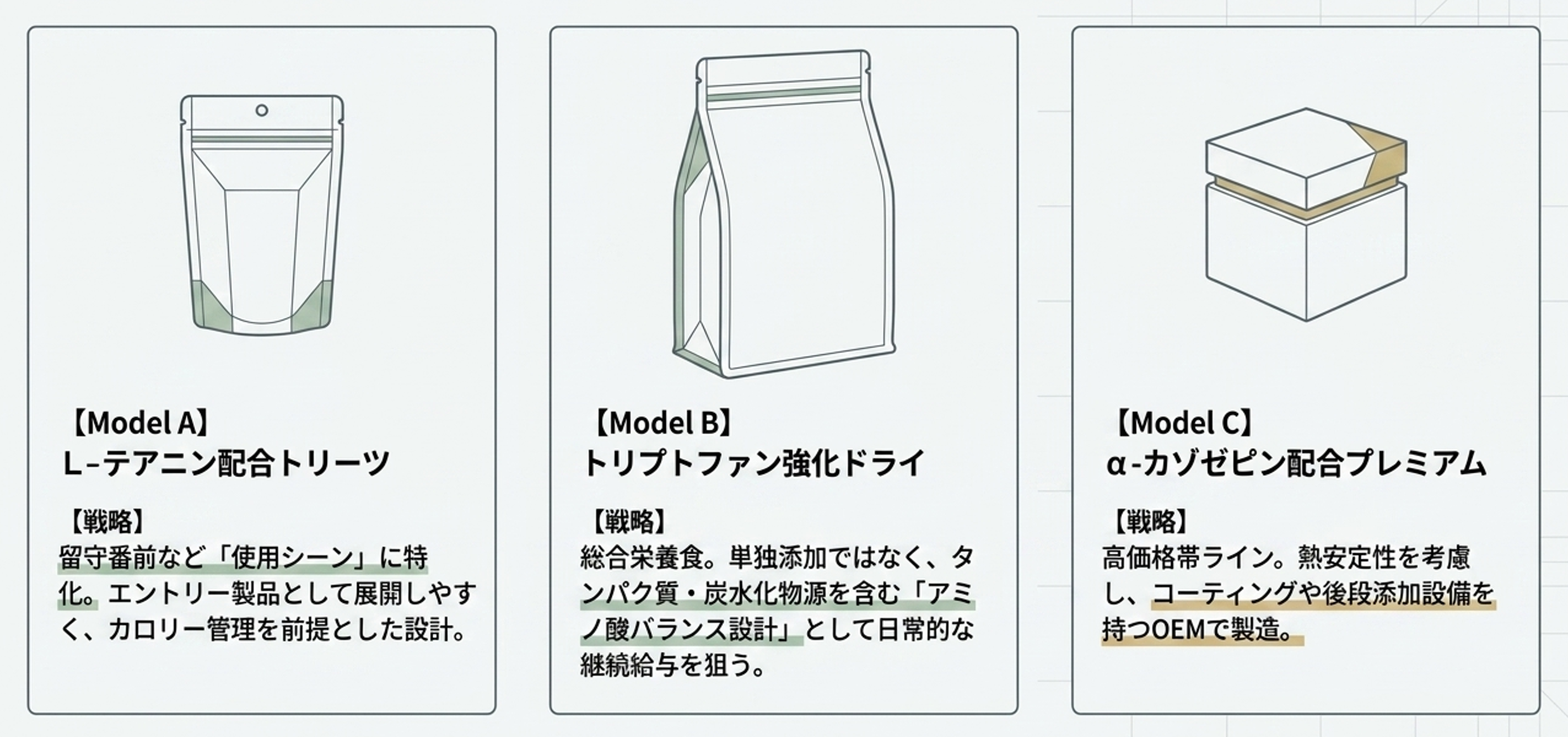
The following are representative model cases for product development using each of the three ingredients. Actual product design should be adjusted according to brand concept, target dog type, price range, and distribution channel.
Model A: L-Theanine Treats
This model is designed as a daily treat or a coated treat positioned around specific scenes such as visitors or travel. The ingredient may be a standardized L-theanine material such as Suntheanine, the L-theanine product of Taiyo International, Inc., or another standardized L-theanine ingredient. Post-extrusion addition through a coating process can be used to help maintain content. Claims should remain at the level of “formulated with L-theanine as an ingredient expected to support relaxation,” and product copy should avoid definitive efficacy claims in dogs.
Model B: Tryptophan-Enhanced Dry Food
This model is designed as a nutritionally enhanced dry food for senior dogs or multi-dog households. The formula first meets AAFCO and FEDIAF adult maintenance requirements, then balances the formula with attention to the Trp/LNAA ratio. The claim direction should focus on nutritional design, such as “a formula enriched with an essential amino acid that serves as a precursor for serotonin synthesis,” while avoiding definitive claims about stress.
Model C: Premium Formula with α-Casozepine
This model is designed as a premium food or semi-moist treat with a functional peptide positioning. The ingredient may be an α-casozepine-enriched hydrolysed milk protein that aligns with quality parameters referenced in the TGA compositional guidelines. A soft-dry format or coating process may be used to reduce heat exposure. Because the ingredient is derived from milk protein, allergen labeling and cautionary statements should be included. Claims should remain at the level of “formulated with α-casozepine, a functional peptide attracting attention.”
Summary: Four Key Takeaways
- At present, the three main ingredient categories in practical use for stress-support products for indoor dogs are L-theanine, L-tryptophan, and α-casozepine.
- Although studies in dogs exist for all three ingredients, limitations in study design mean that none can currently be described as definitively “effective” as a standalone ingredient.
- From the perspectives of the Pet Food Safety Act, the Fair Competition Code, and the Pharmaceuticals and Medical Devices Act, definitive efficacy claims such as “cures,” “improves,” or “reduces” cannot be used. More realistic wording includes qualified expressions such as “reported to support.”
- When selecting an OEM manufacturing partner, it is important to confirm three points: ingredient specifications, finished product content verification, and the ability to consult on labeling language.
FAQ
Q1. Which ingredient has the most reliable effect among L-theanine, L-tryptophan, and α-casozepine?
A.) At present, no ingredient can be described as having the “most reliable effect.” Studies in dogs exist for all three ingredients, but systematic review-level evidence, such as Sofyan 2024 for L-tryptophan and Buckley 2017 for α-casozepine, concludes that the evidence is insufficient as a standalone treatment or that effects are limited with a high risk of bias. For L-theanine, no systematic review focused on dogs has been identified. In product design, it is more realistic to select ingredients based on consistency with the product concept, accurate communication of the research scope, and practical formulation suitability, rather than on certainty of effect.
Q2. Can a stress-support product claim that it “works” or “reduces stress”?
A.) No. Under the Fair Competition Code of the Pet Food Fair Trade Association, definitive efficacy claims are prohibited. Expressions that may cause a product to be mistaken for a medicinal product also carry regulatory risk under the Pharmaceuticals and Medical Devices Act. It is more realistic to use qualified wording such as “formulated with an ingredient reported to have potential relaxation-support benefits.”
Q3. Can a combination of the three ingredients be described as having a synergistic effect?
A.) No. Product copy should not use expressions such as “synergistic effect” or “additive effect.” Flint HE, Weller JE, Hunt ABG, King T. 2025 was a study of a three-ingredient formula containing CBD, and the contribution of each ingredient was not separated. Landsberg G et al. 2017 was a two-ingredient combination study in cats, and extrapolation to dogs requires caution. A combination formula should be positioned as “a formulation combining multiple ingredients,” with claims constructed from the independent evidence for each ingredient.
Q4. Is special approval required when adding functional ingredients to pet food?
A.) For sale as general pet food, products are handled within the framework of the Pet Food Safety Act. However, claims that may fall under therapeutic diet positioning or medicinal efficacy claims may create a risk of regulation under the Pharmaceuticals and Medical Devices Act. Labeling language should ideally be reviewed in advance by the Pet Food Fair Trade Association or a legal specialist.
Q5. What should be checked first with an OEM partner?
A.) Before entering into a contract, it is important to confirm three points: whether ingredient specifications and lot-by-lot Certificates of Analysis can be issued, how the content of the functional ingredient can be verified in the finished product after manufacturing, and whether the OEM partner can review labeling language in advance. Without these systems in place, it may be difficult to ensure product quality stability and consistency between claims and supporting evidence.
Q6. What should be considered when using overseas functional ingredients in products for the Japanese market?
A.) Even if an ingredient has a track record overseas as a functional material, it is necessary to confirm whether ingredient specifications are available for the Japanese market, whether stable supply can be secured, whether import restrictions apply, especially for certain animal-derived ingredients, how the ingredient should be named on the label, and how it is treated under the Fair Competition Code for pet food.
References and Sources
Peer-Reviewed Articles and Review Articles
- Miclo L, Perrin E, Driou A, Papadopoulos V, Boujrad N, Vanderesse R, Boudier JF, Desor D, Linden G, Gaillard JL. Characterization of α-casozepine, a tryptic peptide from bovine αs1-casein with benzodiazepine-like activity. FASEB J. 2001;15(10):1780-1782. PMID: 11481228. https://pubmed.ncbi.nlm.nih.gov/11481228/
- Cakir-Kiefer C, Le Roux Y, Balandras F, Trabalon M, Dary A, Laurent F, Gaillard JL, Miclo L. In vitro digestibility of α-casozepine, a benzodiazepine-like peptide from bovine casein, and biological activity of its main proteolytic fragment. J Agric Food Chem. 2011;59(9):4464-4472. PMID: 21417274. https://pubmed.ncbi.nlm.nih.gov/21417274/
- Bosch G, Beerda B, Beynen AC, van der Borg JAM, van der Poel AFB, Hendriks WH. Dietary tryptophan supplementation in privately owned mildly anxious dogs. Appl Anim Behav Sci. 2009;121(3-4):197-205. https://www.sciencedirect.com/science/article/abs/pii/S0168159109002834
- Templeman JR, Davenport GM, Cant JP, Osborne VR, Shoveller AK. The effect of graded concentrations of dietary tryptophan on canine behavior in response to the approach of a familiar or unfamiliar individual. Can J Vet Res. 2018;82(4):294-305. https://pmc.ncbi.nlm.nih.gov/articles/PMC6168022/
- Templeman JR, Mansilla WD, Fortener L, Shoveller AK. Tryptophan requirements in small, medium, and large breed adult dogs using the indicator amino acid oxidation technique. J Anim Sci. 2019;97(8):3274-3285. PMID: 31363781. https://pmc.ncbi.nlm.nih.gov/articles/PMC6667247/
- Beata C, Beaumont-Graff E, Diaz C, Marion M, Massal N, Marlois N, Muller G, Lefranc C. Effects of α-casozepine (Zylkene) versus selegiline hydrochloride (Selgian, Anipryl) on anxiety disorders in dogs. J Vet Behav. 2007;2(5):175-183. https://www.sciencedirect.com/science/article/abs/pii/S1558787807002031
- Pike AL, Horwitz DF, Lobprise H. An open-label prospective study of the use of L-theanine (Anxitane) in storm-sensitive client-owned dogs. J Vet Behav. 2015;10(4):324-331. https://www.sciencedirect.com/science/article/abs/pii/S1558787815000568
- Dramard V, Kern L, Hofmans J, Halsberghe C, Mombiela DV. Effect of l-theanine tablets in reducing stress-related emotional signs in cats: an open-label field study. Irish Vet J. 2018;71:21. https://pmc.ncbi.nlm.nih.gov/articles/PMC6178259/
- Buckley LA. Is Alpha-casozepine Efficacious at Reducing Anxiety in Dogs? Veterinary Evidence. 2017;2(3). DOI: 10.18849/ve.v2i3.67. https://veterinaryevidence.org/index.php/ve/article/view/67
- Sofyan LM. In adult dogs is supplementary tryptophan in the diet effective in reducing signs of anxiety? Veterinary Evidence. 2024;9(4). DOI: 10.18849/ve.v9i4.686. https://pmc.ncbi.nlm.nih.gov/articles/PMC12710391/
- Landsberg G, Milgram B, Mougeot I, Kelly S, de Rivera C. Therapeutic effects of an alpha-casozepine and L-tryptophan supplemented diet on fear and anxiety in the cat. J Feline Med Surg. 2017;19(6):594-602. https://pmc.ncbi.nlm.nih.gov/articles/PMC5505228/
- Flint HE, Weller JE, Hunt ABG, King T. Treats containing cannabidiol, L-tryptophan and α-casozepine have a mild stress-reducing effect in dogs. Front Vet Sci. 2025;12:1632868. DOI: 10.3389/fvets.2025.1632868. https://www.frontiersin.org/journals/veterinary-science/articles/10.3389/fvets.2025.1632868/full
- Nathan PJ, Lu K, Gray M, Oliver C. The neuropharmacology of L-theanine (N-ethyl-L-glutamine): a possible neuroprotective and cognitive enhancing agent. J Herb Pharmacother. 2006;6(2):21-30. PMID: 17182482. https://pubmed.ncbi.nlm.nih.gov/17182482/
- Gazzano A, Ogi A, Torracca B, Mariti C, Casini L. Plasma Tryptophan/Large Neutral Amino Acids Ratio in Domestic Dogs Is Affected by a Single Meal with High Carbohydrates Level. Animals (Basel). 2018;8(5):63. https://pmc.ncbi.nlm.nih.gov/articles/PMC5981274/
- Kurachi T, Irimajiri M, Mizuta Y, Satoh T. Dogs predisposed to anxiety disorders and related factors in Japan. Appl Anim Behav Sci. 2017;196:69-75. https://www.sciencedirect.com/science/article/abs/pii/S0168159117301958
Regulations and Public Guidelines
- U.S. Food and Drug Administration. GRAS Notice GRN 000209 (L-theanine; Notifier: Taiyo International, Inc.). No-objection letter dated Feb 5, 2007. https://hfpappexternal.fda.gov/scripts/fdcc/index.cfm?set=GRASNotices&id=209
- AAFCO. Official Publication 2024(dog and cat food nutrient profiles 部分は2016改訂). https://www.aafco.org/resources/publications/
- National Research Council. Nutrient Requirements of Dogs and Cats. 2006. National Academies Press.
- FEDIAF. Nutritional Guidelines for Complete and Complementary Pet Food for Cats and Dogs. 2025. https://europeanpetfood.org/wp-content/uploads/2025/09/FEDIAF-Nutritional-Guidelines_2025-ONLINE.pdf
- Therapeutic Goods Administration (Australia). Compositional Guidelines: alpha-casozepine-enriched hydrolysed milk protein. https://www.tga.gov.au/resources/resources/compositional-guidelines/alpha-casozepine-enriched-hydrolysed-milk-protein
- American Animal Hospital Association (AAHA). Behavior Management Guidelines. https://www.aaha.org/resources/2015-aaha-canine-and-feline-behavior-management-guidelines/
- 一般社団法人ペットフード協会. 2025年全国犬猫飼育実態調査. https://petfood.or.jp/pdf/data/2025/3.pdf / https://petfood.or.jp/pdf/data/2025/4.pdf
- 農林水産省. 「愛がん動物用飼料の安全性の確保に関する法律」第5条第1項および第6条/「愛玩動物用飼料の成分規格等に関する省令」(平成21年農林水産省令・環境省令第1号)別表第3/ペットフードの表示に関するQ&A. https://www.maff.go.jp/j/syouan/tikusui/petfood/p_qa/hyouji.html
- ペットフード公正取引協議会. https://pffta.org/