

 Shun Nagai
Formulating dry food for adult cats is not simply a matter of “meeting the standard.” AAFCO compliance is the foundation, but effective product design requires optimizing the entire formula from end to end—starting with nutrient ratios such as Ca:P and taurine, and extending through urinary health, palatability, digestibility, ingredient selection, and manufacturing conditions. Rather than just listing target values, this article explains the practical mindset of linking formulation × feeding amount.
Fundamentals of Setting Nutritional Targets
| Nutrient | Minimum Requirement | Recommended Range | Maximum Tolerance |
|---|---|---|---|
| Protein | 26.0% or more | 30–35% | – |
| Fat | 9.0% or more | 10–18% | – |
| Taurine | 0.1% or more | 0.15–0.2% | – |
| Calcium:Phosphorus Ratio | 1:1 | 1.1:1–1.5:1 | 2:1 |
When designing food for adult cats, the basic requirement is to include all essential nutrients in appropriate amounts based on nutritional standards established by organizations such as AAFCO (Association of American Feed Control Officials).
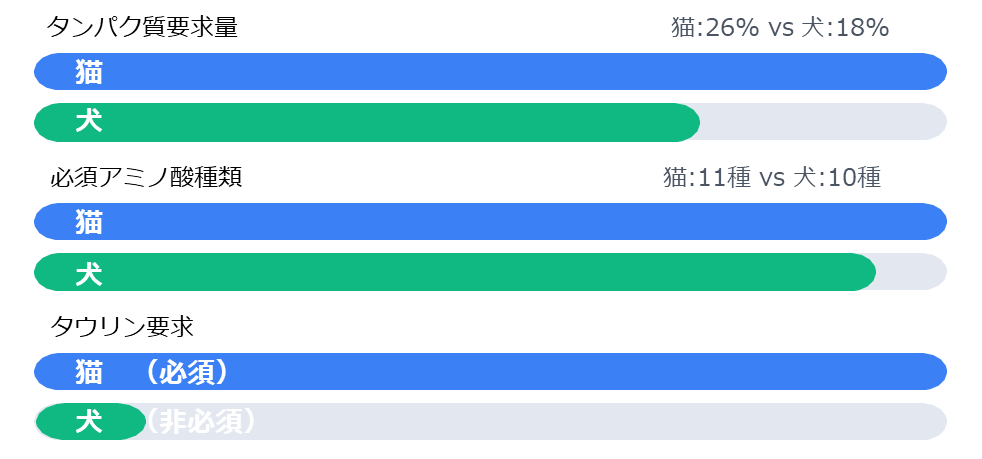
Specific nutrient requirements are outlined in guidelines such as those from AAFCO and FEDIAF (European Pet Food Industry Federation). For adult maintenance, AAFCO sets minimum levels of 26% protein and 9% fat on a dry matter basis.
Taurine: An Essential Nutrient for Cats
These guidelines also address detailed requirements for amino acids, fatty acids, vitamins, and minerals. Taurine is especially important because cats require nutrients that dogs do not, and adequate intake from animal-derived ingredients is essential.
Taurine deficiency can lead to cardiomyopathy and retinal degeneration. For this reason, AAFCO sets a minimum taurine level as well. In dry food, for example, this is around 25 mg/100 kcal, which is roughly equivalent to 0.1% or more.
The Balance Between Calcium and Phosphorus
Calcium and phosphorus balance (the Ca:P ratio) is also critical for skeletal health. In general, a ratio close to 1:1 should be maintained. Excess phosphorus can interfere with calcium absorption, while deficiency or imbalance can negatively affect bone metabolism and parathyroid function.
Protein-to-Energy Ratio
In nutritional design, it is not enough simply to exceed minimum values for each nutrient. What matters is overall nutritional balance. One especially important indicator for obligate carnivores like cats is the ratio of protein to energy.
High-fat diets tend to reduce protein density (g/1000 kcal), even when calorie intake remains the same. If that density falls below the required level, the body may break down its own protein reserves to secure essential amino acids, with part of that protein then lost as energy.
Therefore, nutrient concentrations must be designed with both energy density and feeding amount in mind, so that required levels of protein and other nutrients can still be supplied even when intake volume is low. In other words, because energy design is directly tied to feeding amount design, formulation and feeding amount should always be considered together.
For example, if fat content is increased to make the food more calorie-dense, protein content must also be raised proportionally or the diet may become protein-deficient. In short, nutritional targets for adult cat food should prioritize balance over absolute numbers, ensuring that nutrients are present in appropriate proportions to one another.
Urinary Health Design: The Top Priority for Adult Cats

One of the highest-priority risk management issues in adult cat food development is urinary health. Cats are prone to urinary tract problems such as urolithiasis and lower urinary tract disease, so the formula must be designed to help reduce these risks. The main factors affecting urinary health are urine pH, mineral composition—especially magnesium and phosphorus—and water intake.
pH (Acidity)
A cat’s urine is naturally slightly acidic, around pH 6. When urine remains neutral to alkaline (pH 6.5 or above) over time, the risk of struvite crystal formation increases significantly.
In one study, cats with a urine pH of 6.5–6.9 were reported to be twice as likely to form struvite stones as cats with a urine pH of 6.0–6.2. For this reason, commercial urinary care diets often use formulations that keep urine moderately acidic (around pH 6.0–6.5) and limit magnesium content to help prevent struvite stones.
In fact, since the 1980s, the spread of therapeutic diets that restrict magnesium and acidify urine has substantially reduced the incidence of feline struvite stones.
However, excessive acidification also requires caution. If urine pH is pushed too far below 6.0, the risk of calcium oxalate stones may rise instead. This is thought to occur because overly acidic urine can increase calcium excretion or reduce urinary stone-inhibiting factors.
One report found that cats fed strongly acidifying diets designed to bring urine pH close to 6.0 had a threefold higher risk of calcium stone formation than cats fed diets that maintained a more moderate pH of around 6.5.
For this reason, urinary health design should aim to control urine pH within a moderate range—roughly 6.2 to 6.5—so that both struvite and calcium oxalate stones can be prevented as much as possible.
Mineral Composition (Especially Magnesium and Phosphorus)
In terms of minerals, excess magnesium and phosphorus—both structural components of struvite—should be avoided. Diets high in magnesium and phosphorus are known to be associated with a greater risk of struvite urolith formation, and AAFCO also sets upper limits for their appropriate inclusion levels.
Urinary care foods often highlight “low magnesium” on the label, and formulas are adjusted through ingredient selection and supplementation to control phosphorus and magnesium levels. Sodium content also matters.
Slightly increasing sodium can encourage drinking, dilute the urine, and help reduce stone formation, although excessive salt must be avoided.
Water Intake
Moisture content is another major factor. Cats naturally have a low thirst drive, and when fed dry diets, voluntary water intake is often insufficient. Concentrated urine with a high specific gravity promotes crystal and stone formation, so increasing food moisture—such as by incorporating wet food—can help dilute the urine and lower risk.
In fact, cats fed primarily wet food tend to consume more total water and produce more dilute urine than cats fed primarily dry food, even if they drink less water directly. Therefore, when urinary health is a priority, product format (dry vs. wet) and moisture design are also important considerations.
Overall, adult cat food should be formulated to help maintain urine that is both moderately acidic and well diluted, by adjusting mineral composition and moisture content to manage urinary tract risk.
- Proper urine pH control (6.2–6.5 is the ideal range)
- Adjustment of mineral balance, especially magnesium, phosphorus, and calcium
- Encouraging water intake or ensuring sufficient moisture content
- Increasing voluntary drinking through careful sodium adjustment
Ingredient Strategy: Palatability × Digestibility × Cost
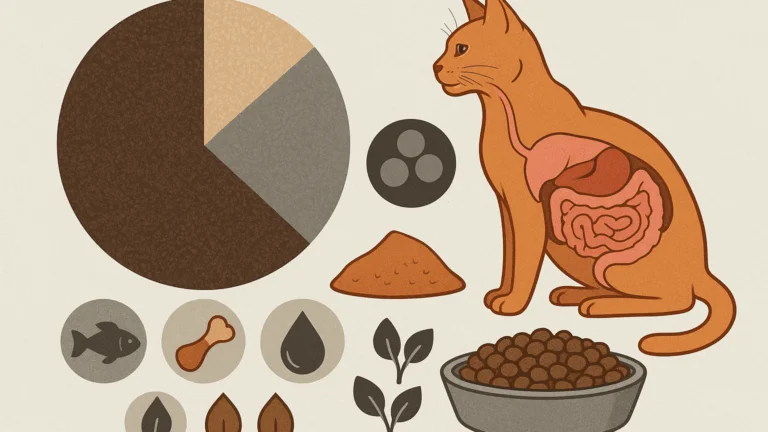
Ingredient selection has a direct impact on palatability, digestibility, and cost, so it requires an integrated strategy. In particular, the choice of protein and carbohydrate sources affects not only nutrition, but also flavor appeal and manufacturing performance.
Animal Protein Sources
First, animal protein sources. Cats are obligate carnivores and require high-quality, animal-derived protein. Animal ingredients provide essential amino acids, taurine, vitamin A (retinol), and arachidonic acid—nutrients that are indispensable for feline health and not adequately supplied by plant ingredients alone.
For example, meat, fish, and eggs offer high biological value and excellent amino acid balance and digestibility. Eggs are considered one of the most ideal foods in terms of amino acid profile, and nutritional value is generally ranked as egg > meat > plant protein.
By contrast, plant proteins such as soy and gluten may be lower in digestibility or deficient in certain essential amino acids, meaning they cannot fully replace animal protein as the main protein source in cat food. The basic strategy, therefore, is to use animal ingredients as the primary protein source and supplement potentially limiting amino acids such as taurine or methionine as needed.
Animal protein sources also vary widely—chicken, beef, fish meal, eggs, and organ by-products, among others. Each differs in flavor, digestibility, nutrient profile, and cost, so the right combination depends on the product concept. Fish-based proteins, for example, are rich in omega-3 fatty acids and often highly palatable, but may present challenges related to odor control and oxidation.
On the other hand, meat meals made from animal by-products can offer cost advantages, though quality variation must be managed carefully. Recent research has shown, however, that properly rendered poultry meal can provide amino acid availability and digestibility comparable to fresh chicken, indicating that well-processed animal ingredients can still deliver high nutritional value.
Carbohydrate Sources
Next, carbohydrate sources. Cats do not have a dietary requirement for carbohydrates as an essential nutrient, but carbohydrates—especially starch—are widely used as an energy source and for manufacturing purposes.
In dry food, starch gelatinization is essential for extrusion, so a certain amount of carbohydrate from grains or tubers is generally required. Common carbohydrate sources include corn, rice, wheat, peas, potatoes, and tapioca, each with different digestibility and processing properties.
Rice, for example, is a highly digestible starch source and is often used in diets for pets with sensitive digestion. Foods marketed as “easy to digest” often favor ingredients such as rice for this reason. Grain-free ingredients such as legumes and potatoes can also be used, but legumes contain substantial fiber and oligosaccharides, which can reduce digestibility or worsen stool quality if overused.
Regardless of the source, extrusion cooking under high heat and pressure greatly improves starch digestibility through gelatinization. Research shows that in cats, dry foods made with a variety of starch sources—including corn, rice, and peas—can all achieve starch digestibility above 93% when properly processed.
In other words, contrary to the common myth that “cats cannot digest carbohydrates,” cats can make good use of properly cooked starches. Therefore, when choosing carbohydrate sources, the key is not whether the formula is grain-based or grain-free, but whether the starch is well processed and used at an appropriate level within the overall recipe.
From a manufacturing standpoint, ingredient particle size and starch content also affect extrusion behavior and kibble quality. Too little starch may prevent proper expansion and binding, while too much can make the kibble overly dense and hard. The appropriate carbohydrate level must therefore be set in balance with protein and fat.
Fat and Functional Ingredients
Finally, the combination of fat and functional ingredients. Fat is a high-energy source, but it also improves aroma and mouthfeel while supplying essential fatty acids and fat-soluble vitamins.
Cats require linoleic acid as well as arachidonic acid, and the latter is found only in animal fats such as meat and fish. This makes the inclusion of animal fat sources—such as chicken fat or fish oil—nutritionally essential.
Omega-3 fatty acids such as DHA and EPA are not strictly essential, but they are valued as functional nutrients for their anti-inflammatory effects and benefits for skin and coat health. Adding sources such as fish oil, flaxseed oil, or more recently algae-derived omega-3s can increase product value by supporting skin, coat, or joint health.
Fat is also used in the kibble coating step as a flavor oil, which directly affects palatability. At the same time, fat is prone to oxidation, and once degraded, it damages flavor quality. For this reason, antioxidants such as mixed tocopherols or rosemary extract are important for preventing oxidation.
Functional ingredients may also include prebiotics such as FOS and MOS, joint support ingredients like glucosamine, fiber for hairball control, and urinary support agents such as citric acid or methionine. However, adding these indiscriminately can affect both nutrient balance and cost. The priority should always be to meet core nutritional design goals first, then add only the functional benefits needed for the product concept.
Manufacturing Design: Extrusion Conditions and Nutrient Retention
The manufacturing process—especially extrusion, drying, and coating—has a major impact on nutrient stability in pet food.
With the right process design, nutrient loss can be minimized. Under poor conditions, however, certain nutrients may be significantly degraded. Product developers therefore need to account not only for the nutrient value of raw materials, but also for the expected nutrient losses during processing.
During extrusion, raw materials are exposed briefly to high temperature, high pressure, and high shear. This improves digestibility by gelatinizing starch and denaturing protein, but it can also lead to vitamin degradation and lipid oxidation.
Heat Degradation of Vitamins
Vitamins A, E, and B1 (thiamine) are especially vulnerable to heat and oxidation, and substantial losses may occur during extrusion and drying. Some reports indicate that high-temperature processing in dry food production can destroy large portions of B vitamins and vitamin A, which is why manufacturers often add vitamins in excess before processing.
Thiamine, for example, is easily destroyed by both heat and thiaminase enzymes present in some fish meals, so significant overage may be needed to ensure the final product still meets standards after processing. Fat-soluble vitamins such as A and E are also degraded by air and light, making sealed packaging and antioxidant use essential for stability.
Taurine, meanwhile, is a key nutrient of concern in cat food. Although one might expect heat processing to reduce taurine levels, recent studies suggest that taurine content remains relatively stable under normal extrusion conditions. Reports have shown that taurine concentration remains essentially unchanged before and after extrusion, so thermal destruction itself does not appear to be a major issue.
However, high-temperature processing and formula composition can still affect taurine utilization. High-fiber diets, for example, may increase taurine breakdown by intestinal bacteria and lead to greater fecal loss, raising the dietary taurine requirement. For this reason, it is standard practice to include taurine with an added safety margin above the AAFCO minimum.
Lipid Oxidation
Fatty acid stability is another major processing issue. Unsaturated fatty acids such as EPA and DHA, particularly those from fish oil, are highly sensitive to heat and oxygen and can oxidize during extrusion, drying, storage, or all three.
Oxidized fats produce peroxides, which worsen flavor and reduce palatability, and may also negatively affect health by destroying fat-soluble vitamins or generating free radicals that can damage cells.
To prevent this, manufacturing processes should minimize oxygen exposure, use rapid cooling, incorporate antioxidants, and consider nitrogen-flushed packaging. The post-extrusion coating step is especially important because liquid fats are sprayed onto the kibble at this stage. These oils must be fresh and tightly controlled for quality, including acid value and peroxide value, because degraded oil can ruin the flavor of the entire product.
Protein Denaturation
Protein denaturation is another point of concern in extrusion. Heating can improve digestibility by partially breaking down otherwise less digestible proteins, but excessive heat may damage certain amino acids such as cystine and lysine.
Lysine is particularly prone to Maillard reactions with sugars such as glucose, which can render it nutritionally unavailable. In extreme cases, available lysine has reportedly fallen by 20–30% compared with unprocessed raw materials.
For this reason, developers must look not only at crude protein content, but also at amino acid digestibility and availability. If necessary, lysine and other amino acids should be supplemented, and extrusion conditions should be adjusted to avoid excessive heat.
Factors That Improve Palatability
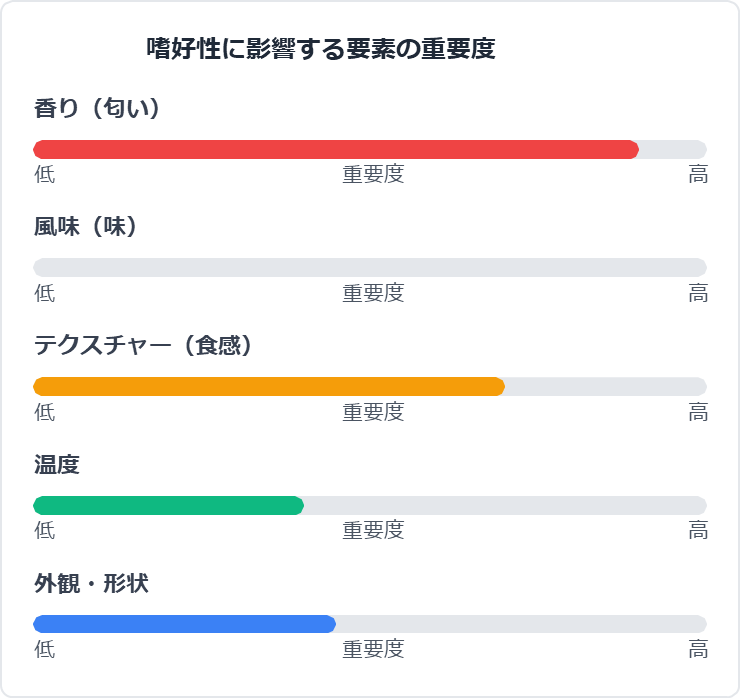
No matter how nutritionally excellent a food is, it is meaningless if a cat will not eat it. Cats are more selective than dogs in their food preferences, and acceptance is influenced by many factors: aroma, flavor, texture, and even kibble size and shape. Palatability design must improve all of these elements together.
Aroma
Aroma is especially important. Cats have relatively few taste buds and cannot detect sweetness, but their sense of smell is many times more developed than that of humans. Creating an appetizing aroma is therefore the key to encouraging initial consumption.
Cats are said to decide whether to eat based first on smell, and if they dislike the aroma, they may refuse even a nutritionally superior product. Aroma-enhancing strategies include using flavorful meat or fish ingredients and applying flavor oils or powdered palatants—such as hydrolyzed liver—to the kibble surface during coating.
This surface “topping” adds rich savory notes and roasted character, stimulating appetite as soon as the bag is opened. Coating oils are typically animal-based, such as chicken oil or salmon oil, while palatants are often made from protein-rich flavor sources such as chicken liver, yeast extract, or fish extract.
Freshness is also essential to aroma quality. Oxidized food develops rancid odors from degraded fat, and cats are highly sensitive to these off-notes. As free fatty acids increase and rancid smell develops, palatability drops noticeably. Oxidation control is therefore a key part of palatability maintenance as well.
Flavor
Flavor and texture are also important. Cats prefer the richness of animal protein and fat and do not perceive sweetness. They are also sensitive to bitterness, so ingredients that introduce strong bitter notes—such as excessive vitamin additions—can reduce palatability.
For this reason, flavor design should minimize bitterness and off-notes while enhancing umami and fat-derived richness. In practice, this means relying on high-quality animal proteins as the main ingredients while balancing fish meals and other strong-flavored components to avoid excessive fishy odor.
Cats perceive saltiness and acidity differently from dogs. Excessive salt is disliked, but moderate salt can enhance savory flavor. Organic acids such as citric acid may also be used for acidification, but excessive sourness should be avoided.
Texture
Texture includes the hardness and shape of the kibble. Cat teeth and jaws are specialized for cutting prey rather than grinding side to side, so overly large or awkwardly shaped kibble can be difficult to eat and may be avoided as a result.
In general, cats tend to prefer small kibble—around 8–12 mm in diameter—with a flat, thin shape. Research has found that flat disc-shaped or star-shaped kibble performed well in palatability tests, while larger triangular prism shapes were less favored.
Flat shapes are thought to be advantageous because they break more easily when bitten and offer more surface area for flavorful coating materials. As for hardness, softer is not always better. Cats often prefer a certain crispness rather than overly soft kibble, though excessive hardness is also undesirable.
The goal is to control density and moisture so the kibble offers satisfying crunch while still breaking easily—a texture that is firm but not too hard.
Designing for Digestibility and Stool Quality

| Fiber Type | Main Ingredient Sources | Effect on Stool | Effect on Gut Health |
|---|---|---|---|
| Soluble fiber | Inulin, guar gum, pectin, beet pulp | Retains moisture and softens stool | Feeds intestinal bacteria; increases short-chain fatty acid production |
| Insoluble fiber | Cellulose, corn fiber, beet pulp | Adds bulk and improves stool form | Stimulates intestinal motility; increases transit speed |
Digestibility—how efficiently nutrients are absorbed—and the quality of the stool produced after feeding are important indicators of pet food quality. With proper design, both nutrient absorption and healthy stool consistency can be improved.
Highly Digestible Food Produces Less Stool
In general, the more digestible a food is, the more efficiently nutrients are absorbed from a smaller feeding amount, and the less stool is produced. Diets made with high-quality animal ingredients and without unnecessary fillers can easily achieve digestibility above 90%, and cats fed such diets tend to produce smaller, less odorous stools.
By contrast, foods containing poorly digestible ingredients—such as low-quality proteins or excessive fiber—leave behind more undigested residue, which can result in large amounts of soft stool with stronger odor. In fact, when a cat’s stool smells particularly bad, it may indicate that the food has poor digestibility or contains ingredients that do not suit that cat well.
As a general guideline, if stool output is less than 12–18% of food intake, digestibility is considered good, while levels above 25% may indicate poor digestibility. During development, test formulas should be fed in trials and evaluated for fecal output and stool quality, with the recipe adjusted as needed.
Fiber for Stool Quality
One of the most important tools for controlling stool quality is the use of dietary fiber. Fiber can be divided into insoluble and soluble (water-soluble) types, each of which affects stool differently.
Insoluble Fiber
Insoluble fiber—such as cellulose and corn fiber—does not dissolve in water and is not digested. It adds bulk to the stool and stimulates intestinal motility.
In appropriate amounts, insoluble fiber helps create stools of proper firmness and supports regular bowel movement. However, in excess, it can increase stool volume too much or interfere with nutrient absorption.
Soluble Fiber
Soluble fiber—such as inulin, guar gum, and pectin—dissolves in water to form a gel, helping create softer, moister stools. It is also readily fermented by intestinal bacteria, making it useful as a prebiotic that supports gut health.
However, if highly fermentable fiber is used excessively, it can increase gas production and cause bloating, soft stool, or diarrhea. In other words, the balance between soluble and insoluble fiber is crucial, and ideally both should be included in appropriate proportions.
This is one reason beet pulp is commonly used in complete pet foods: it contains a balanced mix of soluble and insoluble fiber. Fiber from beet pulp has moderate fermentability, helping maintain stool that is neither too hard nor too soft while also helping reduce odor.
Short-chain fatty acids such as acetate and butyrate, produced when soluble fiber is fermented, serve as energy sources for the colon lining and support intestinal health. Insoluble fiber, by contrast, supports bowel movement and provides the structural bulk that helps form stools and prevent diarrhea.
Because of these properties, a relatively low soluble-to-insoluble ratio—meaning an insoluble-fiber-dominant balance—is generally considered optimal for overall digestibility and stool quality.
Stool Odor and Fiber
Stool odor is also closely related to fiber balance. Much of the odor in feces comes from protein-derived putrefactive compounds such as indole, hydrogen sulfide, and ammonia. In high-protein diets, protein that escapes digestion may ferment and putrefy in the large intestine, generating these odors.
Adding moderate amounts of soluble fiber can help beneficial intestinal bacteria grow and suppress protein putrefaction, thereby reducing odor. On the other hand, using large amounts of legumes or other ingredients rich in poorly digestible oligosaccharides can lead to excessive fermentation, resulting in both softer stools and stronger odor.
In fact, cases of worsened stool odor have been reported with extremely grain-free formulas built heavily around legumes. For this reason, the choice and level of grains, legumes, tubers, and fiber sources should be carefully evaluated during product development so that stool firmness remains controlled and odor stays within an acceptable range.