

 Shun Nagai
In Japan, the cat population is estimated to be approximately 8.847 million in 2025, exceeding the dog population of around 6.82 million (Note 1). As indoor cat ownership has become the norm, cats are increasingly exposed to daily stressors such as multi-cat households, visitors, moving house, veterinary visits, and age-related changes. Against this background, interest is growing among pet food and supplement product planners in products positioned around “cat stress” and “relaxation support.”
However, relaxation and stress-care products for cats are even more difficult to design than those for dogs. Cats are obligate carnivores, and it is known that their ability to process plant-derived compounds is lower than that of dogs (Note 2). In addition, the types and amounts of amino acids they require, as well as the way palatability must be secured, differ greatly from dogs. From a labeling perspective, Japan’s voluntary pet food industry rules—the Fair Competition Code of the Pet Food Fair Trade Conference—interact with the Pharmaceutical and Medical Device Act and the Act against Unjustifiable Premiums and Misleading Representations. As a result, expressions that may be usable for dog products can sometimes go too far when applied to cat products.
This article is intended for D2C brand founders, product planning and marketing teams, and product development managers at mid-sized manufacturers who are considering stress-care foods for cats. Focusing on three ingredients with accumulated research—L-theanine, L-tryptophan, and α-casozepine—we will organize the key formulation decision points based on cats’ unique physiological characteristics, common formulation patterns, and realistic approaches to product labeling.
What You Will Learn in This Article
- The mechanisms of stress in cats and why dog-oriented formulations should not be applied directly to cats.
- Four evaluation criteria for cat relaxation ingredients: mechanism of action, strength of research evidence, ease of formulation, and compliance with labeling rules.
- The characteristics of L-theanine, L-tryptophan, and α-casozepine, and the suitability of each ingredient for cats.
- How to build formulations by target segment, such as senior cats in multi-cat households, young indoor cats, and rescue cats.
- Expressions that should be avoided from the perspective of the Pet Food Fair Trade Conference and the Pharmaceutical and Medical Device Act, and realistic wording that can be used.
- Key points to confirm when selecting an OEM manufacturing partner.
Key Differences Between Cats and Dogs in Stress-Care Formulation
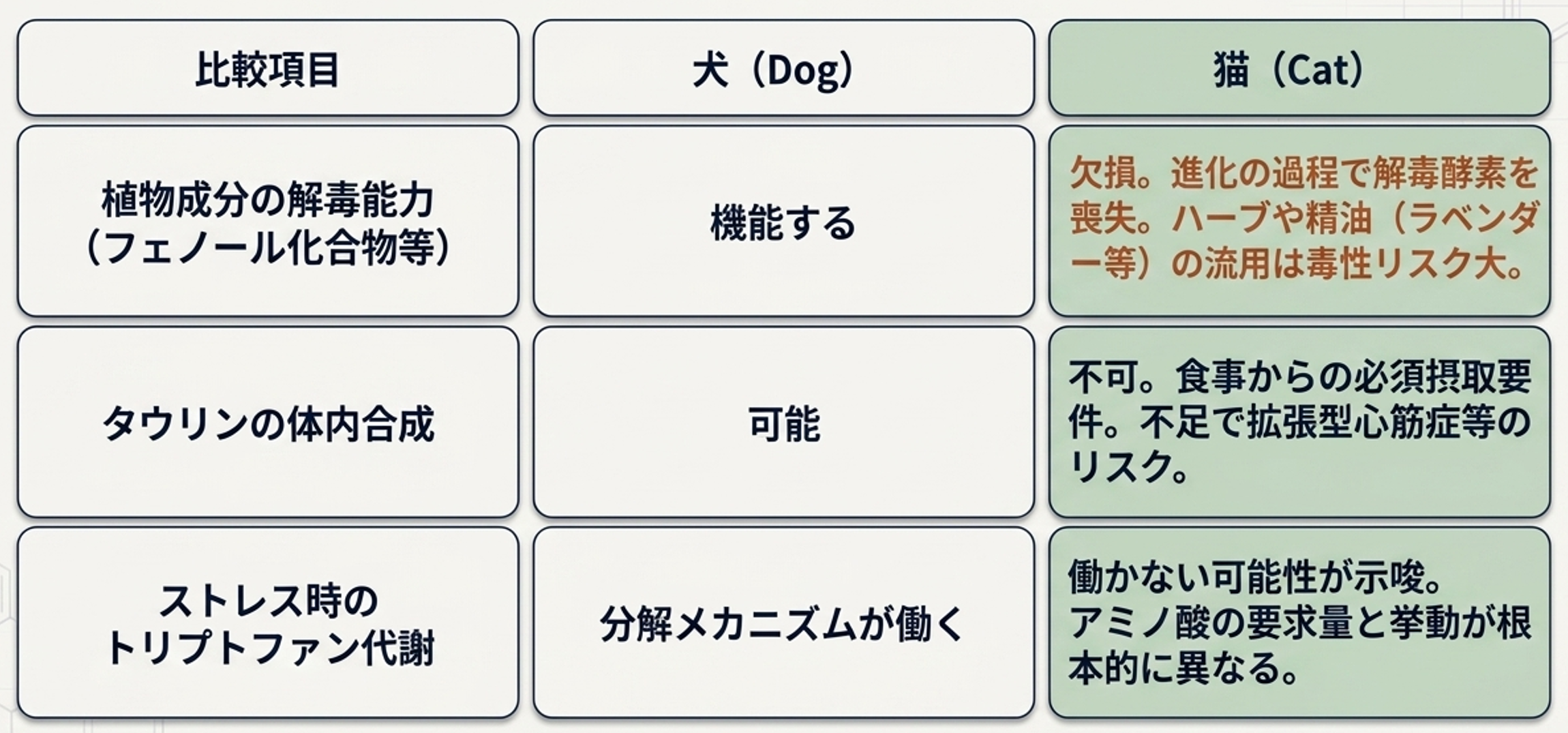
Cats originally evolved as animals specialized for eating meat, and their body systems differ greatly from those of dogs and humans. For this reason, an ingredient that can be used safely in dogs may pose risks in cats.
Physiological Characteristics of an Obligate Carnivore
Unlike dogs, cats are obligate carnivores. Over the course of evolution, they lost part of the biological systems used to utilize and detoxify plant-derived compounds. One feature that directly affects pet food formulation is the fact that a liver enzyme responsible for detoxifying certain plant compounds is almost nonfunctional. Research has shown that all members of the Felidae family lost this detoxification enzyme during evolution, and their ability to excrete plant-derived compounds, particularly phenolic compounds, is markedly lower than that of dogs and humans (Notes 2 and 3).
This characteristic is well known in the context of the strong toxicity that human medicines such as aspirin and acetaminophen can have in cats. In practical pet food formulation, however, its implications are broader. Plant-derived phenolic compounds, essential oils, herbal extracts, and concentrated forms of certain polyphenols should not be applied to cats at the same levels or in the same forms used safely in dogs (Note 2). Herbal relaxation ingredients derived from lavender or tea tree, for example, are an area where it is more difficult to confirm an adequate safety margin for cats than for dogs.
Essential Amino Acid Requirements and Species Differences
Cats cannot synthesize sufficient amounts of the amino acid taurine in their bodies. For this reason, they must obtain taurine from their diet, which is a requirement not seen in the same way in dogs (Note 4). Taurine deficiency has been reported to lead to heart disease, such as dilated cardiomyopathy, and eye disease, such as retinal degeneration. The AAFCO Cat Food Nutrient Profiles in the United States and the FEDIAF nutritional guidelines for cats in Europe both define minimum levels for taurine as an essential nutrient (Notes 5 and 6).
There are also species-specific differences in the metabolism of the amino acid tryptophan. Research suggests that in dogs and humans, stress activates pathways that break down tryptophan, whereas this mechanism may not occur in cats (Note 4). This implies that the behavior of tryptophan under stress may differ between cats and dogs or humans, which is an important point to consider when determining formulation levels.
The AAFCO Cat Food Nutrient Profiles in the United States, included in the 2024 Official Publication, set the minimum tryptophan level for adult maintenance at 0.16% on a dry matter basis and for growth and reproduction at 0.25%. The maximum level is 1.7% on a dry matter basis, which was introduced in the 2016 revision (Note 5). When adding tryptophan for relaxation support purposes, formulations must remain within this upper limit.
Cat Stress Care Cannot Be Completed Through Food Alone
Cats respond strongly to pheromones compared with dogs. Environmental support using feline pheromone products such as Feliway® is commonly used in practice (Note 7). As one practical hypothesis, when cats’ physiological characteristics and their main stressors—territorial behavior, multi-cat living, indoor-only lifestyles, and aging—are taken into account, relaxation support through pet food should realistically be viewed as one part of a broader approach rather than a standalone solution. It is more appropriate to design these products as having an “adjunctive role” alongside environmental management, behavioral support, and veterinary care when needed. Reflecting this premise in the product concept also makes it easier to stay within the range of acceptable labeling expressions.
Four Evaluation Criteria for Cat-Oriented Ingredients
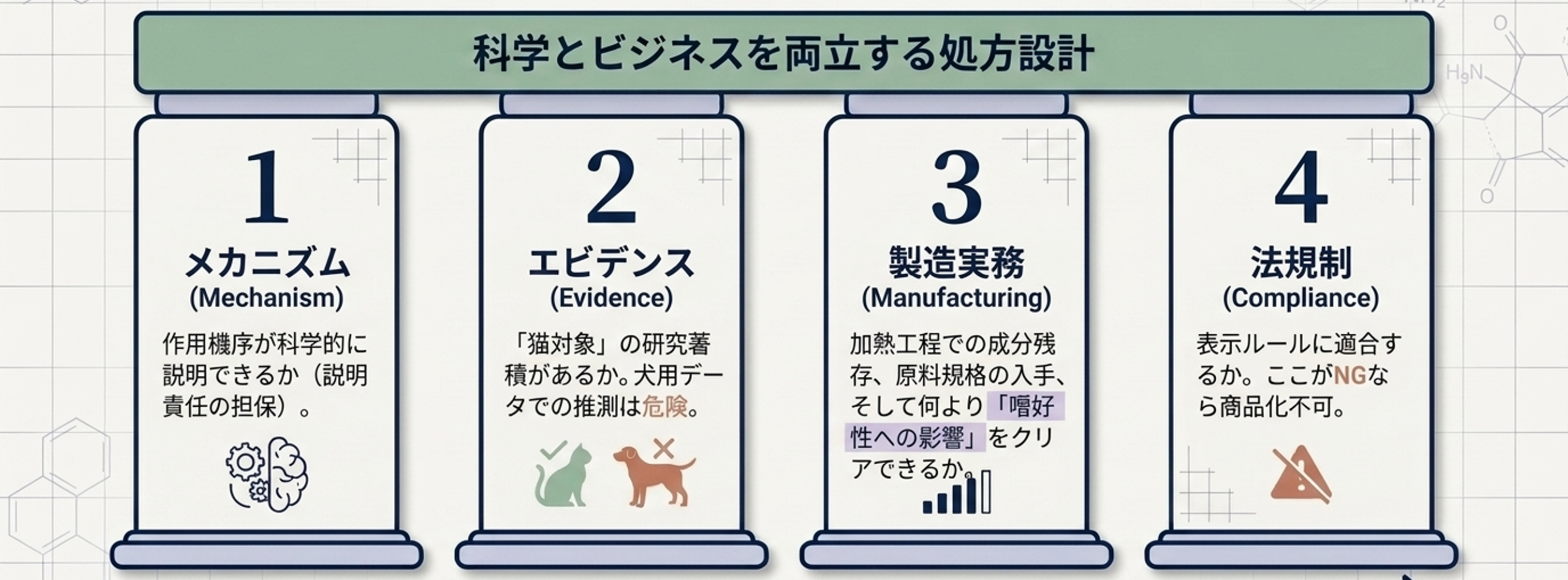
The value of an ingredient should not be determined simply by whether it “seems effective.” In practice, ingredients should be checked against four criteria. In particular, if an ingredient cannot comply with labeling rules, it cannot realistically be commercialized.
1. Can the Mechanism of Action Be Explained?
Current research generally assumes three main pathways for relaxation and stress support.
The first is the GABA, or gamma-aminobutyric acid, receptor pathway. GABA in the brain suppresses neural activity, and benzodiazepine drugs also act through this pathway. L-theanine and α-casozepine have been reported to potentially produce GABA-like effects in ways that differ from pharmaceutical drugs (Notes 8 and 9).
The second is the serotonin pathway. Tryptophan is converted into serotonin in the brain and is involved in the regulation of mood and behavior. The amount of serotonin produced in the brain depends on the concentration of tryptophan in the blood and how efficiently it reaches the brain (Note 10).
The third is the gut-brain connection. In recent years, there has been active research into how gut bacteria may influence the brain by producing neurotransmitters or acting through the immune system. However, direct evidence for behavioral effects in cats remains limited, and this area should still be treated as a hypothesis.
2. How Much Cat-Specific Research Exists?
In practical formulation work, it is useful to organize the strength of research evidence into tiers.
| Level of research evidence | Description | Examples among relaxation ingredients |
|---|---|---|
| Relatively high | Controlled studies in cats are available and can be referenced as peer-reviewed papers or conference presentations | α-casozepine: Beata et al. 2007, peer-reviewed paper |
| Medium to high | Controlled studies in cats have been reported, though at the conference-presentation level, and there is practical use in therapeutic diets | L-tryptophan: Pereira et al. 2010 conference presentation; use in Royal Canin Feline Calm therapeutic diet |
| Medium | Studies in cats exist, but they lack a control group and have limited sample sizes | L-theanine: Dramard et al. 2018, open-label study without a control group |
| Low | Research is mainly in other animal species, with limited direct evidence in cats | Some herbal ingredients and certain probiotics |
An important point is that it is risky from a formulation standpoint to assume that an ingredient with strong evidence in dogs will also work in cats simply because “it works in dogs.” Evidence must be evaluated separately for dogs and cats.
3. Is It Easy to Formulate and Manufacture?
Before a product can be mass-produced, it is necessary to confirm whether the ingredient remains stable through pet food manufacturing processes such as extrusion, drying, coating, or retort sterilization; whether its content level is maintained; whether it affects palatability; and whether ingredient specifications and quality documents can be obtained. In cats, it is especially important to remember that the hurdle of getting the product eaten is high. Compared with dogs, cats have a narrower range of taste perception, with little functional ability to perceive sweetness, and they are highly sensitive to ingredient aroma, kibble shape, and mouthfeel.
4. Does It Comply With Labeling Rules?
In this article, “stress-care food” does not refer to a product intended to treat or improve disease or behavioral problems. Rather, it is treated as a product concept that nutritionally supports daily relaxation and healthy maintenance during environmental changes. Final labeling language must be reviewed individually according to the formulation level, supporting materials, and sales channels.
Pet foods are not covered by the functional labeling system used for human foods in Japan. Instead, they are subject to the Fair Competition Code of the Pet Food Fair Trade Conference and the prohibition of misleading representations under the Act against Unjustifiable Premiums and Misleading Representations (Notes 11 and 12). Definitive efficacy expressions such as “cures,” “works,” or “eliminates anxiety” cannot be used. More cautious expressions such as “has been reported to support” or “is used as an adjunctive support” should be constructed in a way that matches the actual state of the research.
Labeling Expressions: Wording to Avoid and More Appropriate Alternatives
In practice, the following types of wording replacements can be used as a starting point.
| Expressions to avoid | More appropriate expressions |
|---|---|
| Reduces stress | Supports daily relaxation |
| Eliminates anxiety | Supports a calm lifestyle during environmental changes |
| Improves behavioral problems | Formulated with consideration for healthy behavioral balance |
| Effective for dementia | Formulated with consideration for health maintenance in the senior stage |
| Makes cats calmer | Supports a peaceful daily routine |
The table above is only a general direction for developing expressions. Final wording must be reviewed individually according to the product specifications, formulation levels, supporting documents, and sales media. Incorporating a prior consultation with the Pet Food Fair Trade Conference at the product copy stage can help reduce the risk of rework during mass production and market launch.
Priority Order for the Four Evaluation Criteria
In actual ingredient selection, it is practical to evaluate the four criteria in the following order.
- Compliance with labeling rules: if this cannot be cleared, the ingredient cannot realistically be used.
- Ability to explain the mechanism of action: necessary for scientific accountability.
- Strength of cat-specific research: the basis for product claims and communication.
- Ease of formulation and manufacturing: whether the product can be mass-produced.
Practical Comparison of Three Candidate Ingredients
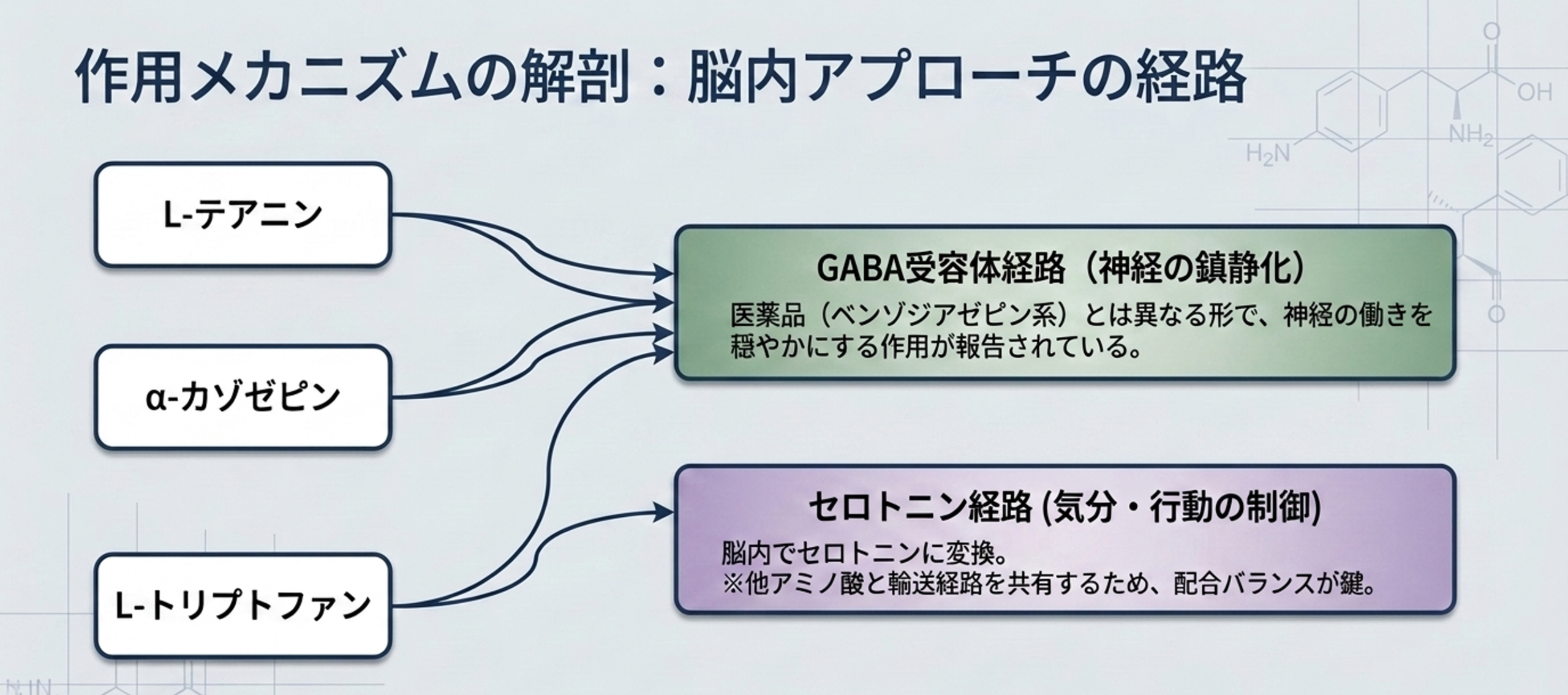
The three ingredients each have different strengths. Rather than relying on a single ingredient, using them in combination tends to offer stronger alignment with both the available research and commercialization track records.
L-Theanine: Characteristics and Formulation Practice
L-theanine is an amino acid found in tea leaves and is structurally related to glutamic acid. It has been reported to potentially promote the release of GABA, serotonin, and dopamine in the brain (Note 8).
A representative cat study is the open-label study by Dramard et al. (2018). In this study, 33 household cats were given 25 mg of L-theanine twice daily, for a total of 50 mg per day, over 30 days. The study reported changes from day 15 onward in behavioral indicators such as inappropriate urination, excessive grooming, excessive alertness, and excessive demanding behavior. However, the authors themselves clearly noted that conclusions should be interpreted cautiously because the study design did not include a control group (Note 13).
Regulatory and Safety Considerations
L-theanine from Taiyo International was submitted to the U.S. FDA as a GRAS notice, GRN 209, and received a “no questions” response from the FDA on February 5, 2007 (Note 14). However, this information relates to human food use. It does not directly guarantee safety as a cat pet food ingredient. When formulating for cats, ingredient specifications, inclusion levels, feeding amounts, and stability through the manufacturing process must be confirmed individually.
Practical Formulation Points
When the dose used in the Dramard study is converted on a body-weight basis, it corresponds to approximately 12.5 mg/kg/day for a 4 kg household cat. L-theanine is highly water soluble. In practical dry food manufacturing, a key point is confirming how much remains after extrusion and drying.
Practical Cautions
There is only one cat-specific study, and it lacks a control group. Therefore, it is not possible to state definitively that L-theanine is effective for stress in cats. On the other hand, there is accumulated research in humans and other animal species, and safety information for human food use has been organized. It may be worth considering as one option for an adjunctive ingredient.
L-Tryptophan: Characteristics and Formulation Practice
L-tryptophan is an essential amino acid that serves as a precursor to serotonin and melatonin. In cats, the basic nutritional requirement is defined in the AAFCO Cat Food Nutrient Profiles as a minimum of 0.16% for adult maintenance on a dry matter basis, with an upper limit of 1.7% on a dry matter basis (Note 5).
In behavioral research involving cats, a controlled study by Pereira et al. (2010), presented at the BSAVA Congress 2010, reported that a diet supplemented with L-tryptophan significantly reduced the frequency of aggression and inappropriate elimination in multi-housed cats (Note 15). A review in Today’s Veterinary Practice lists 12.5 mg/kg as a reference dose (Note 16). In addition, a study by Landsberg et al. (2017) used a therapeutic diet supplemented with L-tryptophan and α-casozepine, Royal Canin Feline Calm, in 24 cats with anxiety tendencies and reported clear differences in testing after four weeks (Note 17).
Practical Formulation Points
L-tryptophan shares transport pathways to the brain with other amino acids, such as phenylalanine. Therefore, when it is formulated alone, its efficiency in reaching the brain may be limited (Note 10). Combining it with carbohydrates or designing the formulation with attention to the ratio between tryptophan and other amino acids may improve its delivery to the brain. However, the optimal formulation ratio in cats has not been established.
Practical Cautions
L-tryptophan has a controlled study in cats and also has a commercialization track record in a therapeutic diet used in combination with α-casozepine. Among the three ingredients discussed here, it is one of the more commercially practical options. Since its effect may be limited when used alone, it is realistic to assume a combination-based formulation.
α-Casozepine: Characteristics and Formulation Practice
α-casozepine is a specialized ingredient derived from milk protein and is known as the active component of the product Zylkene®. It has been suggested to have affinity for receptors involved in relaxation in the brain. Although its in vitro affinity is limited, behavioral effects have been reported in in vivo studies. Unlike benzodiazepine drugs, it is characterized by the absence of reported side effects such as increased aggression or memory impairment (Note 9).
A representative cat study is the controlled trial by Beata et al. (2007). In this study, 34 anxious cats were assigned to an α-casozepine group or a placebo group. The study reported clear differences in fear of unfamiliar people and family members, general fear, fear-related aggression, and autonomic nervous system disorders (Note 9). The review in Today’s Veterinary Practice lists 15 mg/kg as a reference dose (Note 16).
Regulatory and Safety Considerations
α-casozepine has been sold for many years in the veterinary market as Zylkene® by Vetoquinol in France, and safety-related information is relatively well organized. Because it is a milk-derived ingredient, consideration is needed for cats with dairy allergies or sensitivity to milk proteins.
Practical Formulation Points
Because it is a peptide-based ingredient, it is necessary to evaluate the risk of loss of activity due to heat treatment during pet food manufacturing. It is recommended to obtain content-retention data from the ingredient supplier under the expected manufacturing conditions. The active substance is a purified peptide and is not contained in whey protein or ordinary casein ingredients.
Practical Cautions
α-casozepine has a controlled cat study that is relatively easy to cite, making it one of the three ingredients for which the evidence can be organized more clearly. On the other hand, it has practical formulation hurdles, including high ingredient cost and the need to address potential heat-related loss of activity.
Supporting Ingredients: Probiotics and Plant-Derived Materials
Probiotics aimed at influencing behavior through the gut-brain connection, such as products containing Bifidobacterium longum BL999, are better studied in dogs, while behavioral evidence in cats remains limited. Plant-derived functional ingredients such as chamomile, valerian, and hops are used in humans and dogs, but given the limited detoxification capacity of cats for plant-derived compounds, safety margins must be assessed more conservatively than in dogs when considering their use in cat products (Notes 2 and 3).
Comparison Table: Ingredient, Research Level, Reference Dose, Labeling Suitability, and Cat Suitability
| Ingredient | Level of cat-specific research | Main proposed mechanism | Reference dose in cats | Ease of labeling | Practical formulation challenges |
|---|---|---|---|---|---|
| L-theanine | Medium: one open-label study without a control group | Release of GABA, serotonin, and dopamine | Equivalent to approx. 12.5 mg/kg/day based on Dramard 2018 conversion | Relatively easy to handle | Confirmation of content retention through processing |
| L-tryptophan | Medium to high: conference-level study plus therapeutic diet use | Serotonin precursor | Approx. 12.5 mg/kg/day as a reference range | Relatively easy to handle | Delivery efficiency to the brain and balance with other amino acids |
| α-casozepine | Relatively high: one controlled study, peer-reviewed paper | Suggested action on receptors involved in relaxation in the brain | Approx. 15 mg/kg/day as a reference range | Relatively easy to handle | Heat-related loss of activity and ingredient cost |
| Plant-derived ingredients such as chamomile | Low to unclear | Suggested GABA-like effects | No established guideline | Requires caution | Consideration of limited detoxification capacity and safety margin |
| Probiotics | Low: cat behavioral studies are limited | Gut-brain connection, still hypothetical | Product-specific | Relatively easy to handle | Maintaining viable bacteria through the manufacturing process |
Note: The “reference dose” values in the table are based on doses used in cited studies and should be treated as reference information only. Final inclusion levels in commercial product design must be determined through individual consultation with the OEM manufacturer and ingredient supplier.
3 Formulation Models for Cat Stress-Care Foods
Once the target user is defined, the choice of ingredients and product format becomes clearer. Below are three common cases and the practical logic behind each.
Case 1: Senior Cats in Multi-Cat Households
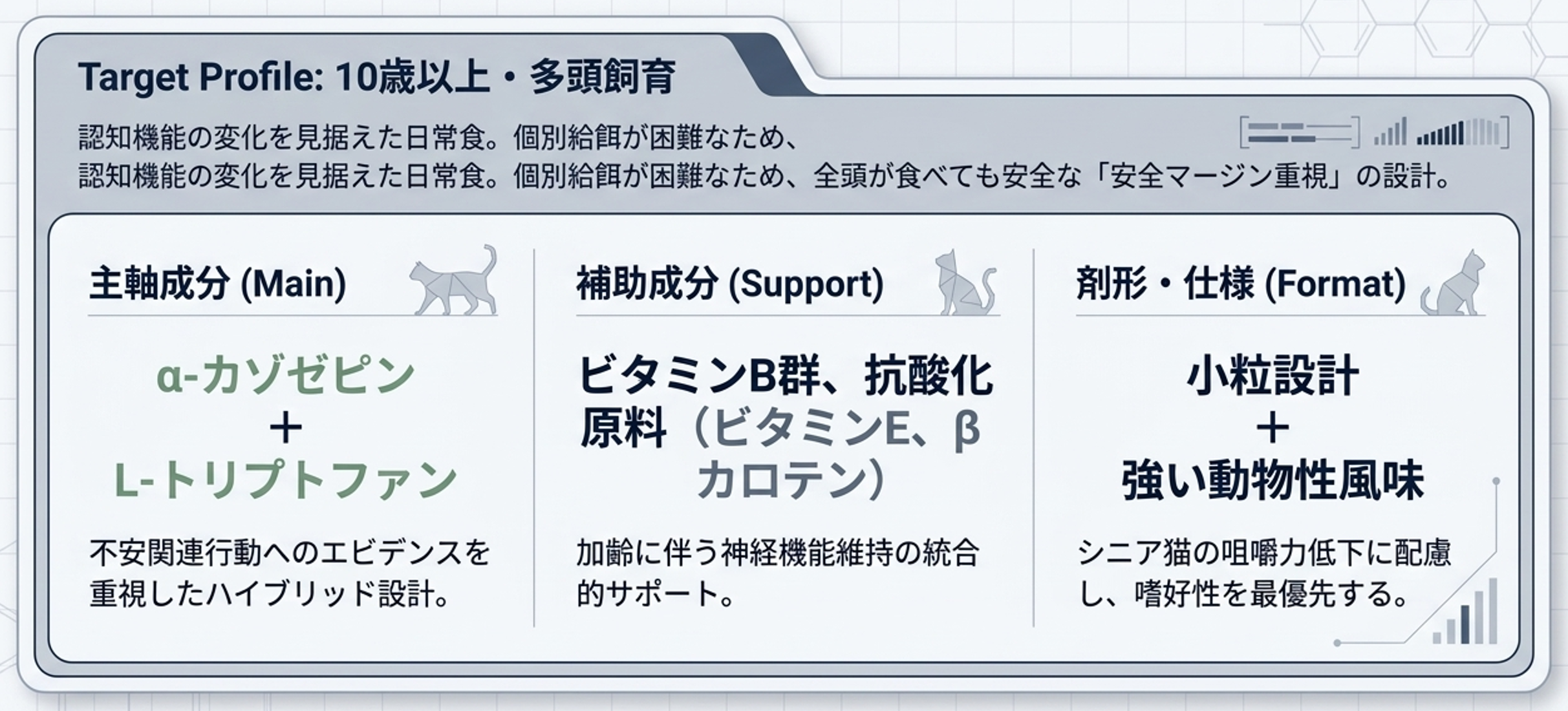
Target
Cats aged 10 years or older living in multi-cat households. The formulation takes into account early signs of age-related changes in senior-stage cognitive function. A survey by Moffat & Landsberg (2003) reported that signs of cognitive function changes were observed in approximately 28% of cats aged 11 to 14 years and about 50% of cats aged 15 years or older (Notes 18a and 18b).
Formulation Structure
- Main ingredient: α-casozepine, based on controlled-study reports related to fear- and anxiety-related behaviors.
- Combination ingredient: L-tryptophan, to support the serotonin precursor pathway and because it has practical use in combination with α-casozepine in a therapeutic diet.
- Supporting nutrients: B vitamins and antioxidant ingredients such as vitamin E and beta-carotene, reinforced within nutritional guideline ranges.
- Palatability support: small kibble size, strong animal-based flavor, and consideration of wet formats when needed for senior cats.
Design Considerations
In multi-cat households, it is difficult to control feeding and ensure that only a specific cat receives the product. Therefore, the formulation must be safe even if all cats in the household eat it. Keeping all nutrients within the AAFCO and FEDIAF ranges is a fundamental requirement.
Case 2: Young Indoor Cats
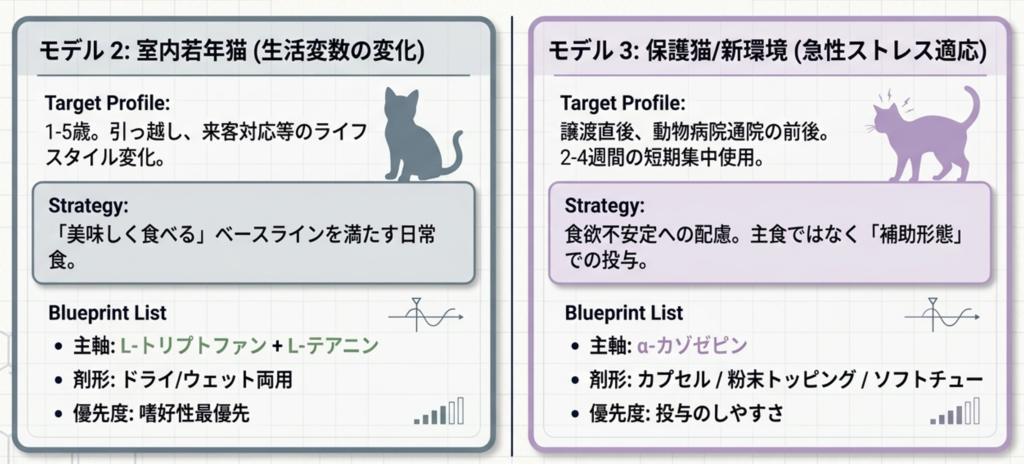
Target
Indoor cats aged one to five years, living alone or with one other cat. The product concept is designed to support cats during lifestyle changes such as moving house, changes in furniture layout, visitors, or the introduction of a new pet.
Formulation Structure
- Main ingredient: L-tryptophan, as a direct approach to the serotonin pathway.
- Combination ingredient: L-theanine, to complement the GABA pathway.
- Palatability support: animal-based proteins as the main ingredients, with palatability testing before production.
- Format: dry, semi-moist, or wet formats are all possible. Because stress may reduce appetite, wet food can also be considered as part of the design.
Design Considerations
Young cats often have strong appetite and activity levels, but the hurdle for palatability is also high. Before promoting relaxation support, the product must first meet the baseline requirement of being enjoyable enough for cats to eat.
Case 3: General Rescue Cats and New-Environment Adaptation
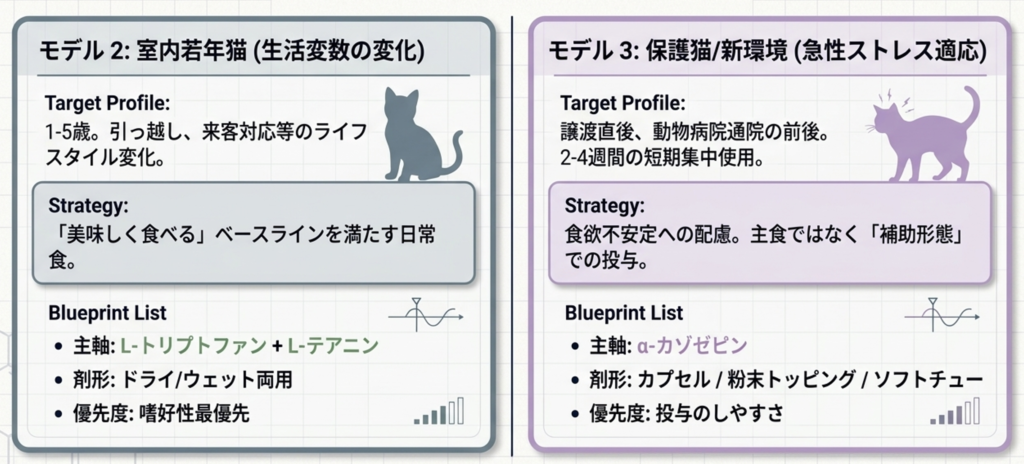
Target
Cats immediately after adoption from a rescue facility or cats that have just experienced an environmental change. The product is intended for limited-period use during the post-adoption adjustment period or before and after veterinary visits.
Formulation Structure
- Main ingredient: α-casozepine, based on accumulated reports related to fear- and anxiety-related behaviors.
- Format: capsules, powder toppings, soft chews, or other supplemental forms that are easy to administer are realistic options.
- Period of use: from several days before the environmental change to two to four weeks after the change. The Landsberg et al. 2017 study observed effects over a two- to four-week period.
Design Considerations
Immediately after adoption, a cat’s food intake may be unstable. For this reason, a treat or supplement format may be more practical than formulating the ingredient into the main food. The product concept is likely to fit better as “support during environmental changes” than as “daily relaxation support.”
Design Principles Common to All Three Model Cases
ven when the target segment differs, the following principles apply across all cases.
- Position pet food or supplements as an adjunctive tool, based on the assumption that environmental support is also necessary.
- Prioritize palatability. If the cat does not eat the product, nothing else matters.
- Design nutrition within AAFCO and FEDIAF ranges, ensuring that the addition of relaxation-support ingredients does not disrupt the base nutritional profile.
- Confirm safety based on cats’ unique metabolic characteristics, especially in relation to plant-derived compounds.
- Check labeling compliance at the early stage of claim and concept development.
4 Points to Organize Before Consulting an OEM Manufacturer
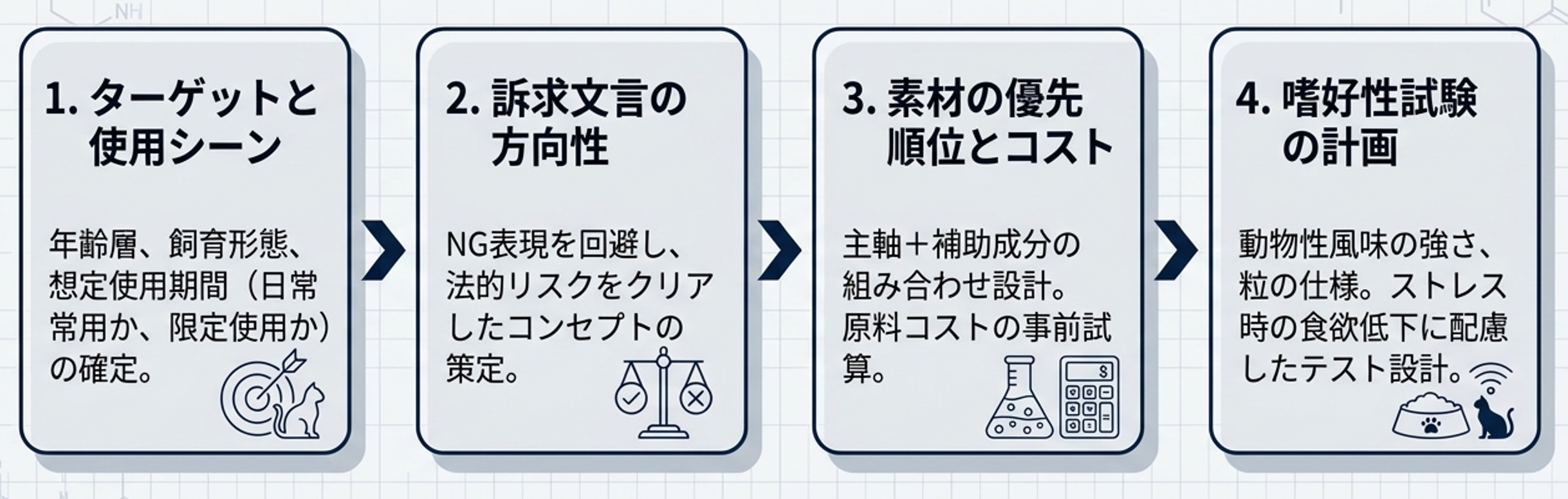
Before consulting an OEM factory, there are several points that should be clarified internally. Preparing these points in advance will greatly improve the quality of the consultation.
Clarify the Target Cat Segment
- Age group: young, adult, or senior cats.
- Housing environment: single-cat or multi-cat household.
- Assumed stressors: lifestyle changes, aging, environmental changes.
- Expected period of use: daily long-term use or limited use during environmental changes.
Direction of Product Claims and Wording
- Confirm expressions that can be used under the Pet Food Fair Competition Code.
- Consider the scope of cautious wording such as “support” and “adjunctive role.”
- Research how competing products communicate their claims while avoiding definitive efficacy statements.
Priority Order for Ingredient Selection
- Assume one main ingredient plus one or two combination ingredients. Combination-based design is generally better supported by the existing research than single-ingredient design.
- Estimate ingredient costs.
- Plan how to obtain content-retention data under the expected manufacturing process.
Palatability Testing Plan
- Determine how palatability testing will be conducted at the prototype stage, including the number of panel cats, test duration, and comparison control.
- Define the intended taste profile, such as strength of animal-based flavor, kibble shape, and kibble size.
- Design with consideration for appetite reduction during stress.
Summary: 3 Essential Points
- Cats must be approached from the starting point of their physiology as obligate carnivores: limited ability to detoxify plant-derived compounds, the need to obtain taurine from the diet, species differences in tryptophan metabolism, and strong responsiveness to pheromones. Applying a dog-oriented formulation to cats without redesign is not recommended. A cat-specific decision framework is essential for both product safety and differentiation.
- L-theanine, L-tryptophan, and α-casozepine are ingredients with accumulated research in cats. However, in terms of sample size, study design, and variability of results, the evidence is not sufficient to state definitively that a single ingredient is effective. A product concept based on combination use, environmental support, and an adjunctive role is more consistent with both the current state of research and regulatory requirements.
- Under the Pet Food Fair Competition Code, the Pharmaceutical and Medical Device Act, and the Act against Unjustifiable Premiums and Misleading Representations, definitive efficacy expressions such as “cures,” “works,” and “eliminates anxiety” cannot be used. Building cautious expressions such as “has been reported to support” or “is used as adjunctive support” in a way that aligns with the research can help prevent rework at the commercialization stage.
FAQ
Q1. Can a relaxation-support formulation for dogs simply be scaled down and used for cats?
No. This is not recommended. Cats are obligate carnivores and have limited ability to detoxify plant-derived compounds. For this reason, plant-based or herbal ingredients that may not raise major issues in dogs may have more limited safe inclusion levels or usage conditions in cats. Cats also have unique requirements related to tryptophan metabolism, the dietary need for taurine, and palatability profiles. Therefore, the formulation must be designed specifically for cats from the beginning.
Q2. Can terms such as “stress reduction” or “anxiety relief” be used in product copy?
Under the Fair Competition Code of the Pet Food Fair Trade Conference, misleading representations are restricted by the Act against Unjustifiable Premiums and Misleading Representations, so definitive efficacy claims cannot be used. In practice, it is more realistic to use cautious expressions such as “relaxation support,” “used as adjunctive support,” or “research has reported…” in a way that matches the actual state of the evidence. For specific wording, prior consultation with the Pet Food Fair Trade Conference is recommended at the commercialization stage.
Q3. The article says α-casozepine is relatively easy to organize from an evidence perspective. Does that still mean its effect cannot be stated definitively when used alone?
Yes. α-casozepine has a controlled cat study, Beata et al. 2007, involving 34 cats, making it one of the easier ingredients among the three to organize from an evidence perspective. However, the sample size is limited, and there is not yet sufficient accumulation of follow-up studies or large-scale trials. The evidence is at the level of suggesting potential effects. From both a regulatory and scientific perspective, product copy that definitively states “it is effective” would not be appropriate.
Q4. What are the key formulation points for a product aimed at multi-cat households?
In multi-cat households, it is difficult to ensure that only a specific cat receives the product. Therefore, the formulation must be safe even if all cats in the household eat it. It is important to keep nutrients strictly within AAFCO and FEDIAF ranges and reduce the risk of excessive intake in individual cats. Territorial tension between cats can also be a stressor. Communicating environmental design measures, such as distributing feeding spaces and using vertical space, alongside the food concept can help convey product value more effectively.
Q5. We are considering a product for age-related cognitive changes in senior cats. Are relaxation-support ingredients alone sufficient?
No. They are not sufficient. Senior-stage cognitive changes are associated with age-related changes in the nervous system. It is recommended to design the product comprehensively with nutrients that support neural function, such as antioxidant nutrients, including vitamin E, beta-carotene, and polyphenols; medium-chain fatty acids; and essential fatty acids such as DHA. Some cases may require veterinary intervention. In product communication, it is recommended to include wording such as “Please also consider consulting your veterinarian.”
References and Sources
- 一般社団法人ペットフード協会(2025)「2025年 全国犬猫飼育実態調査」(JPFA調査・公的統計) https://petfood.or.jp/data-chart/
- Shrestha, B., et al. (2011). Evolution of a major drug metabolizing enzyme defect in the domestic cat and other Felidae. PLOS ONE, 6(3), e18046. https://journals.plos.org/plosone/article?id=10.1371/journal.pone.0018046
- Court, M. H. (2013). Feline drug metabolism and disposition. Vet Clin North Am Small Anim Pract, 43(5), 1039-1054. https://pmc.ncbi.nlm.nih.gov/articles/PMC3811070/
- Li, P., & Wu, G. (2023). Amino acid nutrition and metabolism in domestic cats and dogs. J Anim Sci Biotechnol, 14:19. https://pmc.ncbi.nlm.nih.gov/articles/PMC9942351/
- AAFCO (2024). AAFCO Dog and Cat Food Nutrient Profiles (Official Publication 2024 収録、上限は 2016 年改訂で導入). https://www.aafco.org/
- FEDIAF (2024). Nutritional Guidelines for Complete and Complementary Pet Food for Cats and Dogs. https://europeanpetfood.org/wp-content/uploads/2024/09/FEDIAF-Nutritional-Guidelines_2024.pdf
- International Cat Care. Environmental enrichment for cats and feline pheromones. https://icatcare.org/
- Suntheanine. ST-FDA-GRAS document (Taiyo International). https://www.suntheanine.com/wp-content/uploads/2014/06/ST-FDA-GRAS.pdf
- Beata, C., et al. (2007). Effect of alpha-casozepine (Zylkene) on anxiety in cats. J Vet Behav, 2(2), 40-46. https://www.sciencedirect.com/science/article/abs/pii/S1558787807000391
- Fernstrom, J. D. (2013). Large neutral amino acids: dietary effects on brain neurochemistry and function. Amino Acids, 45(3), 419-430.
- ペットフード公正取引協議会「公正競争規約に基づく必要表示事項及び表示制限について」https://pffta.org/label/required_fair_competition/
- 農林水産省「ペットフード安全法 表示に関するQ&A」https://www.maff.go.jp/j/syouan/tikusui/petfood/p_qa/hyouji.html
- Dramard, V., Kern, L., Hofmans, J., Rème, C.A., Nicolas, C., Chala, V., & Navarro, C. (2018). Effect of l-theanine tablets in reducing stress-related emotional signs in cats: an open-label field study. Irish Veterinary Journal, 71, 21. https://pmc.ncbi.nlm.nih.gov/articles/PMC6178259/
- U.S. Food and Drug Administration. GRAS Notice Inventory, GRN No. 209 (L-theanine), Notifier: Taiyo International, Inc., FDA response: “No questions” (February 5, 2007).
- Pereira, G. G., Fragoso, S., Pires, E. (2010). Effect of dietary intake of L-tryptophan supplementation on multi-housed cats presenting stress related behaviours. BSAVA Congress 2010 抄録. 本記事では Today’s Veterinary Practice ‘Nutritional Intervention for Feline Stress’ レビュー経由で引用。 https://todaysveterinarypractice.com/nutrition/feline-stress-nutrition/
- Today’s Veterinary Practice. Nutritional Intervention for Feline Stress. https://todaysveterinarypractice.com/nutrition/feline-stress-nutrition/
- Landsberg, G., et al. (2017). Therapeutic effects of an alpha-casozepine and L-tryptophan supplemented diet on fear and anxiety in the cat. J Feline Med Surg, 19(6), 594-602. https://pmc.ncbi.nlm.nih.gov/articles/PMC5505228/
- 注18a:Moffat, K. S., & Landsberg, G. M. (2003). An investigation of the prevalence of clinical signs of cognitive dysfunction syndrome (CDS) in cats. J Am Anim Hosp Assoc, 39, 512.
- 注18b:Sordo, L., & Gunn-Moore, D. A. (2021). Cognitive Dysfunction in Cats: Update on Neuropathological and Behavioural Changes Plus Clinical Management. Veterinary Record. https://bvajournals.onlinelibrary.wiley.com/doi/10.1002/vetr.3
Disclaimer: This article is intended as reference information for the planning stage of relaxation-support products for cats. It does not guarantee the efficacy, safety, or commercial suitability of any specific ingredient, formulation, or expression. When proceeding with actual product development, ingredient specification review, manufacturing feasibility checks, and final labeling decisions, please obtain individual confirmation and judgment from relevant specialists, including OEM manufacturers, ingredient suppliers, the Pet Food Fair Trade Conference, veterinarians, and lawyers where necessary.