

 Shun Nagai
Dry pet food (kibble) is cooked and shaped under high temperature and high pressure using an extruder. One of the most critical phenomena behind this process is starch gelatinization, also called α-conversion (alphaization). Gelatinization is the structural transformation of starch granules caused by water and heat—in other words, it is the process of “cooking starch.”
Raw (native) starch is difficult for dogs and cats to digest. However, by gelatinizing starch through extrusion cooking, manufacturers convert it into a form that is far more digestible. This article explains, in detail, the key points that product development leaders should understand about how starch gelatinization works during extrusion, including:
- An overview of extruders and the gelatinization mechanism
- Differences among starch sources (grain vs. grain-free)
- How gelatinization level affects nutrition and digestibility
- Practical ways to control gelatinization during manufacturing
- Recent research and technical trends
Extrusion Cooking and How Starch α-Conversion Works
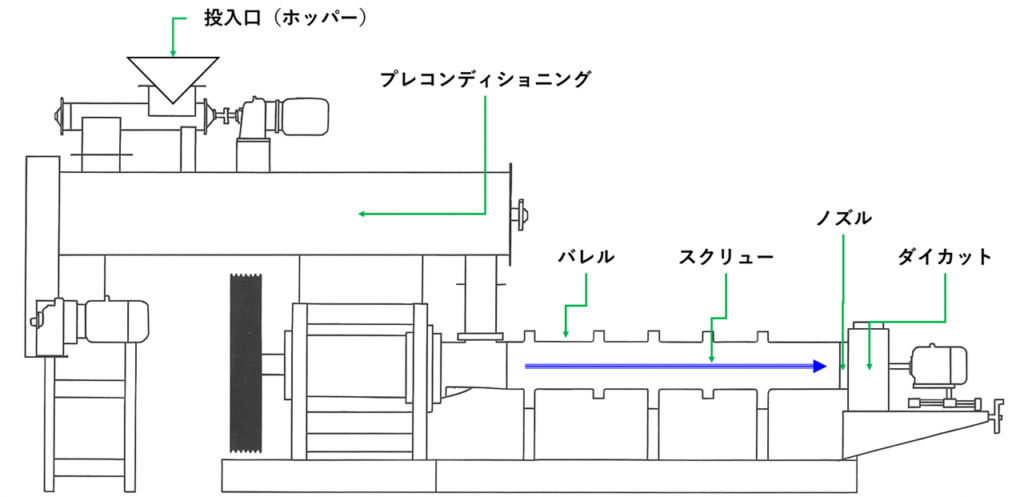
An extruder is a device that mixes, kneads, heats, pressurizes, and then forces a dough-like material through a die to form kibble. Inside the barrel, the material heats rapidly due to mechanical shear (friction) and pressure generated by the screws.
Starch begins to gelatinize when it is heated to roughly 60–80°C in the presence of water. As temperature rises, starch granules absorb water, swell, and lose their crystalline structure, which is the core of gelatinization (α-conversion).
During this process, starch components—amylose (linear chains) and amylopectin (branched chains)—partially leach out, producing a viscous, paste-like structure. This is the same type of transformation you see when rice is cooked and becomes sticky; extrusion achieves a similar effect inside the barrel.
As starch gelatinizes, it becomes more water-accessible and viscosity increases substantially. In typical extrusion, formulas are conditioned to a moisture level around 25–30%, heated to approximately 90–120°C, and processed under elevated pressure (often described as 2–10 bar in practice) for a short period. This high temperature + high pressure + high shear environment promotes relatively uniform gelatinization.
When the cooked dough exits the die, pressure drops suddenly. Part of the water flashes into steam, causing the material to expand (puff) and set into a porous structure. Gelatinized starch also acts like an adhesive, binding ingredients together and helping the kibble maintain its shape.
Because extrusion can reach very high temperatures quickly (sometimes exceeding 100–150°C depending on system design and operating conditions), the process can also contribute to protein denaturation and microbial reduction, supporting product safety and stability.
Gelatinization Characteristics of Major Carbohydrate Sources
Pet foods use a wide variety of carbohydrate sources, and each behaves differently during extrusion because starch structure and gelatinization properties vary. Below is a practical comparison of common ingredients.
Typical gelatinization and processing tendencies
| Property | Corn | Wheat | Rice | Potato | Legumes (peas/chickpeas/lentils) |
|---|---|---|---|---|---|
| Gelatinization onset | ~60–70°C | ~60°C | ~60–75°C | ~60–65°C | ~60°C (varies) |
| Amylose content | ~25% | ~20–25% | ~15–20% | ~20% | ~30–40% (often higher) |
| Expansion during extrusion | Good | Good | Good | Good | Limited / recipe-dependent |
| Viscosity after gelatinization | Medium | Medium–high | Low–medium | Very high | Slightly low |
| Digestibility after proper extrusion (dogs/cats)* | Very high (>98%) | High (>95%) | Very high (>98%) | High (>93%) | High (>93%) |
| Contribution to kibble structure | Balanced expansion & binding | Gluten adds elasticity | Light texture; good digestibility | Strong binding; stable shape | Dense kibble; handling challenges |
*Digestibility values assume starch is properly cooked/gelatinized during extrusion; they should be interpreted as general tendencies, not fixed guarantees.
Regardless of ingredient origin, well-gelatinized starch tends to show high digestibility in dogs and cats.
Corn (Maize)
Corn is one of the most widely used carbohydrate sources in pet food. Corn starch typically begins gelatinizing around 60–70°C, with a reported peak near the high-70s °C range. With amylose content around 25%, corn often provides a good balance of expansion and digestibility during extrusion.
Particle size matters. Finely ground corn flour gelatinizes more effectively than coarse grinds because water and heat penetrate the granules more uniformly. Coarse particles may retain partially ungelatinized cores, potentially leaving small fractions less cooked.
Wheat
Wheat contains starch plus gluten proteins, which contribute viscoelastic properties that support dough cohesiveness and “spring.” Wheat starch gelatinizes at around 60°C, similar to corn.
Some studies suggest that in certain high-fiber wheat fractions (e.g., bran-rich materials), gelatinization may not always translate into large digestibility changes because fiber structures can limit enzyme access, even after heating.
Rice
Rice is a small-granule, highly digestible starch source. Rice starch gelatinizes roughly in the 60–75°C range and tends to gelatinize readily during extrusion. Because it is naturally easy to digest when cooked, extruded rice-based formulas often show strong energy utilization.
Rice is gluten-free, which may reduce dough elasticity compared with wheat, but it is frequently used for sensitive digestion or allergy-positioned products due to its high digestibility.
Potato
Potato starch granules are relatively large and tend to gelatinize at lower temperatures (around 60–65°C). Once gelatinized, potato starch can produce very high viscosity, acting as a strong binder.
This is one reason potato is commonly used in grain-free kibble: it helps maintain shape and structure. However, high viscosity can increase extruder torque/load, so inclusion level and processing conditions must be managed carefully.
Legumes (Peas, Chickpeas, Lentils)
Legumes are widely used in grain-free formulas. Their starch often has higher amylose content (30–40%), and legumes also contain substantial protein and insoluble fiber. In raw form, starch granules can be physically protected by cell walls and protein matrices, reducing digestibility.
Extrusion disrupts these structures and gelatinizes the starch, improving digestibility. However, legume-heavy formulas often contain less total starch and more fiber, which can reduce expansion and create denser, harder kibble.
Key Concept: Amylose vs. Amylopectin and Kibble Texture
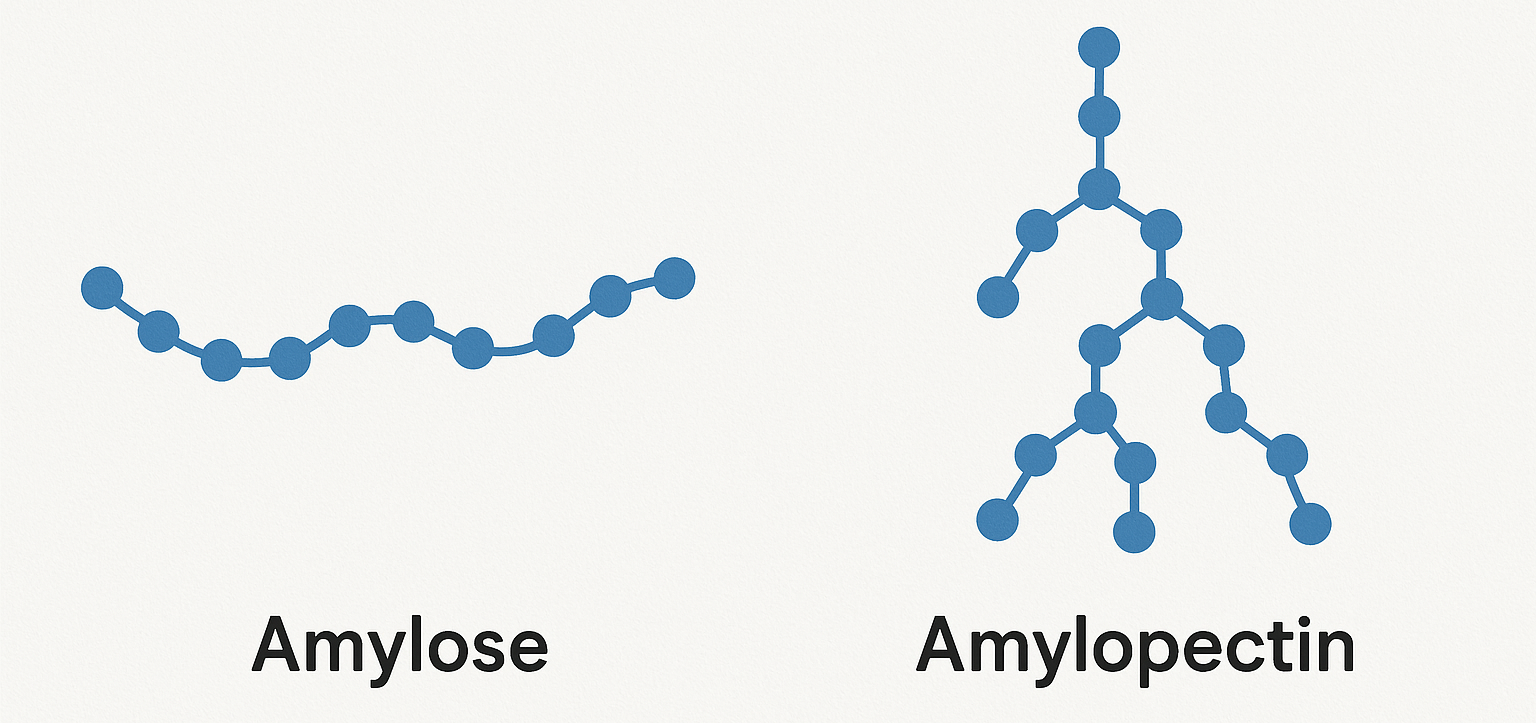
Starch consists mainly of amylose and amylopectin:
- Amylose (linear) tends to form firmer gels after gelatinization. Higher amylose starches often produce tighter, harder kibble structures.
- Amylopectin (branched) contributes stronger stickiness and supports expansion and lighter texture. Lower-amylose starches generally puff more easily.
Therefore, starch source and amylose ratio strongly influence not only gelatinization behavior but also kibble texture, density, and expansion.
Grain vs. Grain-Free: Differences in Gelatinization Behavior
| Aspect | Grain-inclusive formulas | Grain-free formulas |
|---|---|---|
| Typical starch sources | Corn, wheat, rice, barley, oats | Potato, legumes, tapioca, sweet potato |
| Total starch level | Relatively higher; favorable for extrusion | Often lower due to higher protein/fat positioning |
| Gelatinization behavior | Generally consistent and easy to gelatinize | More variability; legumes can gelatinize unevenly; potato becomes highly viscous |
| Manufacturing stability | Typically stable expansion and shaping | Expansion often limited; higher density/hardness; handling can be harder |
| Practical adjustments | Standard extrusion often sufficient | May require supportive starches (potato/tapioca) and tighter process control |
Even grain-free kibble still needs starch
A key point: grain-free does not mean starch-free. To form expanded kibble through extrusion, formulas still require a meaningful amount of starch-based structure.
Grain-free products typically replace grains with potato, legumes, tapioca (cassava starch), and similar ingredients. When properly gelatinized, these starches can become highly digestible energy sources—similar to grain starches.
Texture challenges in grain-free formulas
Grain-free formulations are often higher in protein and fat, which can reduce total starch. For example, a typical adult dog kibble may have starch around the ~40% range, while high-meat or grain-free formulas may drop toward ~30% depending on recipe design.
Lower starch content commonly reduces puffing, resulting in smaller expansion and denser, harder kibble. This can affect both appearance and palatability, so product developers often need additional textural strategies.
Legume-heavy recipes require special attention
Because legumes contain more fiber, dough can hold water differently and may become harder to cut cleanly at the die face. Shape deformation can occur right after exit if structural integrity is insufficient.
To stabilize structure, manufacturers sometimes add tapioca starch or potato starch to increase binding and improve expansion, since these starches can provide strong cohesive properties when gelatinized.
Digestibility is generally good in both types
From a nutritional standpoint, when starch is properly cooked in extruded kibble, digestibility is generally high regardless of whether the starch originates from grains or non-grains.
In dogs, extruded starch digestibility is often reported as very high (around the upper-90% range). In cats, reported values are also high (often >93%) when properly processed. The practical takeaway is that processing quality (gelatinization) matters more than starch source.
This also helps correct common misconceptions such as “grain-free is always more digestible” or “dogs and cats cannot use grains.” The critical factor is whether starch has been properly gelatinized during extrusion.
How Gelatinization Level Affects Digestibility and Nutritional Value
Relationship between gelatinization degree and starch digestibility
| Gelatinization level | Practical definition (rough guide) | Dogs: starch digestibility | Cats: starch digestibility |
|---|---|---|---|
| Very high | ≥90% | ≳98–100% | ≳94–99% |
| High (often optimal) | ~83–90% | ≳96–99% | ≳90–97% |
| Moderate | ~60–80% | ~85–97% (varies by recipe/RS/particle size) | ~80–95% |
| Low | ~30–60% | often insufficient | may decrease |
| Near-raw | ≤30% | markedly insufficient | insufficient |
This table shows general tendencies. Actual outcomes depend on ingredient type, resistant starch formation, particle size, and process consistency.
Raw starch is poorly digested in the small intestine of dogs and cats. Gelatinization converts starch into a more enzyme-accessible form, increasing digestion and energy availability. In properly extruded kibble, starch is typically highly gelatinized and therefore highly digestible.
Very high gelatinization and blood glucose response
More gelatinized starch tends to digest faster, which can increase the likelihood of rapid glucose absorption. In some nutrition strategies, extremely fast-digesting starch may be undesirable because it can contribute to sharper post-meal glucose rises (higher glycemic response).
Partially digested starch and gut health
On the other hand, insufficiently gelatinized starch or retrograded starch formed during cooling can behave as resistant starch (RS). Resistant starch escapes small-intestinal digestion, reaches the colon, and is fermented by microbes—similar to certain dietary fibers.
This fermentation can generate short-chain fatty acids (SCFAs) and support intestinal health. As a result, there is growing interest in designing kibble that retains a controlled amount of resistant starch for functional benefits.
Practical application in product development
For growth, high activity, or general adult maintenance formulas, maximizing usable energy often means aiming for high gelatinization and high digestibility.
At the same time, some newer approaches attempt to increase resistant starch intentionally—by adjusting extrusion parameters—to support gut health and stool quality. However, unintended undercooking can reduce digestibility and may contribute to soft stool or digestive upset in some animals, especially if excess undigested starch reaches the colon.
Therefore, unless resistant starch is intentionally designed and validated, most formulations should prioritize reliable, sufficient gelatinization to ensure consistent energy availability and digestive tolerance.
Effects of High-Temperature Processing on Other Nutrients
Extrusion affects more than starch.
- Amylose–lipid complexes (ALC): During heating, some amylose can complex with lipids, forming structures that resist enzymatic digestion. This can increase the resistant starch fraction and potentially moderate glycemic response. However, in very high-meat formulas, total starch may be lower, and ALC formation dynamics can shift depending on fat/starch ratios.
- Maillard reaction: Under high heat, reducing sugars and amino acids can react, creating desirable roasted flavors that may enhance palatability. At the same time, certain amino acids (notably lysine) can become less nutritionally available if heat exposure is excessive.
- Vitamin loss: Some vitamins are heat-sensitive and may degrade during processing, which is why vitamin premixes and post-extrusion additions are carefully designed.
Extrusion’s benefits—improved starch digestibility and process safety—must be balanced against potential nutrient losses by thoughtful formulation and process control.
Manufacturing Controls: How to Adjust Gelatinization in Practice
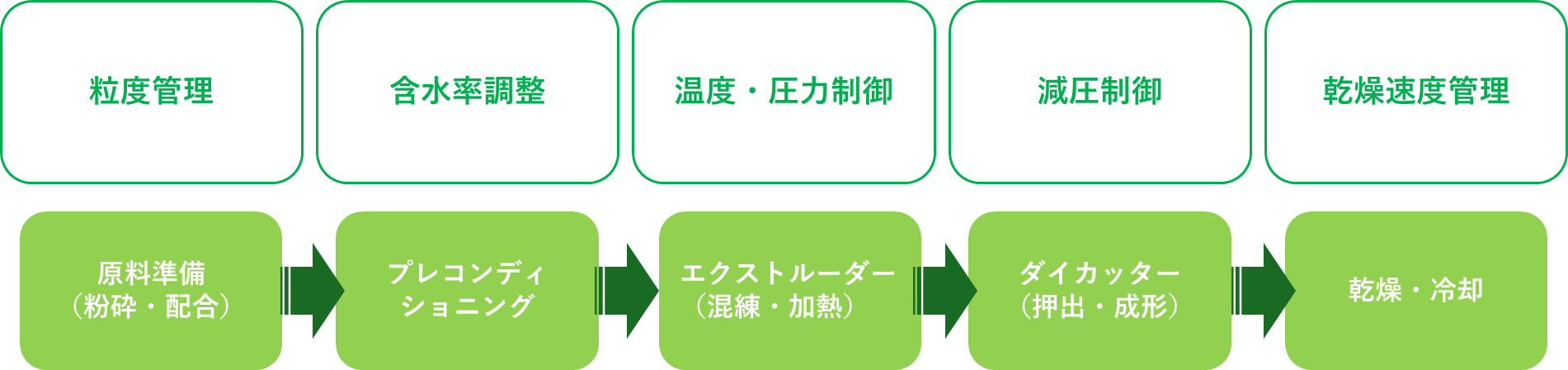
Manufacturers can influence gelatinization degree through multiple controllable factors:
Grinding and pre-treatment
Finer particle size increases water and heat penetration and supports more complete gelatinization. Coarse particles are more likely to retain ungelatinized cores.
Some operations use pre-gelatinized ingredients or pre-conditioning steps, but these add cost, so many producers rely primarily on in-line processing control.
Moisture control
Water is essential for gelatinization. Typical extrusion targets roughly 20–30% moisture entering the extruder.
- Too little water: high friction heat may occur, but starch granules may not hydrate adequately → incomplete gelatinization.
- Too much water (e.g., 35–40%+): shear can drop and energy transfer may become less effective → gelatinization may also become insufficient.
This is why preconditioners are widely used: they add water and steam to stabilize moisture and raise temperature before the barrel, often improving uniformity and reducing variability.
Temperature and pressure profile
Extruders typically use multiple barrel zones with adjustable temperature settings. While gelatinization begins around 60–80°C, achieving rapid, high conversion often requires 90–120°C+ under pressurized conditions.
Some operations run higher peak temperatures depending on equipment and product targets. Pressure is influenced by die design (hole size), fill level, screw configuration, and throughput. Higher backpressure can increase thermal load and support gelatinization, but excessive pressure increases mechanical risk and must be managed within safe operating limits.
Screw design and mechanical energy (shear)
Screw elements determine mixing intensity and shear. Higher shear can break granules and accelerate hydration and gelatinization. However, very high screw speed can also reduce residence time, potentially lowering gelatinization depending on the total energy balance.
In functional product research, some trials intentionally use lower shear, higher moisture, and coarser grinding to reduce gelatinization and increase resistant starch—accepting lower expansion and higher density as a trade-off.
High-protein / high-fat recipes
High-meat recipes often have lower starch and higher fat. Fat can act as a lubricant, reducing friction and mechanical energy, which can lower gelatinization under otherwise identical conditions. These formulations may require:
- tighter moisture/thermal control
- different screw configurations
- or use of twin-screw extruders, which provide greater mixing and process flexibility for difficult recipes
Recent Research and Technology Trends
Functional use of resistant starch
Research interest in resistant starch continues to grow because of its potential to support gut fermentation and stool quality. Studies have demonstrated that modifying extrusion intensity (moisture, screw speed, shear) can meaningfully change resistant starch levels in kibble made from the same recipe.
This opens the door to “functional kibble” concepts where digestive kinetics and colonic fermentation are engineered through processing—not only formulation.
Processing solutions for high-protein, low-carb trends
As demand increases for high-protein, lower-carbohydrate products, extrusion challenges also rise. Technology responses include:
- broader adoption of twin-screw extrusion
- process approaches that reduce mechanical damage while increasing thermal input (e.g., greater steam energy, controlled shear strategies)
- in some cases, alternative forming methods combined with drying (baked styles, hybrid processes) when extreme low-starch targets make classic expansion difficult
Evaluation of new starch sources
As grain-free and alternative carbohydrate trends expand, industry and academic teams continue to test ingredients such as ancient grains (e.g., sorghum, quinoa, amaranth), novel flours, and specialty starches.
Because these materials differ in protein, fiber, and starch structure, each requires validation of moisture targets, screw setup, and thermal profile to achieve acceptable kibble quality and consistent gelatinization.
Key Takeaway: Starch “Cooking” Determines Kibble Quality
Starch α-conversion (gelatinization) in extrusion is not just a nutrition detail—it is a core driver of product structure, digestibility, texture, and manufacturability.
Proper gelatinization transforms grain and non-grain starch sources alike into highly digestible energy. At the same time, emerging research suggests that intentionally managing gelatinization and resistant starch could enable functional digestive benefits—if carefully designed and controlled.
In dry pet food, how you cook the starch often determines whether you succeed in creating a safe, stable, palatable, and nutritionally effective kibble.