

 Shun Nagai
With so many dog food products and brands already on the market, it is becoming increasingly difficult to stand out. One category that is expected to see strong growth in the years ahead is freeze-dried dog food. Freeze-drying is an innovative technology that extends shelf life while preserving much of the ingredient’s original nutritional value.
In this article, we explain what freeze-drying is, how it works, how it differs from dehydrated food, and the many advantages freeze-dried food can offer. We also cover potential concerns, safety considerations, and important points to keep in mind when manufacturing these products, including how to select suitable ingredients.
We hope this article helps you better understand the appeal and market trends of freeze-dried food and supports your product development and manufacturing plans.
Market Trends for Freeze-Dried Food

Freeze-dried dog food is one of the fastest-growing segments in the pet food market. According to Zion Market Research, global demand for freeze-dried pet food was approximately USD 277 million in 2018. Their forecast suggested that this figure would nearly double to USD 525 million by 2025.
That said, this is still only a small part of the overall pet food market. In Thailand alone, about USD 1.35 billion was spent on pets in 2021. Even so, it is highly likely that more and more pet food manufacturers will move into the development and production of freeze-dried products in the coming years.
What Is Freeze-Drying?
The origins of freeze-drying can be traced back to the ancient Inca civilization. Indigenous people in the Andes are said to have used a method similar to freeze-drying to make chuño, a preserved food made from potatoes. By taking advantage of the dramatic temperature differences between day and night in the Andes, they repeatedly froze, pressed, and sun-dried potatoes to preserve them.
Later, during World War II, freeze-drying technology was used to preserve blood plasma and penicillin. In the food industry, freeze-dried products are often said to have become commercially established with the introduction of instant coffee by Nescafé in 1938.
Modern Freeze-Drying Technology
Freeze-dried food is produced by freezing ingredients below their freezing point and then removing moisture through sublimation while the material remains frozen. In practical terms, this means the food is first frozen and then dried under vacuum, rather than simply being dried by heat.
To explain in more detail, the ingredients are first frozen so that their moisture turns into ice. A vacuum is then applied, allowing the ice to change directly from a solid into vapor at a very low temperature, without passing through a liquid stage. This process is called sublimation. The vapor generated during sublimation is captured by a cold trap, where it condenses, freezes, and adheres to the inner wall of the equipment.
Because freeze-drying removes moisture in this way, the finished ingredients retain very little water, typically around 5% to 10% moisture in guaranteed analysis terms. By comparison, frozen raw meat usually contains more than 70% moisture. However, most of the food’s nutrients remain largely intact.
The Difference Between Freeze-Dried and Dehydrated Food
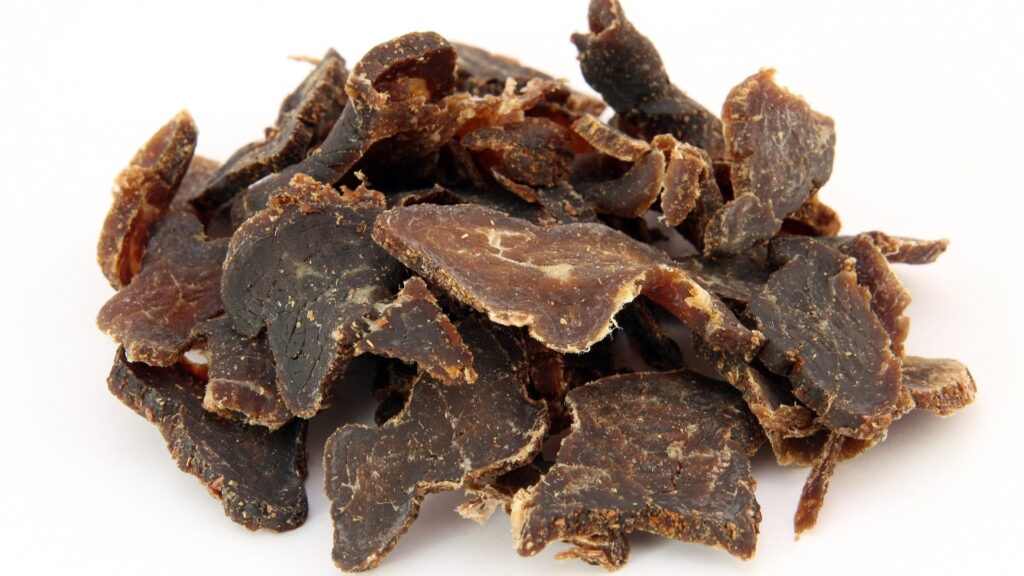
The biggest difference is that freeze-dried food retains nutritional value much more similarly to raw food. This is not generally the case with dehydrated or conventionally dried foods. Although freeze-dried and dried foods may sound similar, they are clearly different in this respect.
Dehydration generally refers to removing moisture from ingredients by applying heat. Some manufacturers claim that dehydrated food is uncooked, but in reality it is processed at low temperatures. As a result, the structure of the food changes and some of its original nutrients are lost.
Most companies do not disclose the exact temperatures used for dehydrated foods, partly because they want consumers to believe the nutrients remain unchanged. In reality, foods marketed as dehydrated are often processed at temperatures of around 60 to 80°C. For this reason, dehydrated food is fundamentally different from raw or freeze-dried food.
On the other hand, one advantage of dehydrated food is that the use of heat generally reduces pathogens more effectively than in raw or freeze-dried food.
Why Freeze-Dried Food Is So Nutritious
Here is why freeze-dried food is considered more nutrient-dense than many other food types, except frozen food.
It Preserves the Food’s Natural Nutrients
Freeze-drying does not denature nutrients in the same way conventional cooking does. Once you cook an egg, for example, you cannot turn it back into a raw egg. The same principle applies to dry dog food. Once ingredients have been heated and altered, they cannot be returned to their original state. In typical cooking processes, proteins and other nutrients are denatured, which reduces the food’s original nutritional value.
By contrast, freeze-dried foods retain proteins, amino acids, and many other nutrients much like raw food does. Other important components, such as enzymes, fats, and probiotics, are also better preserved.
One nutrient that may decrease during freeze-drying is vitamin C. However, this is generally not a major concern, because dogs and cats are able to synthesize vitamin C on their own. In most cases, they do not need to obtain large amounts of it from food.
Lower Starch Inclusion
In general, freeze-dried products do not need to contain large amounts of low-nutrient ingredients such as starches. Because they are typically made with higher-quality raw materials, they can offer greater nutritional value. That said, some freeze-dried foods do contain high levels of starch, often as a cost-saving measure.
By comparison, many dry foods contain significant amounts of grains, legumes, and other starches, partly because these ingredients help form kibble and partly for cost and formulation reasons.
The Many Benefits of Freeze-Dried Food
Freeze-dried food is not only rich in nutrients, but also offers many other advantages.
Highly Palatable and Texture Can Be Adjusted
The freeze-drying process helps preserve much of the original flavor and nutritional value of the ingredients. Because almost all moisture is removed, the food can be eaten as-is, offering a concentrated taste and aroma.
Freeze-dried food also has a unique light and crispy texture, which can improve palatability. On the other hand, if water is added, it becomes softer, allowing the texture to be adjusted according to the dog’s preferences.
Long Shelf Life
Freeze-dried food can maintain both nutritional value and palatability while offering a shelf life of at least one year. In some cases, shelf life can extend to around five years. This is because freeze-dried products contain very little moisture, and microorganisms need moisture in order to survive and grow.
Once opened and exposed to air, however, most products are generally recommended to be consumed within one to three months.
Excellent Digestibility
Freeze-dried food has also been reported to offer excellent protein digestibility. Thanks to the use of high-quality ingredients and minimal heat treatment, it is easier on the stomach and easier to absorb.
As a result, dogs that eat freeze-dried dog food may experience lower levels of harmful ammonia in the stool caused by undigested protein, and digestive issues such as diarrhea may also be reduced.
Convenient Because It Is Lightweight
Compared with raw meat, which requires refrigeration or freezing, freeze-dried food offers convenience similar to dry food. For example, when traveling with a dog, freeze-dried food is much easier to carry because most of the moisture has been removed, making it extremely lightweight.
There is also no need to pack a large cooler in the car to prevent frozen food from thawing and spoiling during transport. Because it is so light, a dog could even carry its own food in a backpack.
The One Major Drawback of Freeze-Dried Food
If there is one main disadvantage of freeze-dried food, it is the manufacturing cost. Freeze-dried products on the market are generally much more expensive than dehydrated foods and many other types of pet food. Why is that?
One reason is that freeze-drying equipment itself is expensive. Another is that the freeze-drying process is costly and time-consuming. In fact, the long production time is one of the biggest reasons freeze-dried food is so expensive. It takes about two days to produce a single batch of freeze-dried food.
If manufacturers try to shorten the process, some moisture may remain in the product. If that happens, the product may lose important advantages such as its light weight and long shelf life.
Safety of Freeze-Dried Food
One important point in manufacturing freeze-dried food is that, as with raw food, high-quality ingredients must be used. When that is the case, there is generally little reason to worry that harmful bacteria will be present in freeze-dried dog food.
Dogs and cats are naturally more resistant to bacteria than humans. As carnivores, their stomach acid has a very low pH of around 1 to 2, which means many bacteria that would make humans sick do not usually affect them in the same way. For example, dogs often eat leftovers found during walks without getting sick, and in the wild they may even consume carcasses.
However, many manufacturers still use high-pressure processing, or HPP, for freeze-dried food. HPP became more common after the U.S. Food Safety Modernization Act began to apply to pet food as well.
As a result, many pet food manufacturers have faced costly and unnecessary recalls. For this reason, most manufacturers have adopted HPP, so bacterial contamination is generally not considered a major concern.
As the name suggests, HPP is a sterilization method that uses very high pressure to eliminate pathogens. However, it is not the same as cooking or traditional processing, and studies suggest that nutrient loss is minimal.
Important Points and Precautions When Manufacturing

When producing freeze-dried food, the value of the process is greatly reduced if the final product does not retain nutrition comparable to raw food.
Make Sure It Provides Complete Nutrition
If you plan to develop freeze-dried food as a complete and balanced diet, make sure it can be formulated to meet AAFCO or FEDIAF standards.
This is important because many freeze-dried foods are developed and manufactured as toppers rather than complete meals. Clear and close communication with the manufacturer in advance is essential to avoid misunderstandings.
Carefully Select the Ingredients You Use
To create a high-quality freeze-dried food, consider the following ingredients:
| Category | Recommended ingredients |
|---|---|
| Main ingredients | High-quality animal protein such as meat, poultry, or fish |
| Quality positioning | GMO-free or organic ingredients |
| Organ meats | Liver, heart, kidney, pancreas, spleen, and similar organs |
| Calcium source | Bone or bone meal |
| Omega-3 fatty acids | Commonly supplied through fish oil, flaxseed, chia seed, or hemp seed |
| Vegetables and fruits | Ideally organic and low in starch |
| Other additives | Food-based natural additives such as probiotics, kelp, and apple cider vinegar |
Ingredients to Be Careful With During Formulation
There are several ingredients that are best avoided when manufacturing freeze-dried food.
Added Vitamins and Minerals
In principle, freeze-dried food should be able to provide sufficient nutrition from the ingredients themselves. Therefore, if a manufacturing partner proposes a formula containing many added vitamins and minerals, it may suggest that the raw materials are not nutrient-dense enough.
It is also important to check whether taurine has been added. Most meats and organ meats naturally contain plenty of taurine, so additional taurine should not generally be necessary.
High Fat Content
Some freeze-dried foods contain very high levels of fat. Fat is an important nutrient for dogs, but a fat content of around 10% to 20% in dog food is generally considered appropriate. Excessively high fat levels may displace other important vitamins and minerals, so formulations containing more than 30% fat are best avoided.
Excessive Starch Content
A nutritionally dense freeze-dried dog food does not need to contain large amounts of starchy ingredients added primarily for carbohydrates. The ideal starch level should be determined in consultation with the manufacturer and a veterinarian.
Examples of ingredients to be cautious about include:
| Ingredient group | Examples |
|---|---|
| Legumes | Chickpeas, lentils |
| Grains | Wheat, corn, oats, soy, quinoa |
| Starchy root crops | Potatoes, sweet potatoes, cassava |
| Sweet root vegetables | Carrots and similar vegetables |
| Pulse flours and substitutes | Chickpea flour, pea flour |
| Certain squash varieties | Winter squash such as butternut squash, which is said to contain two to three times more carbohydrates than summer squash such as zucchini |
OEM Manufacturing in Thailand
Our company offers support for the development and contract manufacturing of dog food in Thailand.
Of course, this includes OEM development of the freeze-dried dog and cat food products introduced above. There are also many other advantages to manufacturing in Thailand, which we explain below.
We can also support OEM manufacturing of freeze-dried products in New Zealand.
Proven Track Record as a Major Pet Food Exporter
According to the Thai Pet Food Trade Association (TPFA), Thailand’s pet food exports in 2021 rose by 27% year on year to more than THB 65 billion, making the country the world’s third-largest pet food exporter.
The top five export destinations for Thai pet food are the United States, Japan, Italy, Malaysia, and Australia. Demand is also growing in Asian countries such as India, Indonesia, and Laos.
This steady growth continued into 2022, with Thai pet food exports already up 43% year on year as of July.
According to Dr. Chanintr Chalisarapong, Chairman of the TPFA, Thailand’s long experience in canned tuna production for human consumption, with roughly one-fifth of the world’s canned tuna produced in Thailand, has also contributed to the expansion of wet pet food manufacturing. As a result, wet food production in Thailand has also become increasingly active.
Easy Access to High-Quality Ingredients
About 95% of the ingredients used in Thai pet food production, including fresh, high-quality meat, grains, and seafood, are sourced locally. This has further supported the country’s manufacturing strength and global trade success.
Thailand’s diverse climate and geography allow it to produce a wide range of agricultural products, including grains, vegetables, and fruits.
Thailand also has a strong livestock sector, making it possible to source fresh, high-quality meat suitable for human consumption. In addition, because the country has extensive coastal access, it also has abundant seafood resources that can be used in pet food.
Cost Advantages
Thailand is known for its relatively low production costs. Compared with Japan and many Western countries, labor costs are lower, and ingredients are easier to procure.
This is a highly attractive point for companies planning to develop new pet food products. Lower manufacturing costs can help keep product prices competitive and improve market competitiveness.
Frequently Asked Questions
- QCan you manufacture a formula exactly as requested?
- QWhat is the quality of the ingredients used in Thai OEM manufacturing?
- QWhat kind of manufacturing facilities do Thai OEM manufacturers have?
- QWhat is the quality control system like in Thailand?
- QHow long does it take from initial inquiry to completion of the final product?
- QHow long does it take from placing an order to delivery?
Inquiries and Consultation

Please feel free to contact us about our OEM support services at any time. We are happy to answer any questions or discuss your needs.
How to Contact Us
Phone: +66 (0)61-457-4310
You can call our representative directly. Phone inquiries allow us to respond quickly and provide the information you need right away.
Email:
You can also contact our representative by email. We will respond to your questions and requests in detail.
Information We Ask You to Prepare
After we receive your inquiry, we will discuss the details based on your interests and needs. At that stage, we will ask about the following:
- Project overview:
Please share the product you want to develop and the purpose of the project. - Requests and preferences:
Please tell us your specific requirements and budget so we can make a more concrete proposal. - Schedule:
Please let us know your target timeline and desired completion schedule.
We value close communication with our clients and will do our utmost to support the success of your project.