

 Shun Nagai
Thai Union, a Thai seafood company, manufactures food for both people and pets. In particular, its cat food catalog looks like a menu from a Michelin-starred restaurant.
The catalog features dishes such as sashimi-style salmon topped with roe-like garnish, and juicy meatloaf served with a cream sauce. Soups include lamb soup and tuna soup. In the snack lineup, the company sells soufflés made with carefully selected ingredients, vitamin balls served with sauce, and salmon biscuit sticks, among other items.
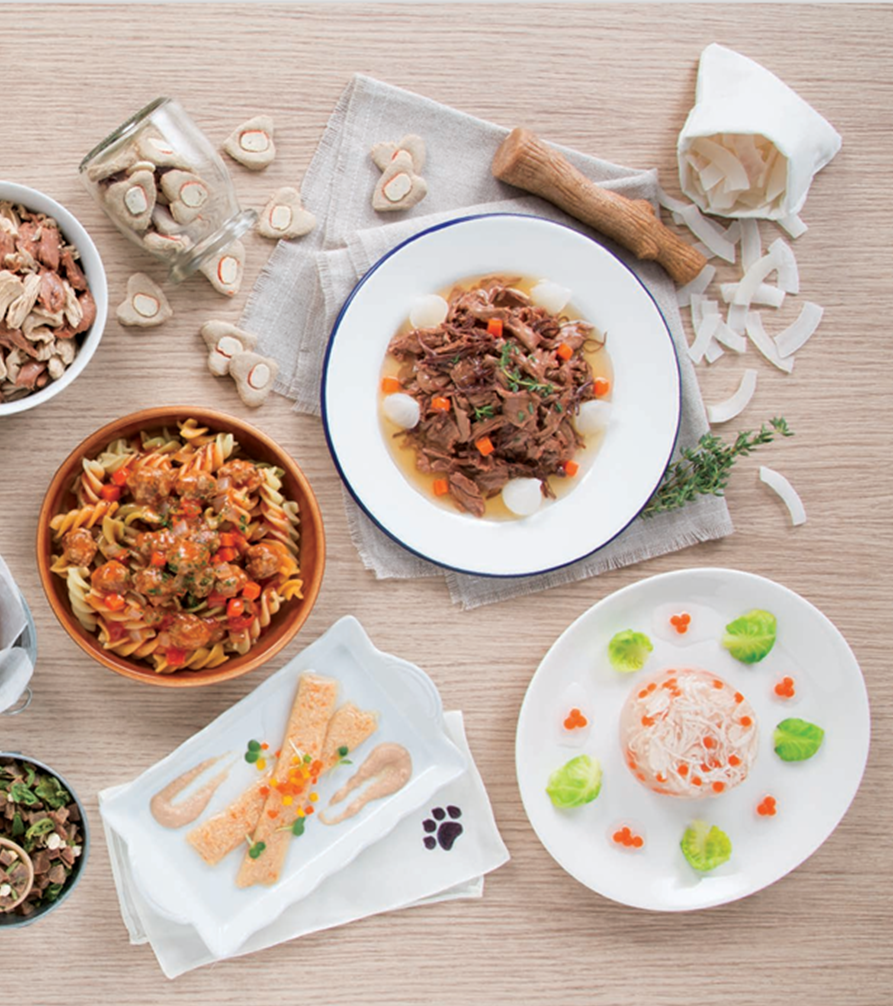
As shown above, Thai food companies are steadily developing super-premium pet food. This trend is especially strong in super-premium products for cats. Thailand has long had abundant access to the raw materials required for pet food, and the country also has substantial manufacturing capacity. As a result, Thailand can supply not only the pet food consumed in its domestic market, but also products for consumers around the world.
In Thailand, where pet humanization accelerated during the pandemic, consumer purchasing power has risen over the past few years and demand for super-premium products has increased further. In Thailand’s pet food market, it is often said that the key to success for pet food manufacturers—both domestic and international—is to offer premium and super-premium pet food with high nutritional value.
Flanders Investment and Trade has reported that premium and super-premium pet food alone accounts for as much as 25% of Thailand’s pet food market, with an extremely positive outlook suggesting the market could double year after year.
Thailand’s Domestic Pet Food Market

Thailand’s pet market is expected to grow in every aspect—from the domestic pet market to pet food exports—without being negatively affected by the disruption caused by COVID-19. Krungthai Bank, a state-owned banking institution, valued Thailand’s pet market at 44 billion baht (USD 1.2 billion) in 2021, and stated that it could reach 66.7 billion baht (USD 1.88 billion) by 2026.
According to the Thai Pet Product Industries Association (TPPIA), Thailand’s pet food industry has maintained annual growth of around 10% since 2011. The market expanded from 29.3 billion baht (USD 830 million) in 2017 to 32.23 billion baht (USD 910 million) in 2018, and then to 36 billion baht (USD 1.02 billion) in 2019. Nearly half of the market consists of pet food for dogs and cats, while the remaining portion is divided among various pet care products and services.
Business analysts such as Mordor Intelligence and Research and Markets estimate that Thailand’s pet food market will grow at a compound annual growth rate (CAGR) of approximately 5.2% to 5.43% from 2022 to 2027.
Thailand as the World’s No. 4 Pet Food Exporter

Since 2019, Thailand has also been the world’s fourth-largest pet food exporter, following Germany, the United States, and France. In 2019, Flanders Investment and Trade reported that Thailand became the second-largest exporter of pet food to the EU after China, achieving exports worth EUR 215 million.
According to the Thai Pet Food Trade Association (TPFA), Thai manufacturers’ own brands account for 20% of Thailand’s dog and cat food exports, while the remaining 80% consists of OEM products for major international brands.
The International Trade Centre reported that Thailand exported pet food worth a total of USD 1.65 billion in 2019. However, according to Dr. Chanintr Chalisarapong of the TPFA, Thailand’s pet food exports in 2020 totaled 609,001 tons, with a value of USD 1.6 billion. In an article contributed to GlobalPets, he stated that compared with 2019, the 2020 figures showed export volume up 13% and export unit prices up 19%. He also expressed an optimistic outlook that Thailand’s pet food exports in 2021 would expand by at least 10%.
He further noted that when comparing exports from January to May 2021 with the same period in 2020, export unit prices had already increased by 25%, and export volume had increased by 19%. Thailand’s top export destinations for pet food in 2021 were the United States, Japan, Italy, Malaysia, and Australia, in that order.
The Super-Premium Shift in Cat Food

Since 2017, Thailand’s pet population has increased by about 10% annually, and more than one-third of households in the country own at least one pet. According to TPPIA data, by 2020 Thailand had 14.5 million pets, including 8.9 million dogs (62%), 3.3 million cats (23%), and other types of pets (15%).
One reason for this growth in pet ownership is a shift from simple pet ownership toward “pet humanization,” which has driven rapid development of premium and super-premium pet food. In particular, demand in Thailand has been rising more strongly for these products for cats than for dogs, as humanized cats are said to prefer these flavors.
A September 2021 report on Thailand’s pet food industry by the U.S. Department of Agriculture (USDA) Global Agricultural Information Network (GAIN) highlights this trend and notes that an increasing number of pet food manufacturers are focusing on developing cat food with higher nutritional value and improved texture.
In addition, the cat food market grew by nearly 30% between 2019 and 2021, with more wet cat food products being launched. In cat food, the ratio of dry to wet products is approximately 60% to 40%, whereas in dog food the ratio is about 80% to 20%.
In this way, growing demand for premium cat food is having a major impact on the entire pet food industry—from technological innovation to sales. While premium pet food is generally more expensive than standard products, it is perceived as closer to “human-grade” food. As more pets consume high-end pet food with a stronger focus on health, Thailand’s pet food industry is gaining a new revenue structure.
Future Challenges for Pet Food Manufacturing in Thailand

However, it is not enough to focus only on profit. All activities related to developing high-quality pet food should evolve alongside pet nutrition science—an argument made by Dr. Anton C. Beynen, Head of R&D at Vobra Special Petfoods BV in the Netherlands.
In his 2013 paper, “Thailand’s Petfood Industry and Pet Nutrition,” Dr. Beynen argues that further growth of Thailand’s pet food business requires a close connection with pet nutrition science. He states that the industry must develop pet food products while taking into account issues such as market differentiation, nutrition trends, progress in product development, and shortages of raw materials.
He also recommends training more professional pet nutrition specialists who can support Thailand’s rapidly growing pet food market—particularly experts who understand the role nutrition plays in the health and disease of dogs and cats. In addition, he suggests that Thai universities should incorporate pet nutrition and nutrition science more thoroughly, including promoting scientific research in pet nutrition.